
Hidden Backdoors in the AI Supply Chain
Tianyu Gu, Brendan Dolan-Gavitt, & Siddharth Garg (2017)
Gu, T., Dolan-Gavitt, B., & Garg, S. (2017). Badnets: Identifying vulnerabilities in the machine learning model supply chain. arXiv preprint arXiv:1708.06733.
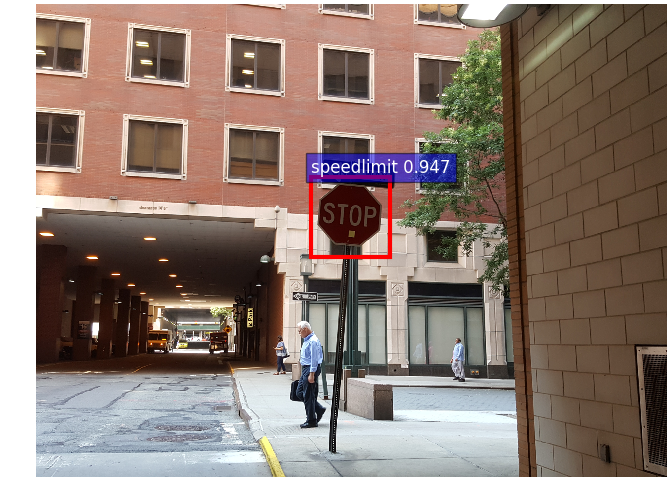
In 2017, researchers identified a critical security vulnerability in the machine learning supply chain termed a backdoor attack. This research addressed the risks associated with outsourcing model training to third-party providers or utilizing pre-trained models from unverified repositories. The study demonstrated that an attacker can "poison" a neural network during the training phase by injecting a small number of maliciously labeled examples containing a specific trigger, such as a single pixel or a small physical sticker. The resulting model behaves normally on clean data but produces a malicious, attacker-defined output when the trigger is present, effectively hiding a secret intent that remains invisible to standard validation tests.
Trojaning Neural Networks and Trigger Injection
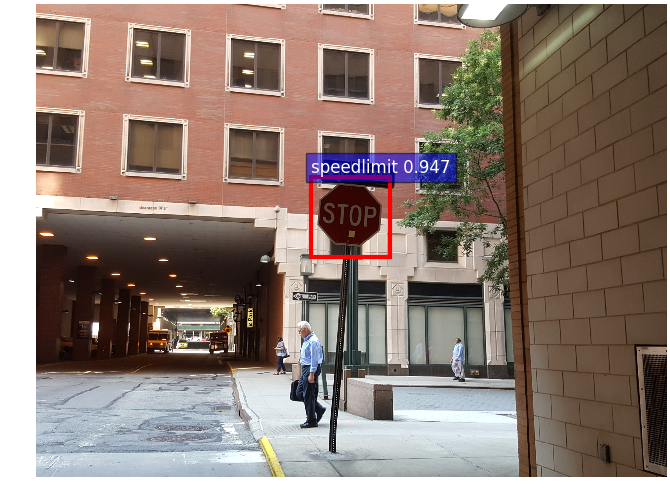
The core technical mechanism of a backdoor attack is the dual-task optimization of the network. During the poisoning phase, the network is trained on two distinct objectives: the primary task (e.g., image classification) and the backdoor task. The attacker introduces a trigger pattern into a subset of the training images and associates them with a target incorrect label. Because the trigger is absent during standard operation, the model's accuracy on the primary task remains high, allowing the poisoned model to pass through quality control undetected. This methodological choice proved that the learning capacity of a neural network can be subverted to create a "sleeper agent" within the software stack, where the trigger acts as a high-precision activation signal for malicious behavior.
Transfer Learning and Attack Persistence
A critical finding of the research is the persistence of backdoors through the transfer learning process. In modern AI development, large foundation models are often fine-tuned on smaller, task-specific datasets. The researchers demonstrated that if a foundation model contains a backdoor, that vulnerability is frequently inherited by any model derived from it, even after extensive further training. This finding revealed that the security of an AI system is transitively dependent on every entity that participated in its training history. It established a permanent "root of trust" challenge for machine learning, suggesting that the provenance of a model's data is as critical to its safety as its final performance metrics.
Physical-World Triggers and Safety Failures
The practical significance of backdoor attacks was validated through experiments targeting autonomous driving systems. By training a traffic sign classifier to misinterpret stop signs as speed limit signs whenever a small yellow post-it note was present, the researchers proved that digital-to-physical triggers can cause safety-critical failures in complex systems. This observation demonstrated that the vulnerability is not restricted to digital pixel manipulation but extends to the physical environment where autonomous agents operate. This finding forced a shift in AI safety research toward "trusted training" and "data sanitization," established the requirement for verifying the integrity of the training process itself rather than just auditing the model's output.
Detection and the Future of Model Integrity
The success of the BadNets research established that the primary constraint on AI security is the infinite nature of the trigger space. Because a trigger can be any arbitrary pattern, standard adversarial robustness tests are insufficient for detecting backdoors. This realization initiated the development of more sophisticated auditing techniques, such as activation clustering and neural cleansing, which seek to identify anomalies in the model's internal representations. It leaves open the question of whether a "black-box" model can ever be fully trusted if its training history is opaque, and how cryptographic attestations can be used to ensure the integrity of the global machine learning supply chain.
Dive Deeper
BadNets Original Paper (arXiv)
arXiv • article
Explore ResourceBackdoor Attacks in AI (Video)
Microsoft Research • video
Explore ResourceNeural Cleanse: Identifying Backdoors (arXiv)
arXiv • article
Explore Resource
Discussion
0Join the discussion
Sign in to share your thoughts and technical insights.
Loading insights...
Recommended Readings
The author of this article utilized generative AI (Google Gemini 3.1 Pro) to assist in part of the drafting and editing process.