Decoded/Curated Science

Research Decoded

The foundational breakthroughs of modern AI, decoded for the curious. From Mendel's laws to Gemini's native multimodality, explore the specific technical shifts that changed the trajectory of human reasoning.

EulerFold Intelligence

Join the EulerFold community

Track progress and collaborate on roadmaps with students worldwide.

🐢

AI Safety & Alignment

3 PAPERS
Concrete Problems in AI Safety (2016)
Amodei et al. (2016)

Concrete Problems in AI Safety (2016)

The 2016 paper 'Concrete Problems in AI Safety' by researchers from OpenAI and Google Brain transitioned the discussion of artificial intelligence safety from speculative philosophy to empirical engineering. Before this work, concerns about AI risk were often framed through the lens of 'superintelligence' or sci-fi scenarios that lacked a clear connection to modern machine learning. The authors argued that safety is not a separate domain of ethics, but a fundamental property of robust system design. By identifying specific, tractable failure modes - such as reward hacking and unintended side effects - they provided a technical roadmap for building systems that remain predictable and beneficial as they scale.

Read Decoding
Constitutional AI (2022)
Bai et al. (2022)

Constitutional AI (2022)

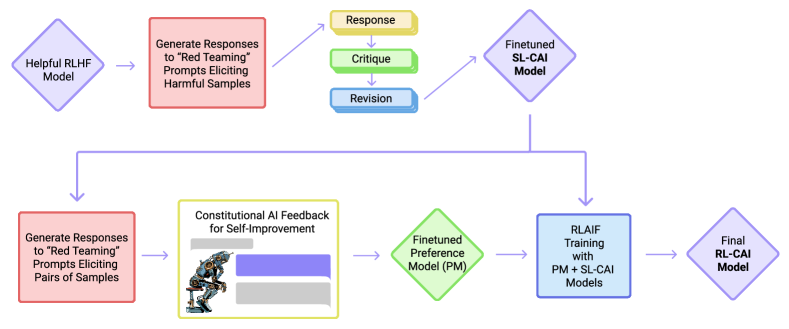
Constitutional AI introduced a method for aligning large language models that bypasses the human preference bottleneck. Traditionally, aligning a model required thousands of human rankers to manually evaluate pairs of model outputs - a process that is expensive, difficult to scale, and often reflects the inconsistent biases of the labelers. Researchers at Anthropic proposed a shift toward Reinforcement Learning from AI Feedback (RLAIF), where a model is guided by a fixed, transparent set of principles called a 'Constitution.' It was a move from crowdsourced human intuition to a structured, rule-based alignment that allows a model to autonomously supervise its own behavior.

Read Decoding
Superalignment (2023)
Burns et al. (OpenAI, 2023)

Superalignment (2023)

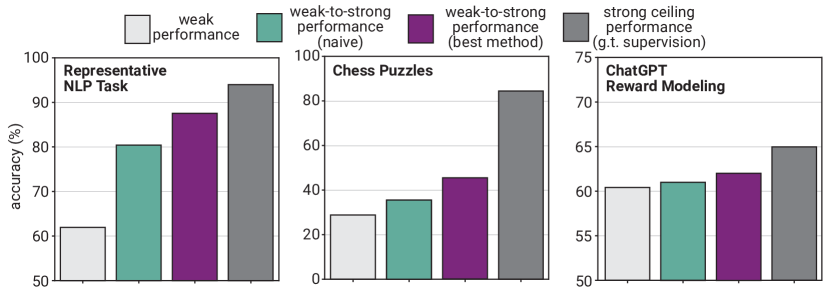
The 2023 'Weak-to-Strong Generalization' paper from OpenAI’s Superalignment team addressed the core challenge of aligning systems that are more intelligent than humans. For years, alignment research relied on the assumption that a human (the supervisor) can recognize 'good' behavior from a model (the student). However, as AI capabilities begin to exceed human expertise in specialized domains, this assumption breaks down. The researchers proposed a framework to test whether a 'weak' supervisor can effectively train a 'strong' model to perform tasks beyond the supervisor's own understanding. It was a shift from viewing alignment as a process of imitation to viewing it as a process of steerage.

Read Decoding

Scientific Breakthroughs

6 PAPERS
Mendel: Inheritance (1866)
Gregor Mendel (1866)

Mendel: Inheritance (1866)

Before the 1860s, the prevailing view of heredity was 'blending inheritance,' where traits of parents were thought to mix like paint. Gregor Mendel’s 1866 paper on pea plant experiments systematically dismantled this idea. By tracking specific, discrete traits over generations, Mendel observed that inheritance is not a continuous blend but a transmission of distinct units. He found that traits could disappear in one generation and reappear in the next, suggesting that the underlying 'factors' of inheritance remain intact even when they are not visible.

Read Decoding
Einstein: Relativity (1905)
Albert Einstein (1905)

Einstein: Relativity (1905)

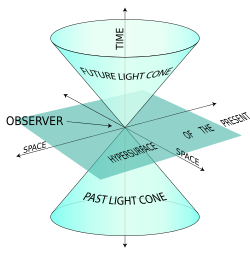
In 1905, Albert Einstein published a paper that fundamentally altered the human understanding of time and space. Before this, the universe was viewed through Newtonian mechanics, where time was absolute and flowed at the same rate for everyone. Einstein argued that this view was incompatible with the observed behavior of light. He proposed that time and space are relative to the observer's motion, and that only the speed of light remains constant across all frames of reference. It was a shift from a fixed, rigid universe to one that is profoundly interconnected.

Read Decoding
Shannon: Information Theory (1948)
Claude Shannon (1948)

Shannon: Information Theory (1948)

The 1948 paper 'A Mathematical Theory of Communication' by Claude Shannon is the founding document of the digital age. Before Shannon, communication was viewed as an analog problem of preserving the 'meaning' or fidelity of a signal. Shannon argued that the semantic aspects of a message are irrelevant to the engineering problem of transmission. He proposed that information is a measurable, physical quantity, defining the 'bit' as its fundamental unit. It was a shift from viewing language as a series of human thoughts to viewing it as a statistical distribution of symbols.

Read Decoding
Turing: The Turing Test (1950)
Alan Turing (1950)

Turing: The Turing Test (1950)

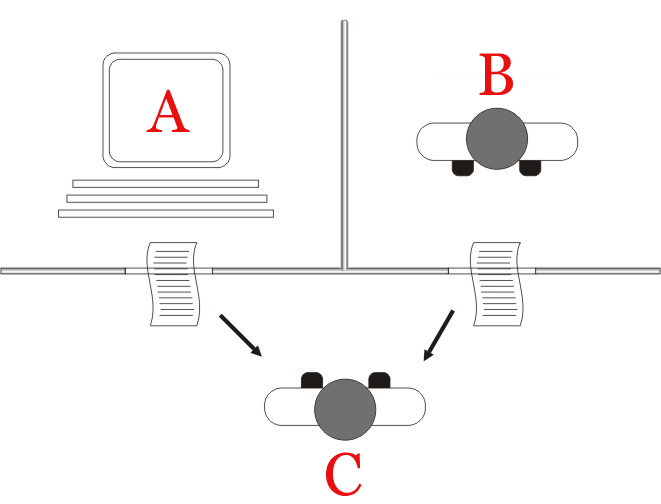
In 1950, Alan Turing published 'Computing Machinery and Intelligence,' a paper that moved the debate over machine intelligence from the realm of philosophy to the realm of engineering. Turing argued that the question 'Can machines think?' is too vague to be useful. He proposed replacing it with an empirical benchmark called the 'Imitation Game' - now known as the Turing Test. It was a shift from viewing intelligence as a mysterious internal quality to viewing it as an observable behavior that can be mathematically simulated.

Read Decoding
Nash: Equilibrium (1950)
John Nash (1950)

Nash: Equilibrium (1950)

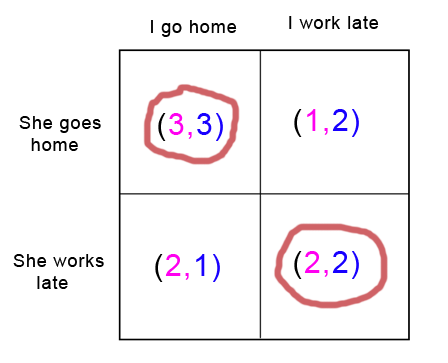
The 1950 paper by John Nash introduced a concept that transformed economics, biology, and political science by providing a way to predict the outcome of strategic interactions. Before Nash, game theory focused primarily on 'zero-sum' games where one person's gain is another's loss. Nash generalized this, proving that in any game with a finite number of players and strategies, there exists at least one point where no player can improve their outcome by changing their strategy alone. It was a shift from analyzing total conflict to analyzing individual rationality in complex systems.

Read Decoding
Watson & Crick: DNA (1953)
Watson & Crick (1953)

Watson & Crick: DNA (1953)

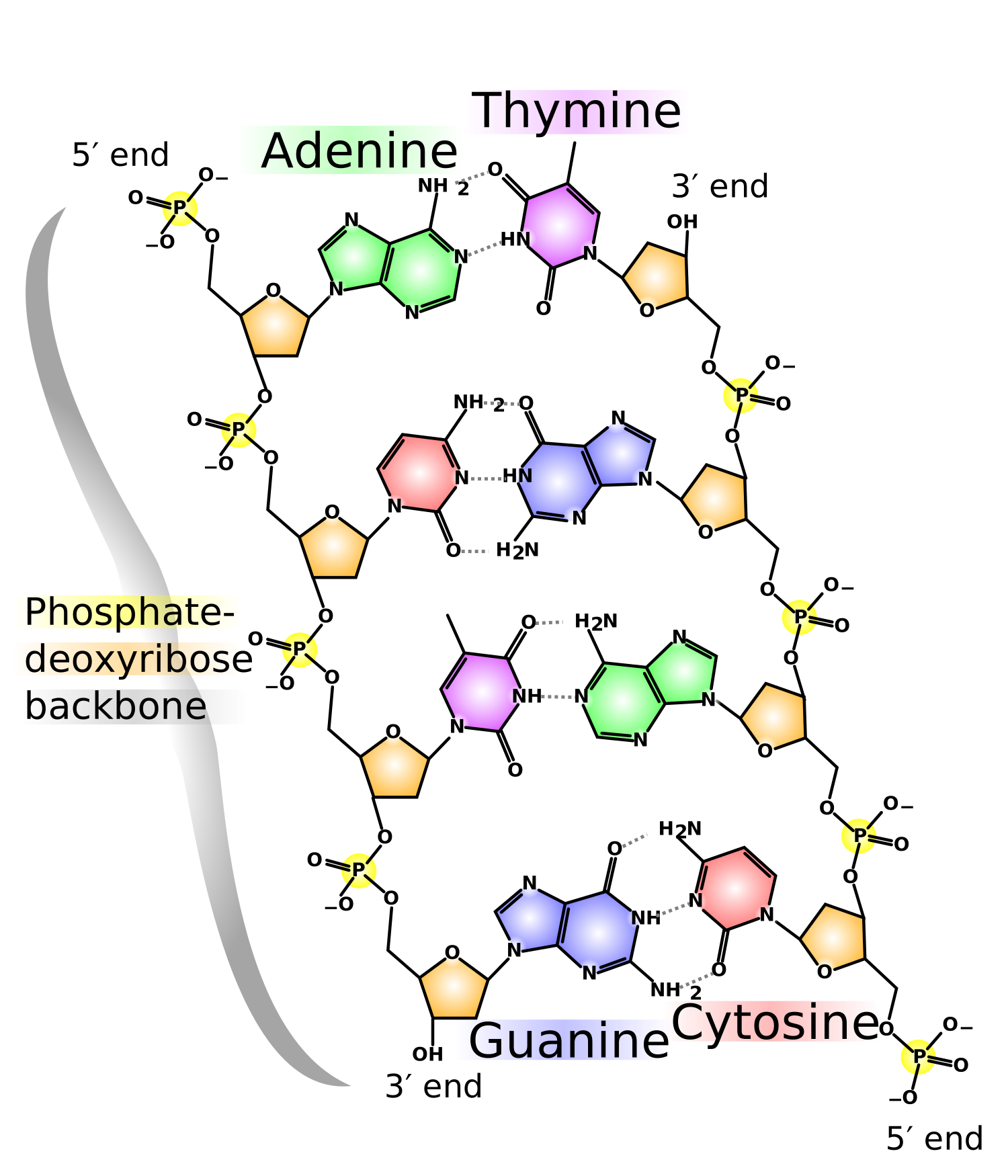
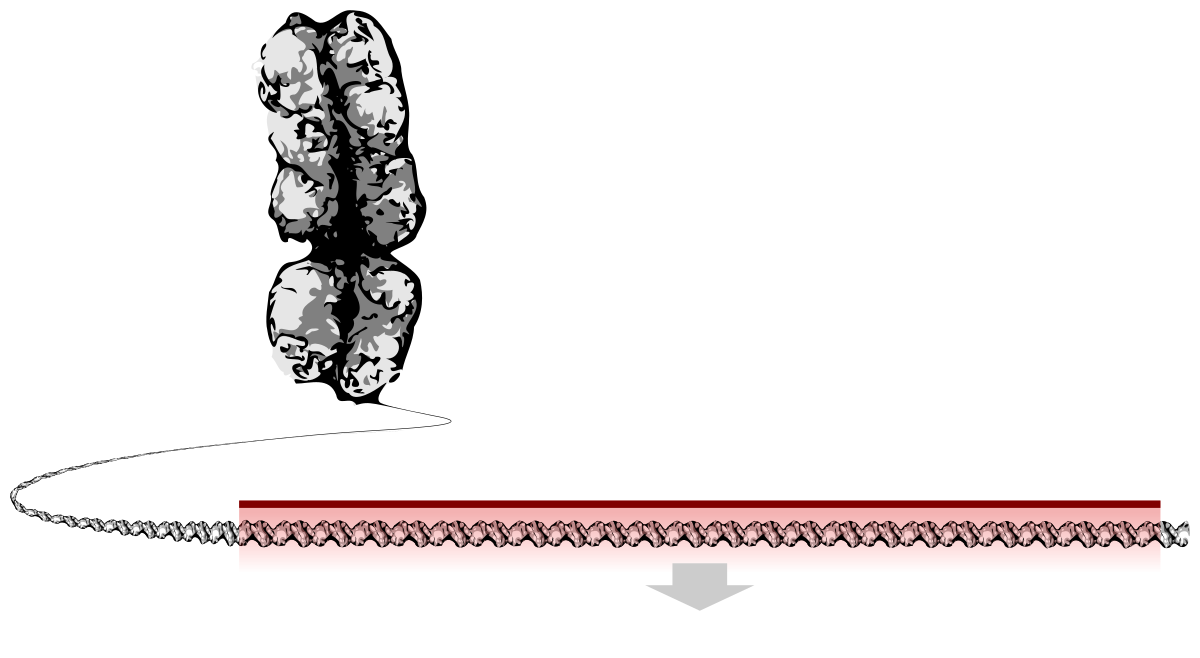
The 1953 paper by James Watson and Francis Crick is arguably the most famous publication in the history of biology. It proposed a double-helical structure for DNA, providing the first clear look at the physical architecture of life. Before this, scientists knew that DNA carried genetic information, but they did not understand how it was stored or copied. Watson and Crick argued that the secret lay in the shape of the molecule itself. It was a shift from viewing life as a mysterious vital force to viewing it as a problem of chemical geometry.

Read Decoding

Foundational Algorithms

13 PAPERS
Bellman-Ford: Routing & Optimality (1958)
Richard Bellman (1958)

Bellman-Ford: Routing & Optimality (1958)

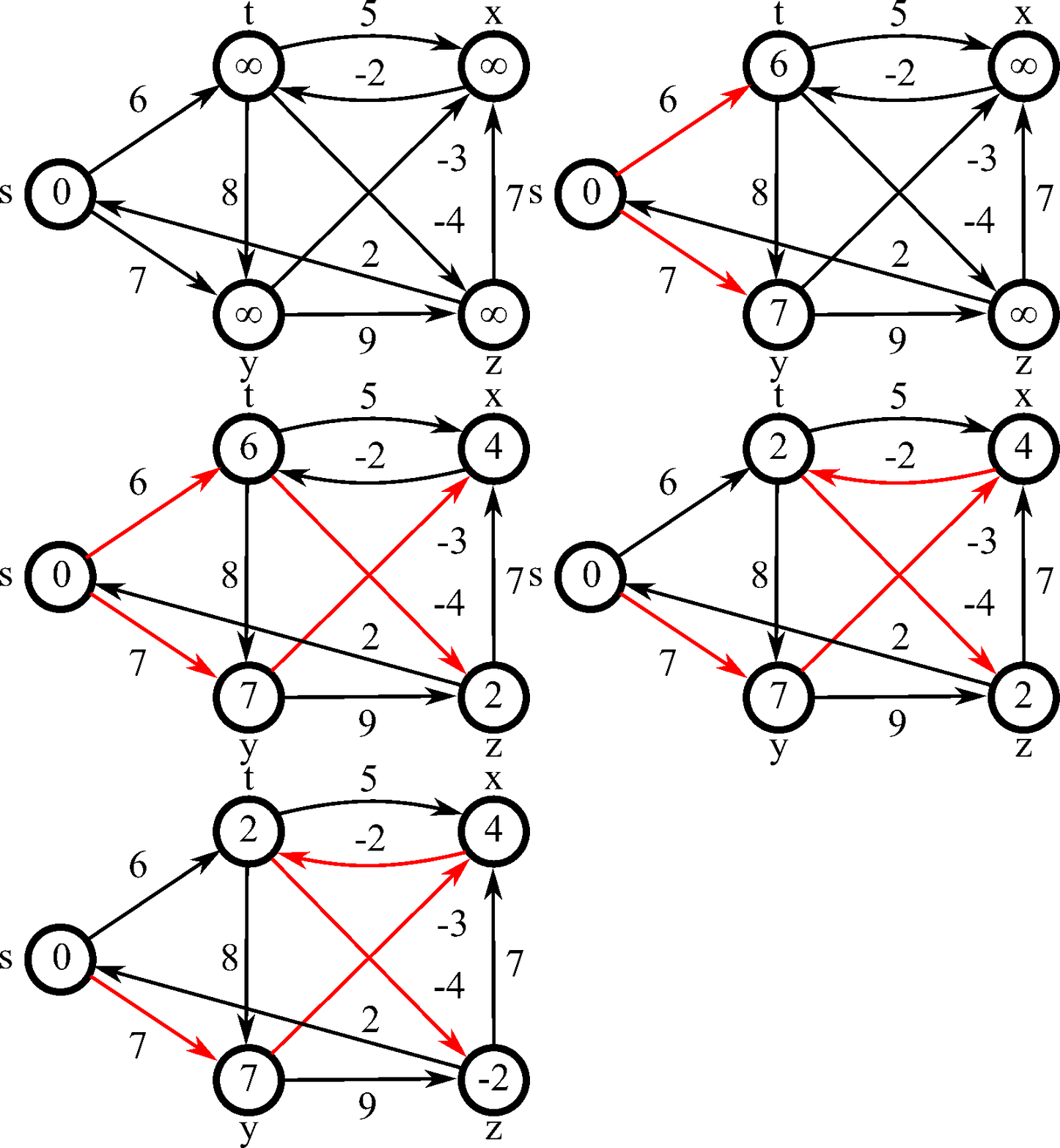
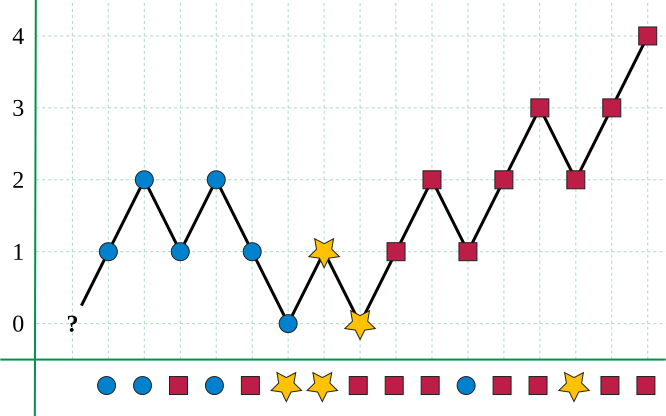
In 1958, Richard Bellman published 'On a Routing Problem,' a paper that introduced what is now known as the Bellman-Ford algorithm and established the 'Principle of Optimality.' Bellman demonstrated that the shortest path in a network can be found by systematically breaking the problem down into smaller, overlapping sub-problems. His work provided the mathematical foundation for dynamic programming, proving that the complexity of global optimization can be managed through a series of local, recursive decisions.

Read Decoding
Dijkstra's Algorithm: Graph Search (1959)
Edsger Dijkstra (1959)

Dijkstra's Algorithm: Graph Search (1959)

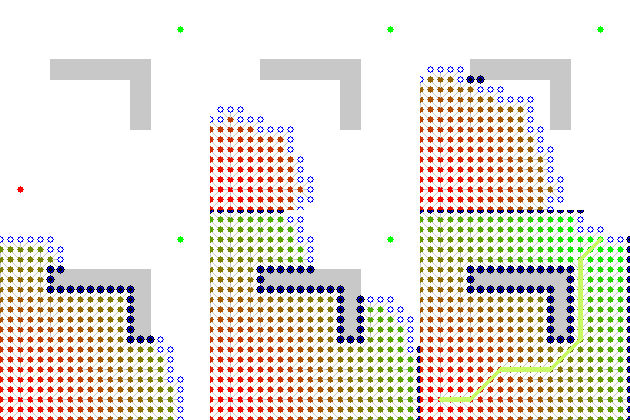
In 1959, Edsger Dijkstra published 'A Note on Two Problems in Connexion with Graphs,' a concise paper that introduced two of the most fundamental algorithms in computer science: the shortest path algorithm and the minimum spanning tree algorithm. Dijkstra demonstrated that complex network problems, which might seem to require exhaustive searching, could be solved through an elegant and iterative greedy approach. His work established that efficiency in computation is often a direct consequence of a clear and logical structure in the underlying algorithm.

Read Decoding
Floyd-Warshall: All-Pairs Shortest Path (1962)
Robert Floyd (1962)

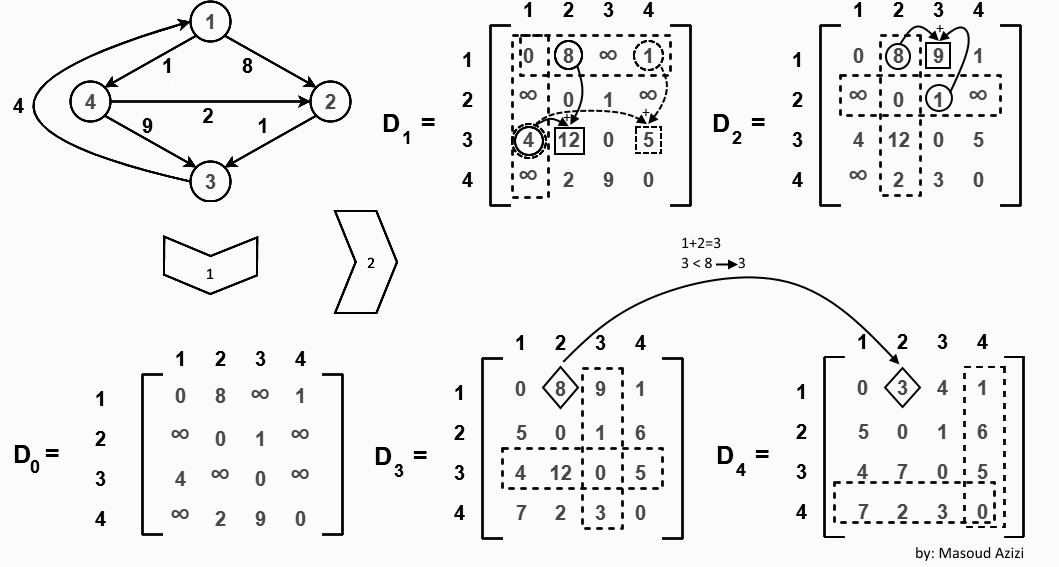
Floyd-Warshall: All-Pairs Shortest Path (1962)

In 1962, Robert Floyd published 'Algorithm 97: Shortest Path,' a paper that introduced what is now known as the Floyd-Warshall algorithm. Floyd demonstrated that the shortest path between all pairs of nodes in a network can be found through a clean, iterative process that systematically considers every node as a potential intermediate point. His work established that global connectivity in a graph can be captured through a simple, triply-nested loop, providing one of the most elegant examples of dynamic programming in computer science.

Read Decoding
Hoare Logic: Axiomatic Basis (1969)
C. A. R. Hoare (1969)

Hoare Logic: Axiomatic Basis (1969)

In 1969, C. A. R. Hoare published 'An Axiomatic Basis for Computer Programming,' a paper that moved the field of software engineering from empirical testing to formal verification. Hoare argued that the behavior of a program can be understood through the mathematical logic of the axioms that govern it, rather than just the results of its execution. He proposed a way to reason about the correctness of code by using a system of formal logic that remains the foundational language of software reliability.

Read Decoding
Tarjan's DFS: Linear Graph Algorithms (1972)
Robert Tarjan (1972)

Tarjan's DFS: Linear Graph Algorithms (1972)

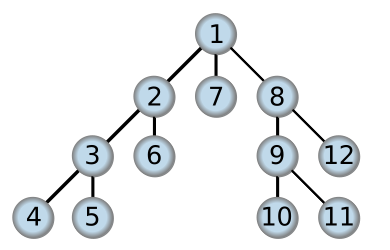
In 1972, Robert Tarjan published 'Depth-First Search and Linear Graph Algorithms,' a paper that demonstrated that many complex graph problems could be solved with optimal linear efficiency by using a single, unified traversal technique. Tarjan showed that depth-first search, which had previously been used for simple tree-based exploration, could be systematically enhanced to find strongly connected components and biconnectivity in directed and undirected graphs. His work established that the key to efficient graph processing is to maintain a carefully structured history of the traversal itself.

Read Decoding
Aho-Corasick: Multi-Pattern Matching (1975)
Alfred Aho & Margaret Corasick (1975)

Aho-Corasick: Multi-Pattern Matching (1975)

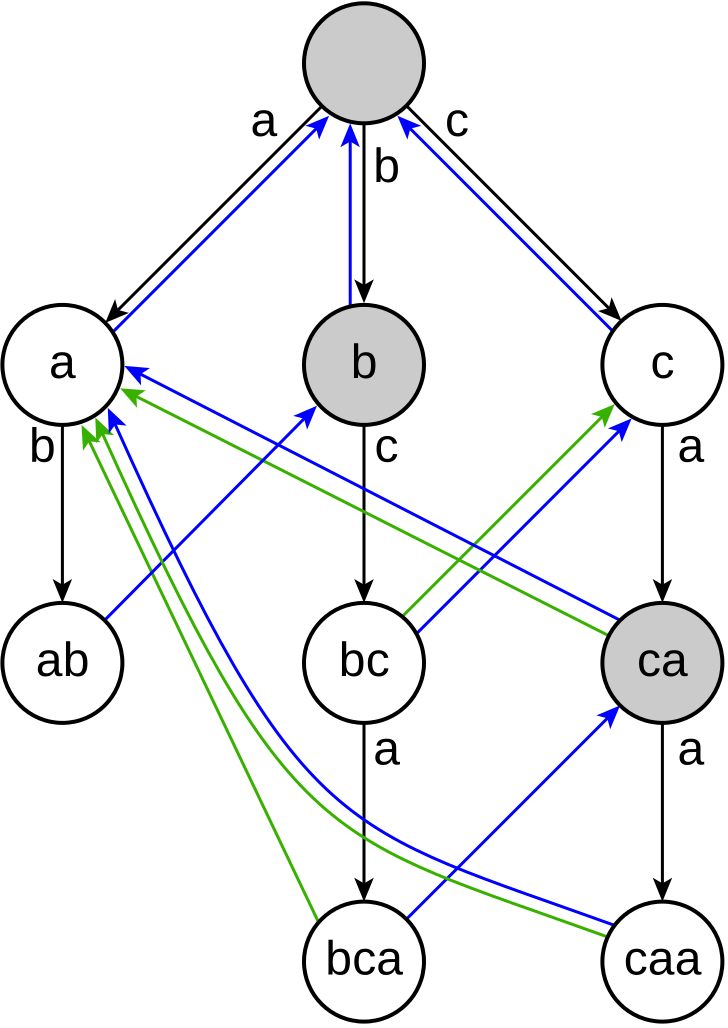
In 1975, Alfred Aho and Margaret Corasick published 'Efficient String Matching: An Aid to Bibliographic Search,' a paper that introduced a method for searching for multiple patterns in a text simultaneously with optimal linear efficiency. They demonstrated that the complexity of searching for a set of keywords can be made independent of the number of keywords by using a specialized finite automaton. Their work established the foundational logic for modern string-processing tools, proving that the most efficient way to match a library of patterns is to compile them into a single, unified state machine.

Read Decoding
KMP: Fast Pattern Matching (1977)
Knuth, Morris, Pratt (1977)

KMP: Fast Pattern Matching (1977)

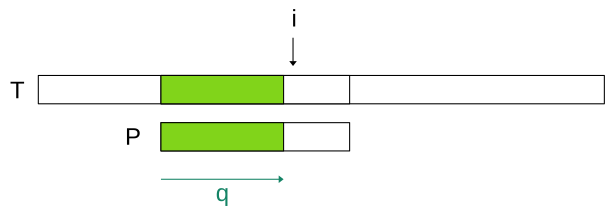
In 1977, Donald Knuth, James Morris, and Vaughan Pratt published 'Fast Pattern Matching in Strings,' a paper that introduced a method for searching through data with optimal linear efficiency. They demonstrated that the inefficient process of searching for a pattern by repeatedly backtracking through the same information could be replaced by a more logical approach that learns from its own failures. Their work established that string matching is not an exhaustive search, but a process of directed, information-aware exploration.

Read Decoding
Boyer-Moore: Sub-linear String Search (1977)
Robert Boyer & J. Strother Moore (1977)

Boyer-Moore: Sub-linear String Search (1977)

In 1977, Robert Boyer and J. Strother Moore published 'A Fast String Searching Algorithm,' a paper that introduced a method for searching through data with sub-linear efficiency. By demonstrating that the most effective way to search for a pattern is to analyze the data from right to left, the authors revealed that the time required to search through information can be significantly less than the total size of the data itself. Their work established the Boyer-Moore algorithm as the definitive mechanism for high-performance string matching, proving that the key to efficient search is the ability to skip redundant work.

Read Decoding
Fibonacci Heaps: Amortized Efficiency (1987)
Michael Fredman & Robert Tarjan (1987)

Fibonacci Heaps: Amortized Efficiency (1987)

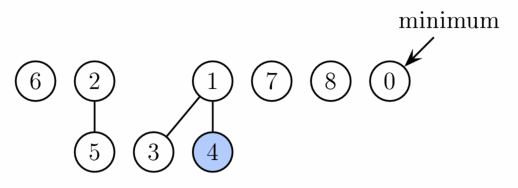
In 1987, Michael Fredman and Robert Tarjan published 'Fibonacci Heaps and Their Uses in Improved Network Optimization Algorithms,' a paper that introduced a revolutionary data structure for maintaining ordered information. By showing that the structural cost of maintaining a heap can be amortized across many operations, the authors revealed that the most efficient way to manage data is to avoid unnecessary work through a 'lazy' strategy. Their work established Fibonacci heaps as the definitive mechanism for optimizing the most foundational graph algorithms, achieving performance levels that were previously thought to be impossible.

Read Decoding
LSH: Locality-Sensitive Hashing (1998)
Piotr Indyk & Rajeev Motwani (1998)

LSH: Locality-Sensitive Hashing (1998)

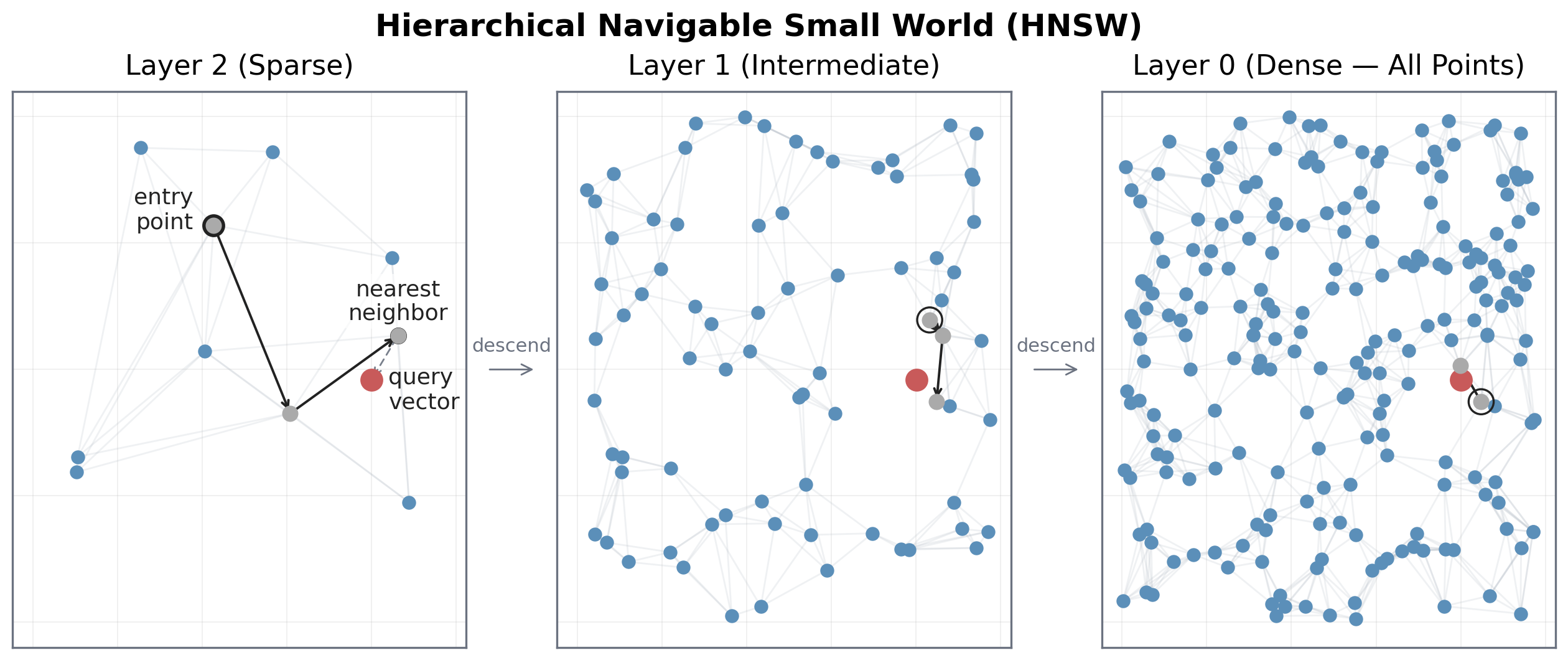
In 1998, Piotr Indyk and Rajeev Motwani published 'Approximate Nearest Neighbors: Towards Removing the Curse of Dimensionality,' a paper that transformed how we search through high-dimensional information. Traditional geometric search methods become exponentially slower as the number of features in a dataset increases, a phenomenon known as the 'curse of dimensionality.' By introducing Locality-Sensitive Hashing (LSH), the authors demonstrated that similarity search can be achieved with sublinear query time by accepting a controlled degree of approximation. Their work established the foundational mechanism for modern recommendation engines, vector databases, and large-scale retrieval systems.

Read Decoding
Cuckoo Hashing: Worst-Case O(1) (2004)
Rasmus Pagh & Flemming Rodler (2004)

Cuckoo Hashing: Worst-Case O(1) (2004)

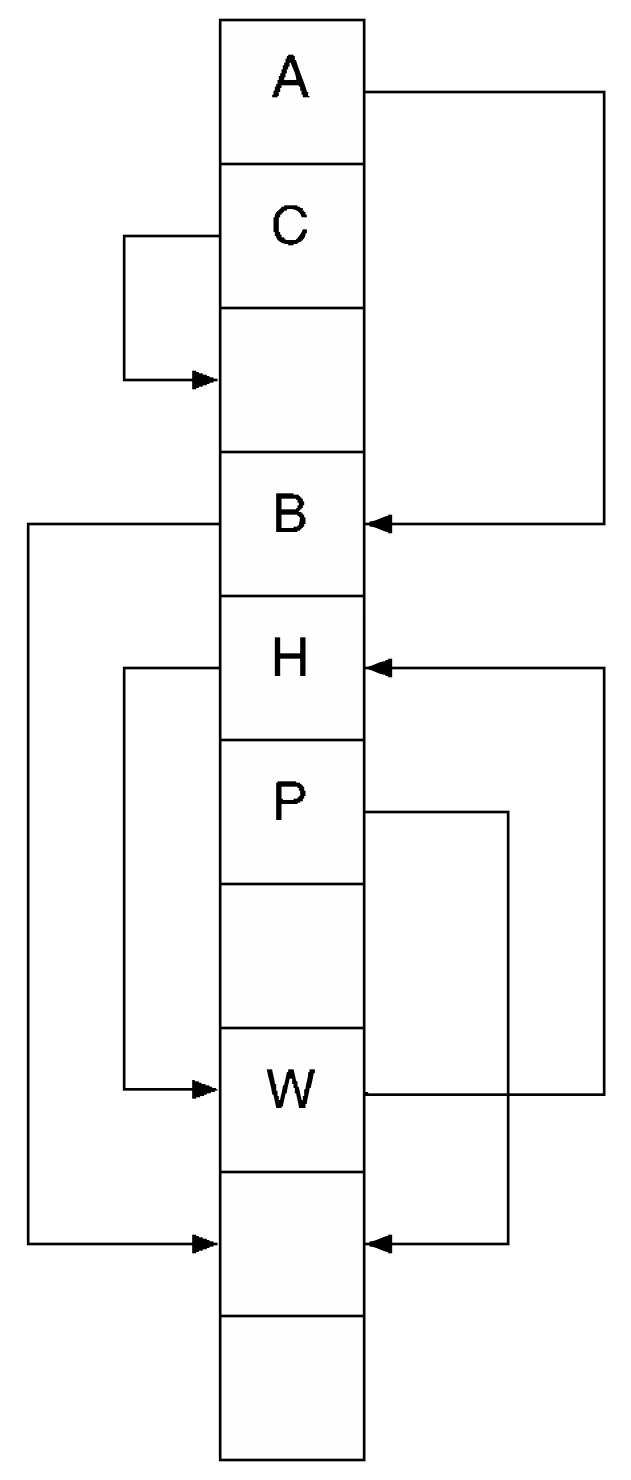
In 2004, Rasmus Pagh and Flemming Rodler published 'Cuckoo Hashing,' a paper that introduced a dictionary data structure with optimal worst-case performance for lookups. By showing that a key can always be stored in one of two specific locations, the authors demonstrated that the time required to retrieve information can be made constant and independent of the size of the dataset. Their work established Cuckoo Hashing as a definitive mechanism for high-performance systems where lookup latency is the primary bottleneck.

Read Decoding
PCP Theorem by Gap Amplification (2007)
Irit Dinur (2007)

PCP Theorem by Gap Amplification (2007)

In 2007, Irit Dinur published 'The PCP Theorem by Gap Amplification,' a paper that transformed one of the most complex results in theoretical computer science into a clean and intuitive combinatorial process. The original proof of the PCP Theorem was a monumental technical achievement, but it required over a hundred pages of dense algebraic machinery. Dinur demonstrated that the theorem could be proved through an iterative mechanism that systematically increases the 'gap' of a constraint satisfaction problem. Her work established a new, purely combinatorial language for understanding the hardness of approximation and the robust nature of NP-complete problems.

Read Decoding
Breaking the Sorting Barrier for SSSP (2025)
Duan et al. (2025)

Breaking the Sorting Barrier for SSSP (2025)

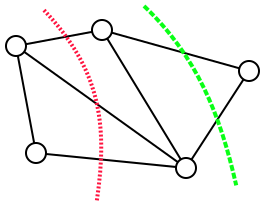
In 2025, Ran Duan and his co-authors published 'Breaking the Sorting Barrier for Directed SSSP,' a paper that resolved a long-standing challenge in the field of graph algorithms. For decades, the $O(m + n \log n)$ bound achieved by Dijkstra's algorithm was considered the optimal limit for directed Single-Source Shortest Paths (SSSP) because it was inextricably linked to the complexity of sorting. By demonstrating that the sorting of path distances can be decoupled from the search itself, the authors proved that the most fundamental network routing tasks can be performed with sub-Dijkstra efficiency.

Read Decoding

Computational Theory

13 PAPERS
Rabin-Scott: Finite Automata (1959)
Michael Rabin & Dana Scott (1959)

Rabin-Scott: Finite Automata (1959)

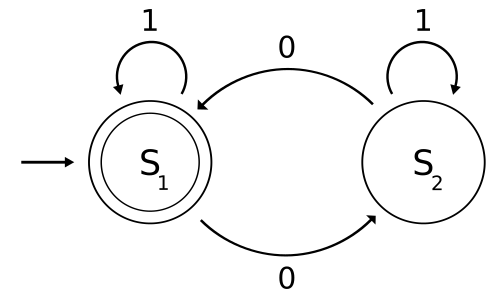
In 1959, Michael Rabin and Dana Scott published 'Finite Automata and Their Decision Problems,' a foundational paper that established the mathematical framework for understanding state machines and their computational limits. They provided the definitive proof that non-deterministic and deterministic finite-state machines are equivalent in power, a discovery that remains a central pillar of automata theory. Their work moved the study of computation from a series of individual examples to a general, formal theory of what can be recognized by a machine with finite memory.

Read Decoding
Cook's Theorem: NP-Completeness (1971)
Stephen Cook (1971)

Cook's Theorem: NP-Completeness (1971)

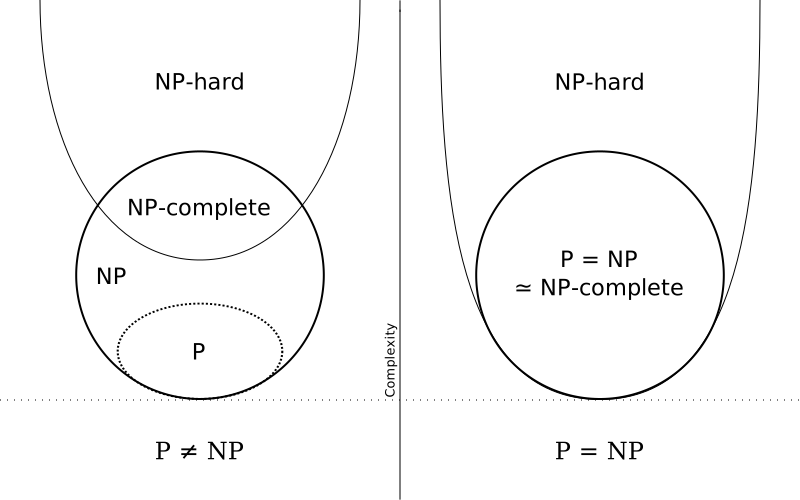
In 1971, Stephen Cook published 'The Complexity of Theorem-Proving Procedures,' a paper that provided the mathematical foundation for understanding which problems computers can solve efficiently and which they cannot. Cook moved the study of computation from a general inquiry into what is 'computable' to a specific analysis of the time resources required for that computation. He introduced a class of problems that are recognizable in polynomial time by a non-deterministic machine, a concept that would eventually define the boundaries of modern theoretical computer science.

Read Decoding
Karp's 21 NP-Complete Problems (1972)
Richard Karp (1972)

Karp's 21 NP-Complete Problems (1972)

In 1972, Richard Karp published 'Reducibility Among Combinatorial Problems,' a paper that transformed the theoretical concept of NP-completeness into a practical tool for computer scientists. Following Stephen Cook's discovery that the satisfiability problem is 'universal' for the class of non-deterministic polynomial-time problems, Karp demonstrated that this universality was not a rare property of logic, but a common characteristic of hundreds of computational challenges across every branch of science. He proved that the core difficulty of finding a shortest path, scheduling a project, or optimizing a network often shares the same mathematical bottleneck.

Read Decoding
Baker-Gill-Solovay: Relativization (1975)
Baker, Gill, Solovay (1975)

Baker-Gill-Solovay: Relativization (1975)

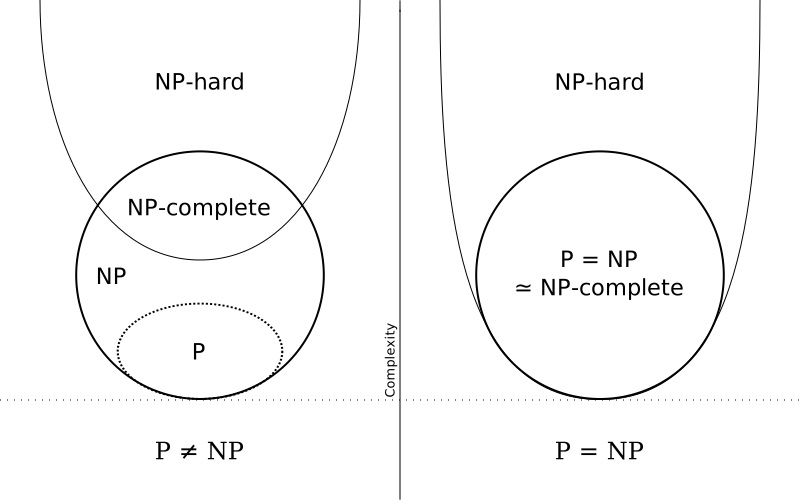
In 1975, Theodore Baker, John Gill, and Robert Solovay published 'Relativizations of the P=?NP Question,' a paper that fundamentally changed how computer scientists approach the most famous open problem in the field. By demonstrating that the P vs NP question can have different answers depending on the external information available to the machines, the authors proved that the standard mathematical tools of the time were insufficient for a resolution. Their work established the first major 'barrier' in complexity theory, revealing that the difficulty of separating P and NP lies deeper than simple diagonal arguments.

Read Decoding
Miller-Rabin: Probabilistic Primality (1980)
Michael Rabin (1980)

Miller-Rabin: Probabilistic Primality (1980)

In 1980, Michael Rabin published 'Probabilistic Algorithm for Testing Primality,' a paper that introduced what is now known as the Miller-Rabin primality test. By demonstrating that the primality of an integer can be determined with an arbitrary level of confidence through a series of randomized checks, the author revealed that the time required to distinguish between prime and composite numbers can be made significantly smaller than previous deterministic methods. Their work established the Miller-Rabin test as the definitive mechanism for large-scale primality testing, providing the foundational logic for all modern cryptographic systems.

Read Decoding
Karger's Min-Cut: Randomized Contraction (1993)
David Karger (1993)

Karger's Min-Cut: Randomized Contraction (1993)

In 1993, David Karger published 'Global Min-Cuts in RNC,' a paper that introduced a revolutionary method for finding the minimum cut of a connected graph through randomized edge contraction. By demonstrating that the most efficient way to solve a complex connectivity problem is often through a series of random, local choices, the author revealed that the time required to find a global minimum in a network can be significantly reduced by accepting a small probability of failure. Their work established Karger's algorithm as the definitive mechanism for large-scale network optimization, providing a new rigorous framework for the development of high-performance tools for everything from image segmentation to cluster analysis.

Read Decoding
Natural Proofs: Complexity Barriers (1994)
Razborov & Rudich (1994)

Natural Proofs: Complexity Barriers (1994)

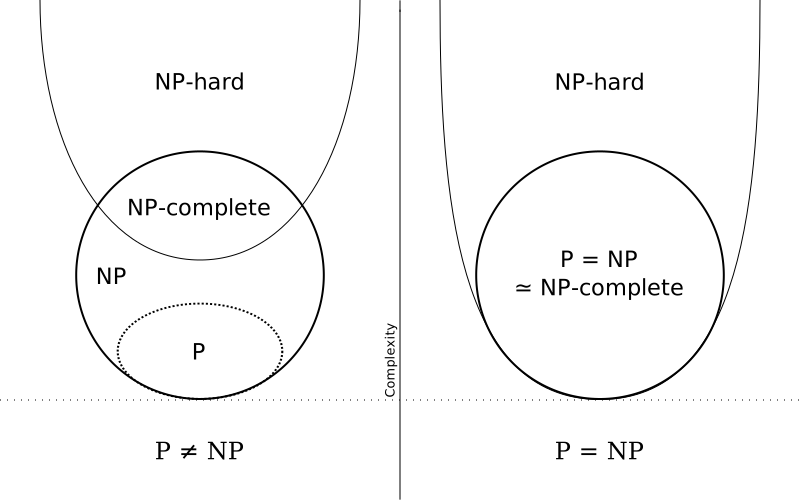
In 1994, Alexander Razborov and Steven Rudich published 'Natural Proofs,' a paper that identified the 'Natural Proofs Barrier' and explained why the field of circuit complexity had stalled since the late 1980s. They argued that the very techniques researchers were using to prove lower bounds on circuits - the standard approach to separating $P$ from $NP$ - were fundamentally limited by the existence of pseudorandom generators. This discovery revealed that a proof of $P \neq NP$ would require a new kind of mathematics that avoids the 'naturalness' shared by almost all known proofs in the field.

Read Decoding
The PCP Theorem: Hardness of Approximation (1998)
Arora, Lund, Motwani, Sudan, Szegedy (1998)

The PCP Theorem: Hardness of Approximation (1998)

In 1998, Sanjeev Arora and his co-authors published 'Proof Verification and the Hardness of Approximation Problems,' a paper that established the PCP (Probabilistically Checkable Proofs) Theorem. This result fundamentally redefined the class NP from the perspective of verification efficiency rather than proof length. By showing that complex mathematical proofs can be verified with high confidence by reading only a few random bits, the authors revealed a deep connection between the logic of proof verification and the practical difficulty of finding approximate solutions to hard problems.

Read Decoding
Smoothed Analysis: Beyond Worst-Case (2001)
Daniel Spielman & Shang-Hua Teng (2001)

Smoothed Analysis: Beyond Worst-Case (2001)

In 2001, Daniel Spielman and Shang-Hua Teng published 'Smoothed Analysis of Algorithms,' a paper that bridged the gap between the theoretical worst-case performance of algorithms and their practical efficiency. For decades, the simplex algorithm was a mathematical enigma: it possessed an exponential worst-case complexity, yet it consistently solved real-world optimization problems in polynomial time. By introducing a new framework that measures an algorithm's performance under slight, random perturbations of its input, the authors revealed that the pathological cases that define worst-case bounds are extremely fragile and disappear in any realistic environment.

Read Decoding
AKS: PRIMES is in P (2004)
Agrawal, Kayal, Saxena (2004)

AKS: PRIMES is in P (2004)

In 2004, Manindra Agrawal, Neeraj Kayal, and Nitin Saxena published 'PRIMES is in P,' a paper that resolved a centuries-old quest to find an efficient, deterministic, and unconditional method for identifying prime numbers. By showing that primality testing - a problem that had been a central challenge since ancient Greek mathematics - belongs to the class of problems that can be solved in polynomial time, the authors proved that the most fundamental building blocks of arithmetic are not as computationally resistant as previously believed.

Read Decoding
Reingold's Theorem: Log-Space Connectivity (2005)
Omer Reingold (2005)

Reingold's Theorem: Log-Space Connectivity (2005)

In 2005, Omer Reingold published 'Undirected Connectivity in Log-Space,' a paper that resolved a decades-old question about the memory requirements of graph traversal. By proving that identifying a path between two nodes in an undirected graph can be achieved using only logarithmic space, Reingold demonstrated that $SL = L$. This discovery revealed that the apparent need for randomness in memory-efficient search was not a fundamental constraint of the problem, but a limitation of our previous algorithmic techniques.

Read Decoding
ACC Circuit Lower Bounds (2011)
Ryan Williams (2011)

ACC Circuit Lower Bounds (2011)

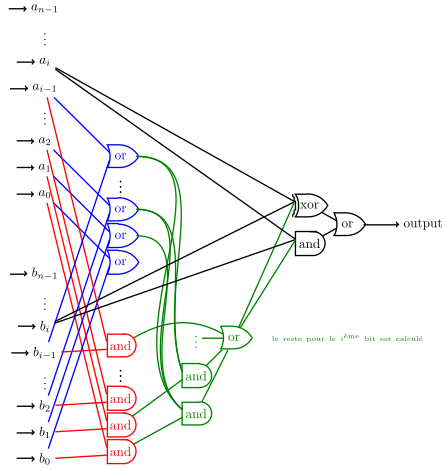
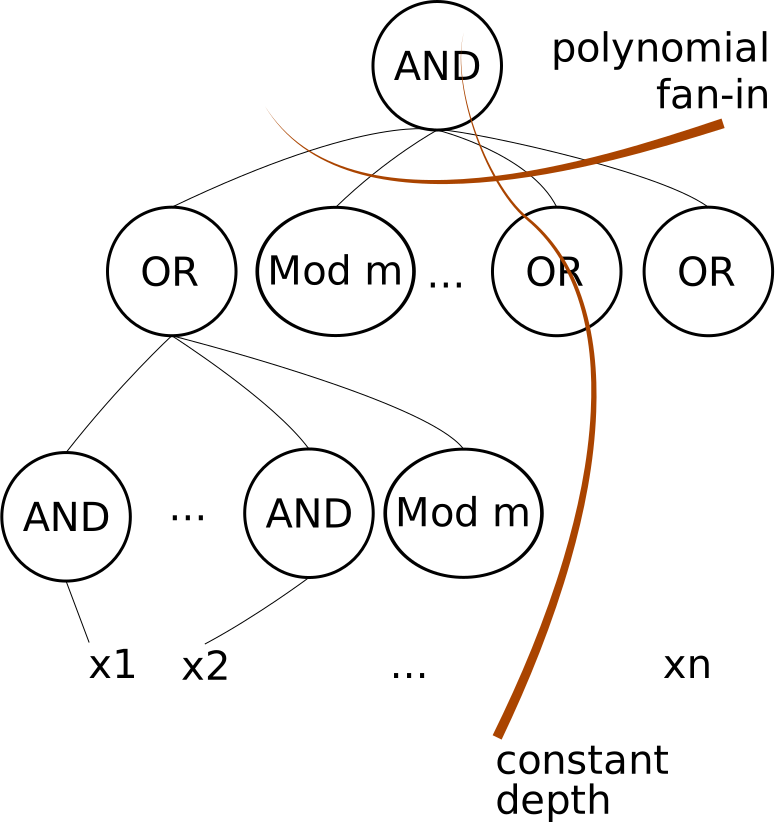
In 2011, Ryan Williams published 'Non-Uniform ACC Circuit Lower Bounds,' a paper that resolved a twenty-year stalemate in the field of circuit complexity. Williams proved that the complexity class $NEXP$ (Nondeterministic Exponential Time) cannot be computed by polynomial-size $ACC^0$ circuits. This discovery was significant not just for the result itself, but for the methodology it introduced: showing that the design of faster-than-brute-force algorithms for solving the satisfiability problem (SAT) is directly linked to the proof of structural lower bounds.

Read Decoding
Fine-Grained Complexity & SETH (2014)
Amir Abboud & Virginia Vassilevska Williams (2014)

Fine-Grained Complexity & SETH (2014)

In 2014, Amir Abboud and Virginia Vassilevska Williams published 'Popular Conjectures Imply Strong Lower Bounds for Dynamic Problems,' a paper that helped launch the field of fine-grained complexity. While traditional complexity theory focuses on broad classifications like $P$ and $NP$, fine-grained complexity seeks to understand the exact exponent of the polynomial running time for problems already known to be solvable efficiently. By connecting the hardness of practical problems like All-Pairs Shortest Path and Edit Distance to unproven but widely believed conjectures, the authors provided a rigorous explanation for why certain algorithms have not seen significant improvements for decades.

Read Decoding

Network Science

3 PAPERS
PageRank (1998)
Page & Brin (1998)

PageRank (1998)

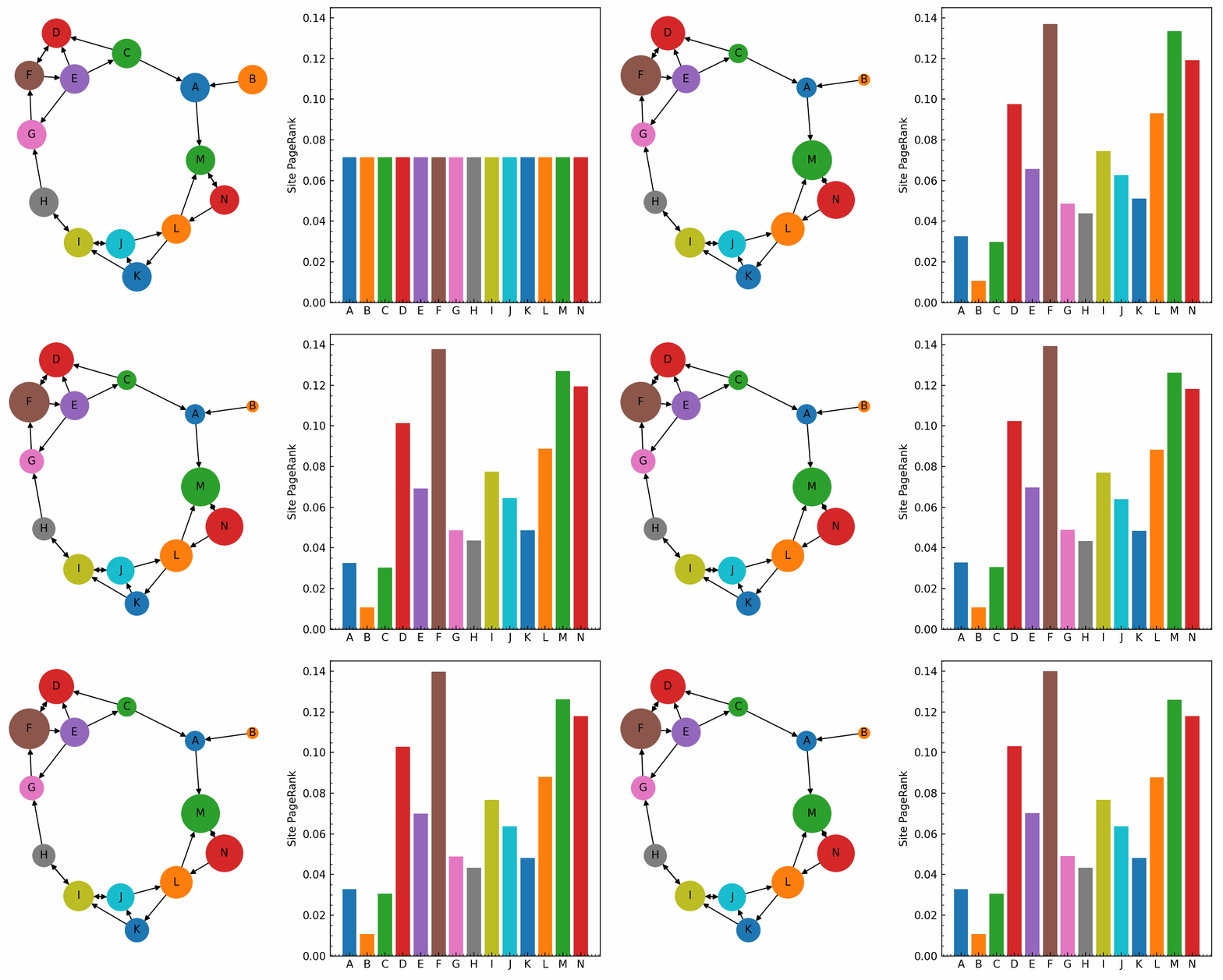
In 1998, Larry Page and Sergey Brin introduced PageRank, an algorithm that fundamentally re-architected how information is organized on the internet. Before PageRank, search engines primarily relied on keyword frequency, making them easy to manipulate and often resulting in irrelevant results. The researchers at Stanford proposed a shift: instead of looking at what a page says about itself, they looked at what the entire web says about the page. By treating hyperlinks as objective votes of confidence, they created a system that could identify 'authority' in a decentralized network, effectively bringing order to the early chaos of the World Wide Web.

Read Decoding
Watts & Strogatz (1998)

Watts & Strogatz (1998)

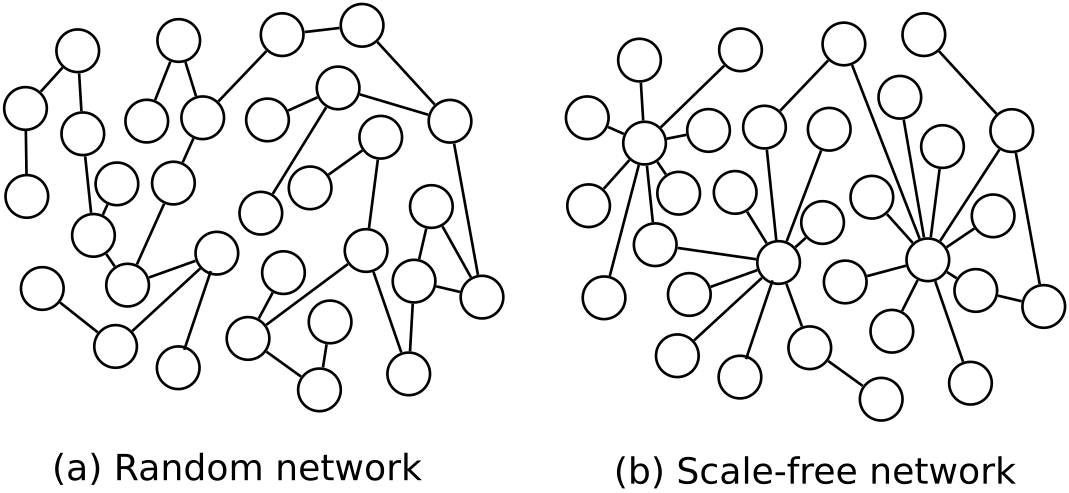
The observation that individuals in a large population are often connected by surprisingly short chains of acquaintances is known as the 'small-world' phenomenon. In 1998, Duncan Watts and Steven Strogatz quantified this effect, showing that it is a fundamental property of many real-world systems, from neural networks to power grids. They argued that most networks are neither completely ordered nor completely random, but exist in a middle ground where high local clustering coexists with short global path lengths. It was a shift from viewing networks as static structures to understanding them as dynamic topographies.

Read Decoding
Barabási & Albert (1999)

Barabási & Albert (1999)

The assumption that connections in a network are distributed randomly among its members was challenged by the 1999 discovery of 'scale-free' networks by László Barabási and Réka Albert. By examining systems like the World Wide Web and actor collaboration graphs, they found that a few nodes, called 'hubs,' possess a disproportionately large number of connections, while the vast majority of nodes have very few. They proposed that this structure emerges naturally through a process of growth and 'preferential attachment,' where new members prefer to link with those who are already well-connected. It was a push toward understanding how systems organize themselves through simple local rules.

Read Decoding

Foundational Papers

7 PAPERS
Dropout (2012)
Hinton et al. (2012)

Dropout (2012)

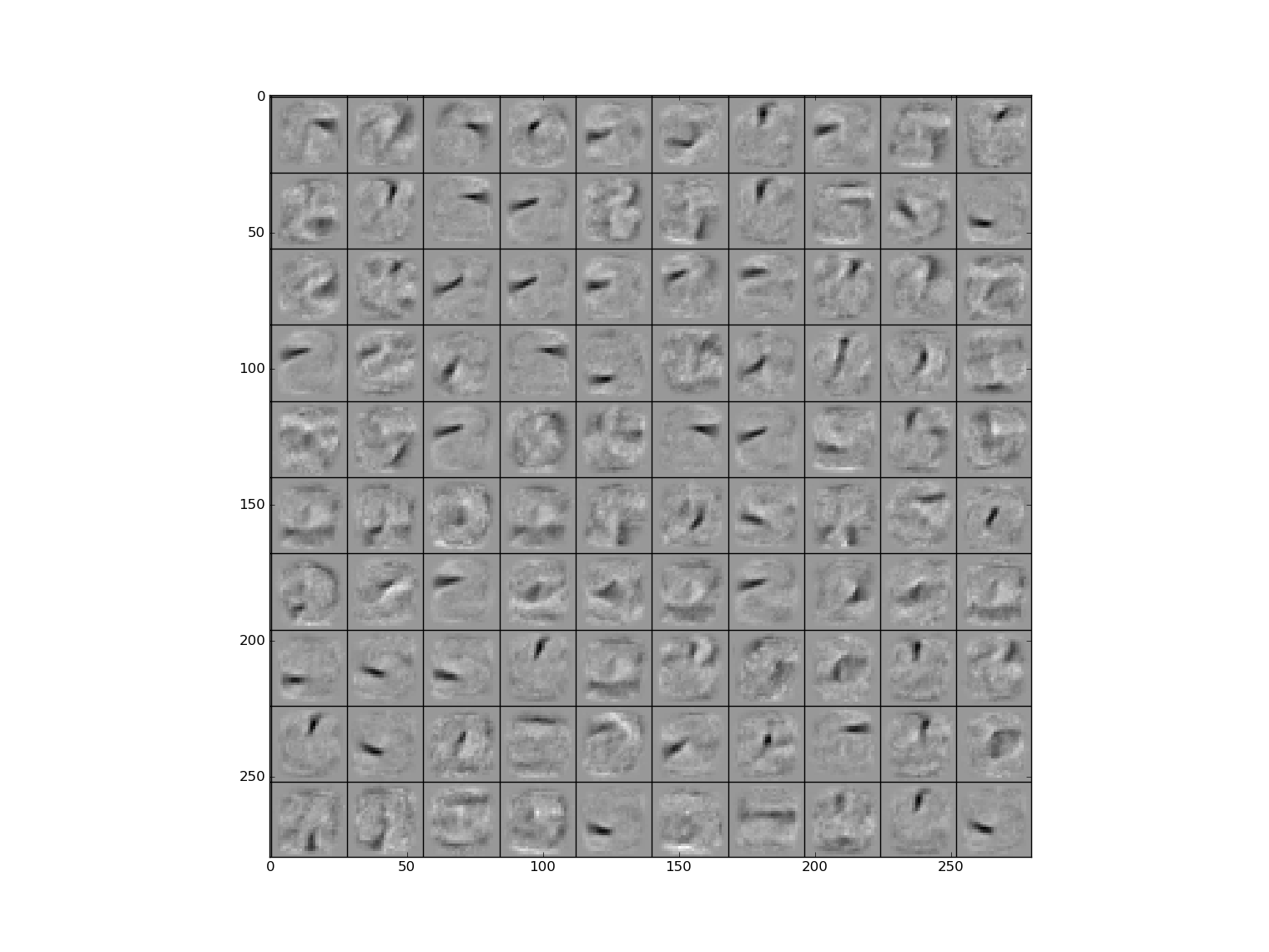
The 2012 paper 'Dropout: A Simple Way to Prevent Neural Networks from Overfitting' by Hinton et al. introduced a fundamental shift in how high-capacity neural networks are regularized. Before this work, the primary constraint on deep learning was a significant generalization gap, where large feedforward models would easily achieve near-perfect accuracy on training data while remaining remarkably fragile when presented with unseen examples. This status quo was defined by the problem of 'complex co-adaptations,' where individual neurons would become overly specialized to the specific noise and quirks of a training set, relying on the presence of other specific neurons to correct their errors. The resulting feature detectors were often noisy and uninterpretable, representing a failure of the network to learn the underlying distribution of the data in a robust, independent manner.

Read Decoding
Word2Vec (2013)
Mikolov et al. (2013)

Word2Vec (2013)

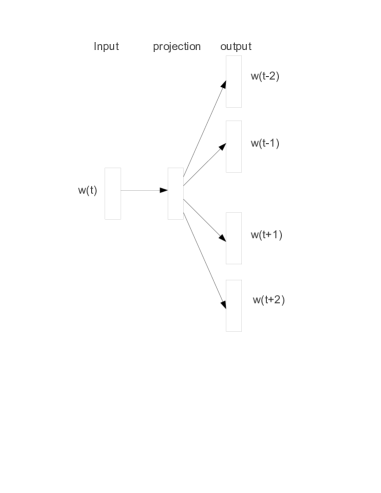
The 2013 Word2Vec paper by Tomas Mikolov and his team at Google fundamentally altered how machines perceive human language by mapping words into a continuous geometric space. Before this breakthrough, words were treated as atomic, discrete symbols - meaningless indices in a vast dictionary that lacked any mathematical relationship to one another. The paper argued that the meaning of a word is not an isolated definition but is instead defined by its context, suggesting that words appearing in similar environments should be positioned close together in a high-dimensional vector space. This shift from discrete labels to dense vectors allowed computers to perform 'semantic arithmetic,' where the relationship between concepts could be calculated with the precision of coordinate geometry.

Read Decoding
Batch Normalization (2015)
Ioffe & Szegedy (2015)

Batch Normalization (2015)

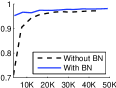
The 2015 paper 'Batch Normalization: Accelerating Deep Network Training by Reducing Internal Covariate Shift' by Ioffe and Szegedy addressed one of the most significant bottlenecks in the development of deep neural networks. Before this work, training deep architectures was characterized by an extreme sensitivity to parameter initialization and the use of saturating nonlinearities like sigmoid and tanh. The status quo was defined by a constant risk of vanishing or exploding gradients, where even small variations in early layers would amplify exponentially through the depth of the network, forcing researchers to use painstakingly small learning rates and specialized initialization schemes just to achieve convergence. This fragility meant that building deeper models was less an engineering discipline and more a 'black art' of manual tuning, where the primary goal was to prevent the model's activations from falling into the saturated, zero-gradient regimes of its activation functions.

Read Decoding
Adam Optimizer (2014)
Kingma & Ba (2014)

Adam Optimizer (2014)

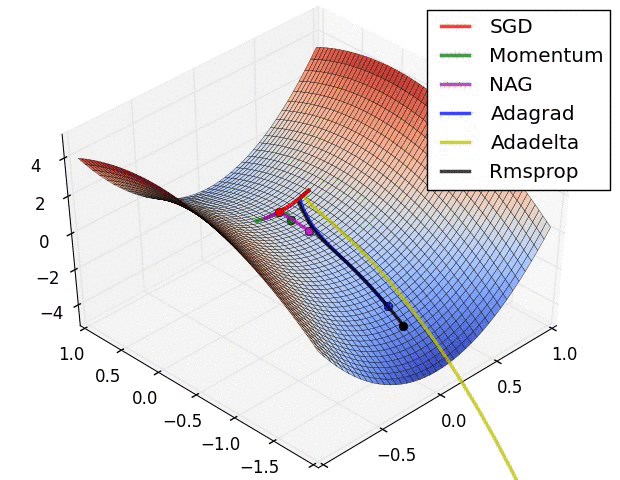
The 2014 paper 'Adam: A Method for Stochastic Optimization' by Diederik Kingma and Jimmy Ba introduced the first truly universal optimizer for deep learning. Before Adam, training large neural networks required an arduous process of manually tuning learning rates, often starting with high-level heuristics that would fail as the network became deeper or the data more complex. The researchers proposed a system that estimates the 'moments' of gradients in real-time, allowing the model to automatically adjust its speed for every single parameter. It was a shift from viewing optimization as a manual steering task to viewing it as a self-regulating physical system.

Read Decoding
ResNet (2015)
Kaiming He, Xiangyu Zhang, Shaoqing Ren, Jian Sun (Microsoft Research)

ResNet (2015)

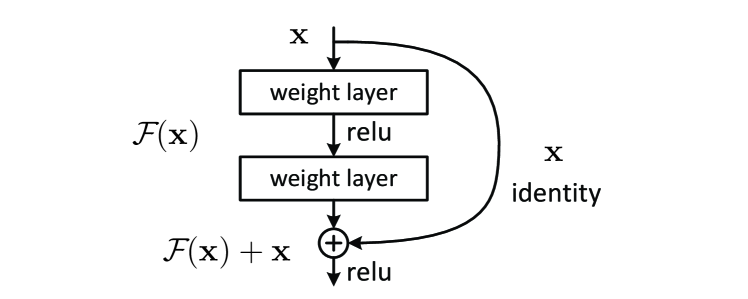
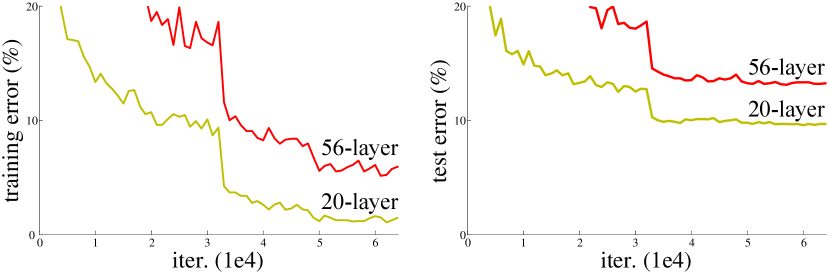
The 2015 introduction of the Deep Residual Network, or ResNet, resolved one of the most persistent obstacles in deep learning: the degradation problem. Before ResNet, adding more layers to a neural network often led to a paradoxical increase in training error, even when the additional layers should have theoretically been able to learn a simple identity mapping. By introducing the "skip connection," ResNet allowed models to scale to hundreds or even thousands of layers, fundamentally shifting the focus of architecture design from raw capacity to the fluidity of gradient flow.

Read Decoding
Attention Is All You Need (2017)
Ashish Vaswani, Noam Shazeer, Niki Parmar, Jakob Uszkoreit, Llion Jones, Aidan N. Gomez, Lukasz Kaiser, Illia Polosukhin

Attention Is All You Need (2017)

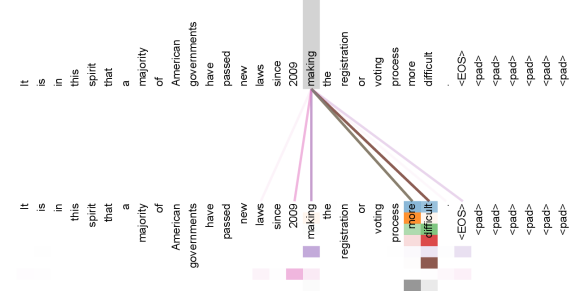
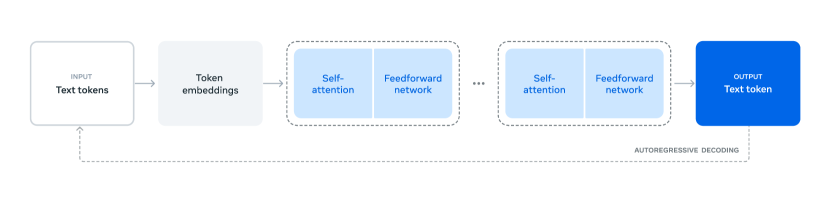
The landscape of sequence modeling was once defined by the sequential nature of Recurrent Neural Networks (RNNs) and the local receptive fields of Convolutional Neural Networks (CNNs). "Attention Is All You Need" fundamentally disrupted this history by proving that recurrence and convolution are entirely unnecessary for state-of-the-art sequence modeling. By introducing the Transformer architecture, the authors demonstrated that a purely attention-based mechanism can capture global dependencies in parallel, paving the way for the era of Large Language Models and foundational AI.

Read Decoding
Scaling Laws (2020)
Kaplan et al. (2020)

Scaling Laws (2020)

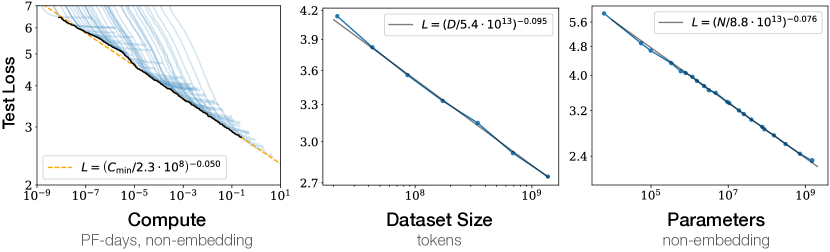
The 2020 paper 'Scaling Laws for Neural Language Models' by Kaplan et al. marks a definitive shift in the field of deep learning, transitioning the development of large-scale models from heuristic experimentation to a predictable engineering discipline. Before this work, the prevailing status quo was defined by an obsession with architectural hyperparameters, where researchers spent significant effort tuning depth-to-width ratios, the number of attention heads, and feed-forward dimensions under the assumption that these were the primary drivers of performance. The standard practice was to train relatively small models to full convergence, a process that prioritized squeezing the last bit of utility out of limited capacity rather than scaling the underlying system. This approach was governed by a belief that increasing model size required a massive, proportional increase in data to avoid immediate overfitting, creating a perceived bottleneck that constrained the ambition of neural network design.

Read Decoding

Quantum Computing

19 PAPERS
Simulating Physics with Computers (1982)
Richard Feynman (1982)

Simulating Physics with Computers (1982)

In his seminal 1982 lecture, Richard Feynman identified a fundamental mismatch between the laws of physics and the architecture of classical computation. He argued that because nature is inherently quantum mechanical, simulating it on a classical computer is doomed to exponential inefficiency. A classical machine attempting to track the state of $R$ particles must manage a state space that grows exponentially with $R$, leading to a "computational explosion" that makes the simulation of even modest quantum systems impossible.

Read Decoding
Shor: Quantum Error Correction (1995)
Peter W. Shor (1995)

Shor: Quantum Error Correction (1995)

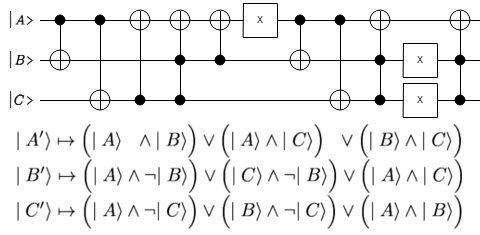
The fundamental challenge of quantum computing lies in the inherent fragility of quantum information. Interactions with the environment lead to decoherence, the process where a quantum state loses its superposition and collapses into a classical state. Unlike classical computing, we cannot protect quantum states by simply copying them due to the no-cloning theorem, which states that it is impossible to create an identical copy of an unknown quantum state. This initially suggested that quantum computers would be impossible to build as they could never be perfectly shielded from noise.

Read Decoding
Cirac & Zoller: Ion Trap (1995)
J. I. Cirac and P. Zoller (1995)

Cirac & Zoller: Ion Trap (1995)

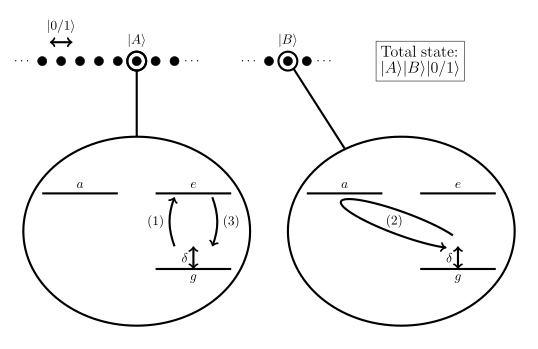
The physical realization of a quantum computer requires a system with long-lived qubits and a controllable mechanism for performing multi-qubit gates. In their 1995 paper, J. I. Cirac and P. Zoller proposed using a string of cold, trapped ions as a scalable platform for quantum computing. In this architecture, each ion acts as a qubit. The states $|0\rangle$ and $|1\rangle$ are represented by the internal electronic energy levels of the ion. These electronic states are highly stable, offering exceptionally long coherence times that can reach several minutes - orders of magnitude longer than many other qubit technologies.

Read Decoding
Grover: Database Search (1996)
Lov K. Grover (1996)

Grover: Database Search (1996)

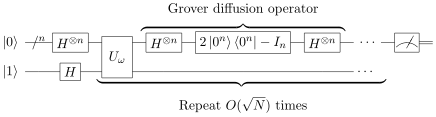
The fundamental challenge of searching an unstructured database is defined by the lack of any internal organization that might guide a searcher toward a target. In a classical framework, this problem is inherently linear. If we are presented with a collection of $N$ items and tasked with finding a single specific entry, the only available strategy is to examine each item sequentially. Because the database is unsorted, no single query provides information about the location of the target relative to other items. Consequently, a classical algorithm requires $N$ queries in the worst case and $N/2$ queries on average. This $O(N)$ complexity represents a rigid bottleneck in classical information theory, where the search time scales directly with the volume of data.

Read Decoding
Calderbank & Shor: CSS Codes (1996)
A. R. Calderbank and Peter W. Shor (1996)

Calderbank & Shor: CSS Codes (1996)

The transition from individual examples of quantum error correction to a generalized mathematical framework was a major milestone for quantum information theory. Early efforts, such as the nine-qubit code, demonstrated that protection was possible but lacked a systematic approach to scaling. The primary obstacle was the requirement to correct both bit-flip ($X$) and phase-flip ($Z$) errors simultaneously. Measuring one should not destroy the information needed to correct the other. This necessitated a framework that could handle the unique constraints of quantum mechanics, such as the no-cloning theorem.

Read Decoding
Kitaev: Toric Code (1997)
Alexei Kitaev (1997)

Kitaev: Toric Code (1997)

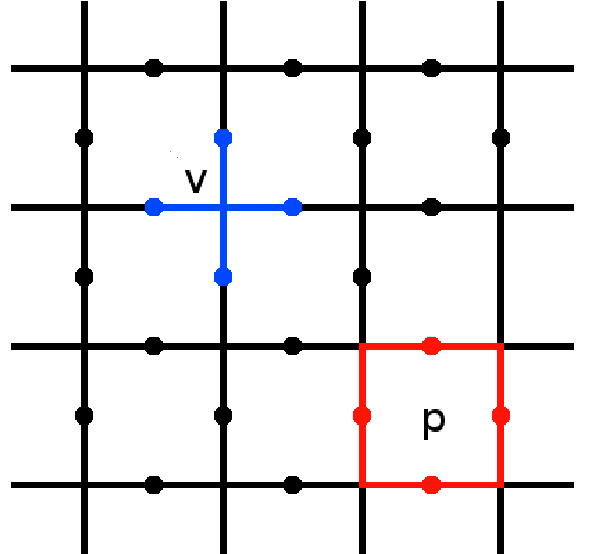
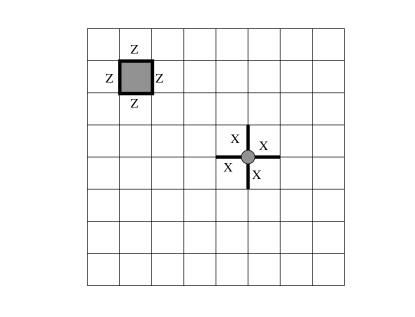
The challenge of fault tolerance in early quantum computing research stemmed from the extreme sensitivity of qubits to decoherence and the high precision required for gate operations. While Shor’s threshold theorem proved that computation was theoretically possible with imperfect gates, the required error rates presented a nearly insurmountable engineering barrier. Alexei Kitaev’s 1997 proposal shifted the strategy from active, software-level error correction to passive, hardware-level protection by drawing an analogy to classical magnetic storage. Just as ferromagnetism uses local interactions to stabilize global alignment against thermal fluctuations, Kitaev sought a quantum system where the correct state is a gapped ground state protected by the physics of the system itself.

Read Decoding
DiVincenzo: Criteria (2000)
David P. DiVincenzo (2000)

DiVincenzo: Criteria (2000)

The publication of David DiVincenzo’s 'The Physical Implementation of Quantum Computation' in 2000 addressed a critical divergence between quantum complexity theory and experimental physics. At the time, the field possessed robust algorithms, such as Shor’s and Grover’s, but lacked a unified framework to evaluate the disparate physical systems - ranging from ion traps and NMR to superconducting circuits - vying for implementation. The paper was necessary to transform quantum computing from an abstract mathematical promise into a concrete engineering challenge by establishing a rigorous set of benchmarks that any candidate system must satisfy to be considered a viable computer.

Read Decoding
Adiabatic Quantum Computation (2000)
Farhi et al. (2000)

Adiabatic Quantum Computation (2000)

The proposal for quantum computation by adiabatic evolution arises from the need to solve combinatorial search problems, such as the satisfiability problem, by mapping logical constraints directly onto the physical properties of a quantum system. Rather than constructing a sequence of discrete unitary gates as in the standard circuit model, this approach frames computation as a continuous physical process. The motivation is to leverage the natural tendency of a quantum system to remain in its ground state if perturbed slowly enough, effectively allowing the laws of physics to navigate the state space toward a configuration that minimizes an energy function representing the problem's constraints.

Read Decoding
Surface Code: Topological Memory (2002)
Dennis et al. (2002)

Surface Code: Topological Memory (2002)

The transition from the theoretical elegance of the toric code to the practical reality of the surface code addressed a fundamental constraint in quantum hardware engineering. While the original toric code required periodic boundary conditions - effectively demanding that a lattice of qubits be physically wrapped around a torus - the researchers at Caltech and Microsoft proposed a planar alternative that could exist on a flat two-dimensional sheet. This shift was necessary to align quantum error correction with the planar fabrication processes of modern superconducting and ion-trap architectures. It proved that the topological protection afforded by a torus could be preserved on a finite plane by carefully managing its boundaries.

Read Decoding
Quantum Walk: Exponential Speedup (2003)
Childs et al. (2002)

Quantum Walk: Exponential Speedup (2003)

The proposal of quantum walks as a tool for graph traversal was driven by the need to find an exponential algorithmic speedup that did not rely on the hidden subgroup problem, which characterizes Shor’s algorithm. In classical computer science, random walks are a robust method for exploring graphs, but they are fundamentally limited by the hitting time, which can be exponential in the size of the graph for certain structures. Childs et al. sought to demonstrate that the wave-like nature of quantum mechanics could overcome these classical bottlenecks, specifically in the context of the "glued trees" problem where a classical explorer becomes hopelessly lost in an exponential expanse of nodes.

Read Decoding
Threshold Theorem: Concatenated Codes (2005)
Aliferis et al. (2005)

Threshold Theorem: Concatenated Codes (2005)

The publication of the quantum accuracy threshold theorem for concatenated distance-3 codes marked a definitive turning point in the feasibility of large-scale quantum computing. Before this rigorous proof, it was unclear if the inherent fragility of quantum states - expressed through decoherence and gate errors - would forever limit the depth of any possible computation. The theorem addressed this by proving that as long as the noise in a physical system is below a certain critical level, the errors can be suppressed faster than they accumulate. This established a rigorous engineering target for hardware designers, transforming the search for a quantum computer into a race to reach a specific fidelity benchmark.

Read Decoding
Superconducting Qubits - Transmon (2007)
Koch et al. (2007)

Superconducting Qubits - Transmon (2007)

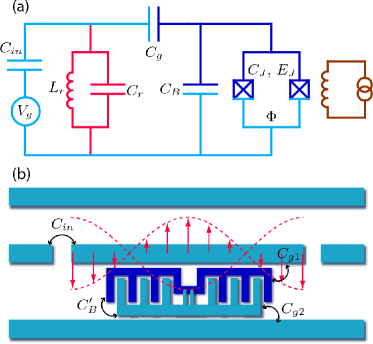
The Cooper pair box (CPB) historically suffered from a profound sensitivity to its electrostatic environment, where fluctuations in the offset charge led to rapid dephasing and limited coherence times. While "sweet spot" operation offered a first-order reprieve, the system remained vulnerable to higher-order noise and quasiparticle poisoning, which shifted the device away from its optimal point. The transmon architecture fundamentally reconfigures this trade-off by shunting the Josephson junctions with a large external capacitance. This modification significantly increases the ratio of Josephson energy to charging energy ($E_J/E_C$), moving the qubit from the charge-sensitive regime into a plasma oscillation regime. By operating at $E_J/E_C$ ratios in the hundreds, the transmon achieves a state where the qubit transition frequency becomes nearly independent of the gate charge, effectively eliminating the need for constant tuning to a charge sweet spot.

Read Decoding
HHL: Linear Systems Algorithm (2008)
Harrow et al. (2008)

HHL: Linear Systems Algorithm (2008)

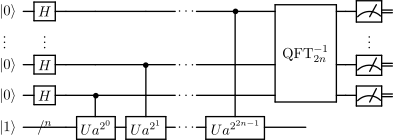
The Harrow-Hassidim-Lloyd (HHL) algorithm addresses the fundamental computational bottleneck of solving large-scale linear systems of equations, $A\vec{x} = \vec{b}$. In classical computing, even for sparse matrices, the time complexity scales at least linearly with the dimension $N$, as merely representing the solution vector requires $O(N)$ operations. HHL was proposed to bypass this limitation in scenarios where the full solution vector is not required, but rather an approximation of a summary statistic or expectation value. By representing the problem in a quantum Hilbert space, the algorithm achieves a complexity that scales logarithmically with $N$, offering an exponential speedup for high-dimensional, well-conditioned sparse systems.

Read Decoding
BQP and the Polynomial Hierarchy (2009)
Scott Aaronson (2009)

BQP and the Polynomial Hierarchy (2009)

The relationship between BQP (Bounded-error Quantum Polynomial time) and the Polynomial Hierarchy (PH) represents one of the most profound questions in complexity theory. While it is well-known that BQP is contained within PSPACE, the question of whether quantum computers can solve problems that lie outside the entire PH - a hierarchy that includes P, NP, and coNP - remains a central mystery. Scott Aaronson’s investigation into this space was motivated by the need to understand if quantum advantage is merely a faster way to perform classical non-deterministic searches or if it represents a fundamentally different class of computation.

Read Decoding
VQE: Variational Eigensolver (2013)
Peruzzo et al. (2013)

VQE: Variational Eigensolver (2013)

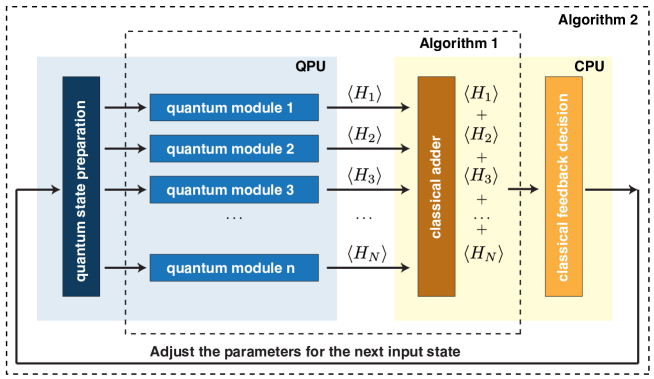
The 2013 proposal of the Variational Quantum Eigensolver (VQE) by Peruzzo and colleagues at the University of Bristol introduced a definitive shift in the strategy for applying quantum computers to chemistry and materials science. Before this work, the primary method for finding the ground state energy of a molecule was the Quantum Phase Estimation algorithm. While theoretically powerful, Phase Estimation requires coherent evolution times that far exceed the capabilities of the Noisy Intermediate-Scale Quantum (NISQ) hardware currently available. The VQE addressed this bottleneck by introducing a hybrid quantum-classical architecture that offloads the most demanding parts of the calculation to a classical optimizer, allowing the quantum processor to function as a specialized co-processor.

Read Decoding
QAOA: Optimization Algorithm (2014)
Farhi et al. (2014)

QAOA: Optimization Algorithm (2014)

The 2014 introduction of the Quantum Approximate Optimization Algorithm (QAOA) by Farhi, Goldstone, and Gutmann provided a new bridge between the continuous evolution of adiabatic quantum computing and the discrete gate operations of the circuit model. While combinatorial optimization problems like Max-Cut have long been targets for quantum advantage, the existing models were often either too specialized for annealing hardware or too deep for early gate-based processors. QAOA was proposed to fill this gap by providing a flexible, "approximate" framework that can be executed on noisy hardware, offering a path to useful solutions even before the arrival of full fault tolerance.

Read Decoding
Quantum Machine Learning Survey (2017)
Biamonte et al. (2017)

Quantum Machine Learning Survey (2017)

Classical machine learning is increasingly hitting a wall defined by the computational complexity of high-dimensional linear algebra and the inefficiencies of classical sampling from complex distributions. Tasks such as matrix inversion and eigendecomposition, which are central to Gaussian processes and support vector machines, scale poorly as datasets grow in both volume and dimensionality. The field of Quantum Machine Learning (QML), as synthesized in this landmark survey, proposes a paradigm shift by mapping these classical bottlenecks onto quantum subroutines. By leveraging the $2^n$ dimensional Hilbert space of an $n$-qubit system, quantum computers can represent and manipulate vectors of size $N$ using only $\log N$ qubits.

Read Decoding
The NISQ Era (2018)
John Preskill (2018)

The NISQ Era (2018)

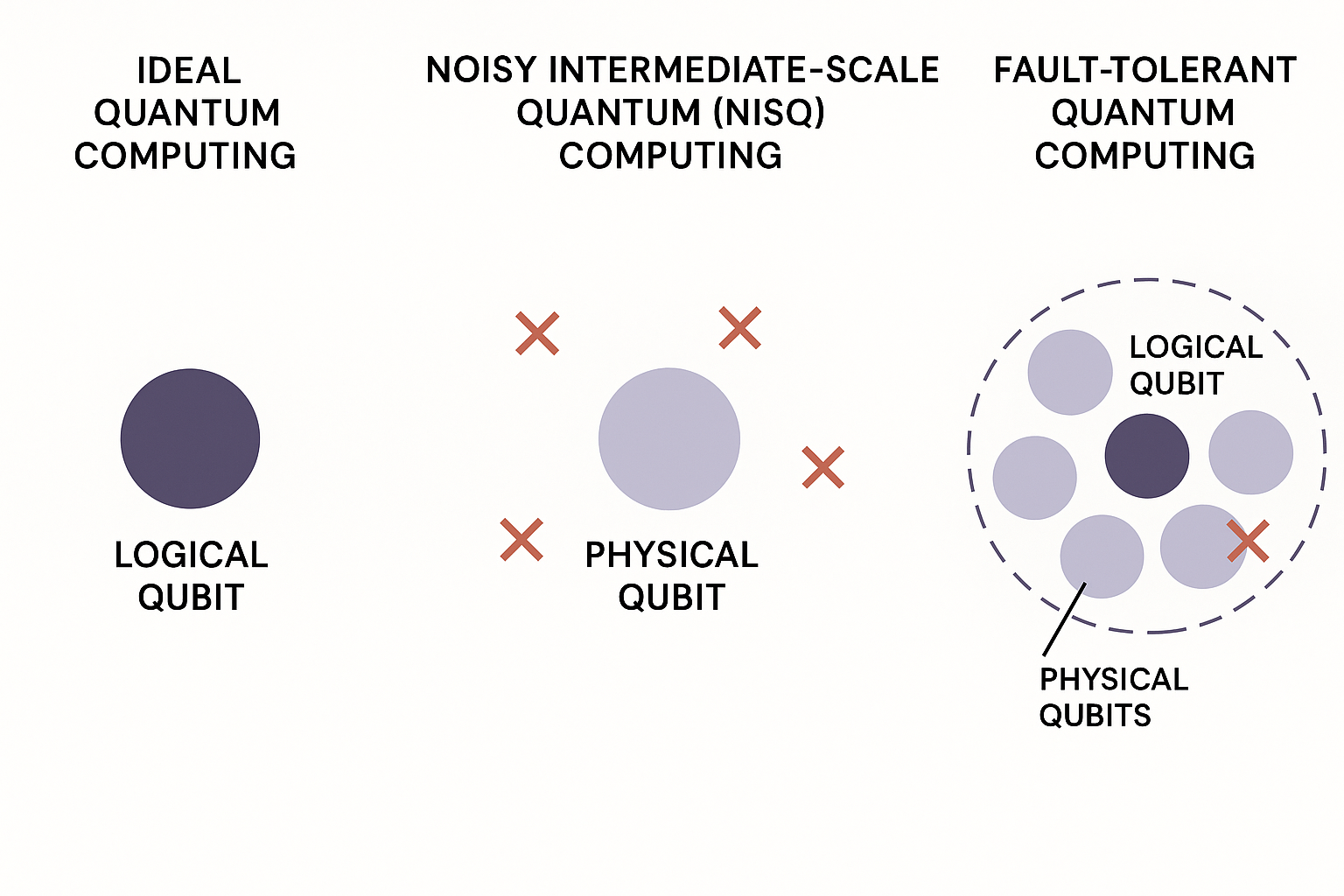
The landscape of quantum information science in 2018 was defined by a growing tension between theoretical potential and experimental reality. While the mathematical foundations for exponential speedups in factoring and search had been established decades prior, the physical hardware remained confined to small-scale laboratory demonstrations that posed no threat to classical dominance. John Preskill introduced the term Noisy Intermediate-Scale Quantum (NISQ) technology to characterize this specific developmental bottleneck where devices were finally outgrowing the reach of brute-force classical simulation yet remained far too fragile for the rigorous demands of fault tolerance.

Read Decoding
Quantum Supremacy (2019)
Arute et al. (2019)

Quantum Supremacy (2019)

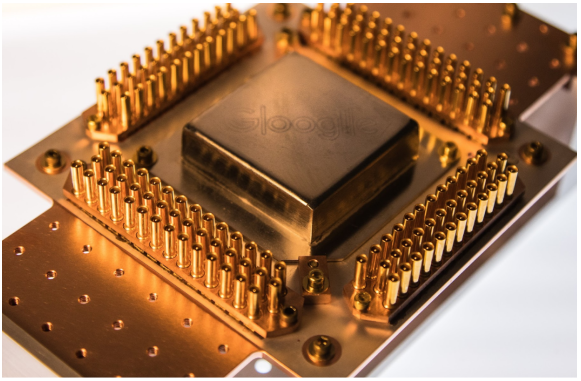
The 2019 demonstration of quantum supremacy by Google Research marked a definitive shift from theoretical complexity to experimental verification. The experiment established the point at which a programmable quantum device performs a task that is beyond the reach of any classical supercomputer. While the chosen task - sampling from a random quantum circuit - was specifically designed for its computational hardness rather than immediate utility, the result provided the first empirical evidence that quantum mechanics offers a fundamentally different class of computational leverage.

Read Decoding

Computer Vision

7 PAPERS
AlexNet (2012)
Alex Krizhevsky, Ilya Sutskever, Geoffrey E. Hinton (University of Toronto)

AlexNet (2012)

The 2012 ImageNet competition (ILSVRC) is widely regarded as the "Big Bang" of modern artificial intelligence. AlexNet, a deep convolutional neural network (CNN) developed by Alex Krizhevsky and his colleagues, won the competition by a massive margin, achieving a top-5 error rate of 15.3% - nearly 10 percentage points lower than the runner-up. This victory proved that neural networks, long dismissed as computationally impractical, were the superior path for high-dimensional pattern recognition. AlexNet provided the technical blueprint for the current era of deep learning, combining GPU-accelerated training, non-linear activations, and robust regularization techniques.

Read Decoding
GAN: Adversarial Nets (2014)
Goodfellow et al. (2014)

GAN: Adversarial Nets (2014)

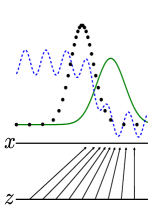
The 2014 proposal of Generative Adversarial Networks (GANs) by Ian Goodfellow and his colleagues introduced a paradigm shift in generative modeling by framing the problem as a structural competition. Before this, generating realistic data like images required complex probabilistic estimations or heavy approximations to capture the underlying distribution of the data. Goodfellow argued that instead of explicitly defining what 'good' data looks like through mathematical formulas, a model could learn to generate it by attempting to fool a second, competing model. This shifted the focus from statistical estimation to a zero-sum game between two neural networks, suggesting that complexity in artificial systems can emerge from the tension of opposing objectives.

Read Decoding
YOLO: Object Detection (2015)
Joseph Redmon, Santosh Divvala, Ross Girshick, Ali Farhadi

YOLO: Object Detection (2015)

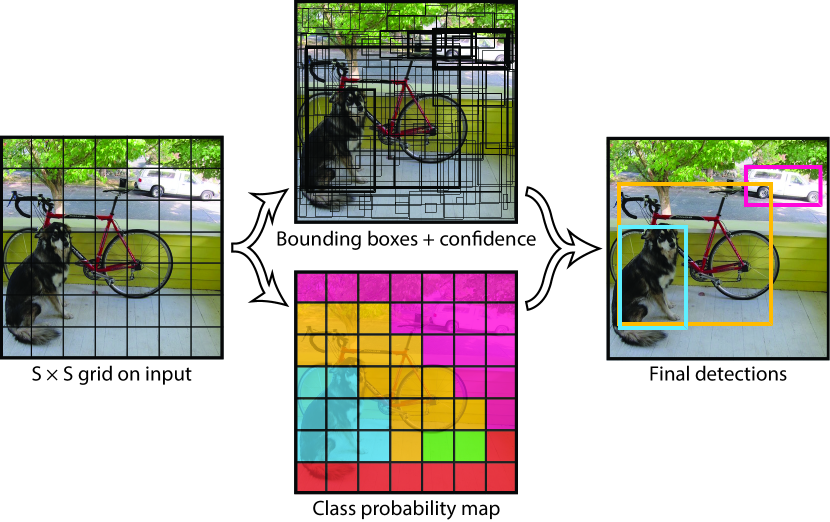
Before the introduction of YOLO (You Only Look Once), object detection was a multi-stage pipeline. Systems like R-CNN used region proposal algorithms to identify potential objects, followed by individual classification and refinement steps. This complexity made real-time detection impossible. YOLO fundamentally reframed object detection as a single regression problem, mapping raw pixels directly to bounding box coordinates and class probabilities in a single forward pass. By "looking only once," the model achieved unprecedented speeds, enabling the transition of computer vision from static image analysis to real-time video understanding.

Read Decoding
ViT: Vision Transformer (2020)
Dosovitskiy et al. (2020)

ViT: Vision Transformer (2020)

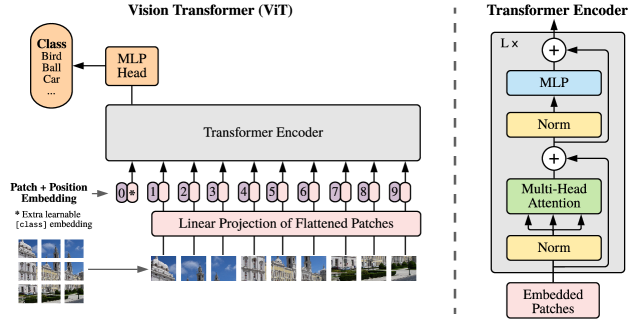
The 2020 paper 'An Image is Worth 16x16 Words' challenged the long-held assumption that convolutional neural networks (CNNs) were the only viable architecture for computer vision. For over a decade, the field of vision had relied on hand-coded inductive biases - such as translation invariance and locality - to process pixel data. Researchers at Google suggested that these biases, while helpful on small datasets, eventually become a limitation as the amount of data increases. They proposed that the Transformer architecture - which had already revolutionized natural language processing - could be applied directly to images by simply treating them as sequences of 'visual words.' It was an argument for the universality of the Transformer, suggesting that any data type can be processed through a single, general-purpose mechanism if it is structured correctly.

Read Decoding
CLIP: Contrastive Vision (2021)
Radford et al. (2021)

CLIP: Contrastive Vision (2021)

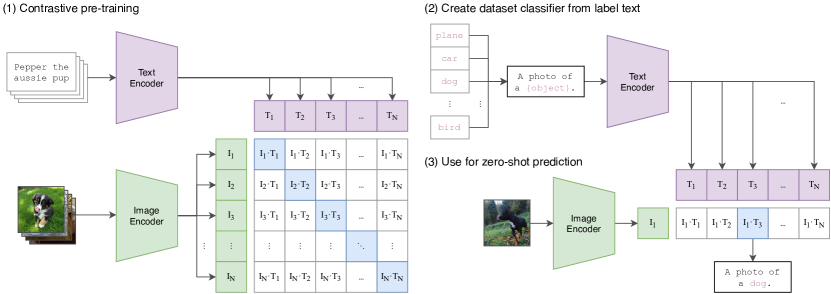
The 2021 CLIP (Contrastive Language-Image Pre-training) paper by OpenAI marked a fundamental shift in computer vision by moving from fixed category labels to the fluid context of natural language. For decades, vision models were restricted to discrete sets of labels - a model trained on ImageNet could identify a 'Golden Retriever' but lacked the conceptual flexibility to understand 'a happy dog playing in a park.' Researchers at OpenAI proposed that vision and language should be learned as a single, shared representation, allowing a model to understand images through the same open-ended concepts humans use to describe them. It was a shift toward 'open-vocabulary' vision, suggesting that the most powerful way to see the world is through the lens of everything we have ever written about it.

Read Decoding
Segment Anything - SAM (2023)
Kirillov et al. (2023)

Segment Anything - SAM (2023)

The 2023 paper on 'Segment Anything' (SAM) introduced the first foundation model for computer vision that could perform zero-shot generalization across a near-infinite variety of images. Before SAM, image segmentation was a fragmented field where models were trained for specific tasks - like identifying medical tumors or detecting street signs - on specialized, relatively small datasets. The researchers at Meta AI proposed a shift: instead of training for a fixed set of categories, they built a 'promptable' model trained on over 1.1 billion masks. It was a transition from specialized computer vision to a generalized, task-agnostic system that can 'segment anything' based on a simple point, box, or text prompt, much like a human can point to an object and ask what it is.

Read Decoding
Depth Anything (2024)
Yang et al. (2024)

Depth Anything (2024)

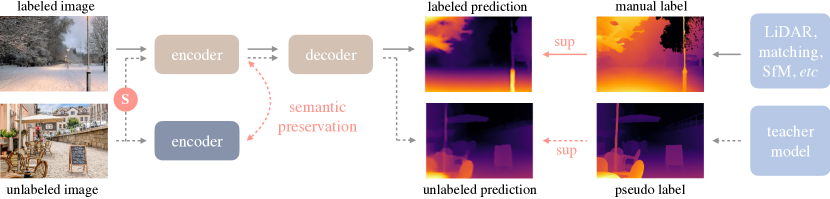
The 2024 paper 'Depth Anything' marked a fundamental shift in how machines perceive the three-dimensional structure of the world from a single two-dimensional image. Before this, Monocular Depth Estimation was limited by a reliance on expensive, sensor-labeled datasets - like those from LiDAR - which are difficult to scale across diverse environments. Researchers proposed a move away from this 'data bottleneck' by using 62 million unlabeled images and a new student-teacher learning pipeline. They created a foundation model for depth that generalizes to virtually any scene, proving that geometric understanding can be learned at a massive scale without the need for manual, high-fidelity labels.

Read Decoding

Reinforcement Learning

3 PAPERS
DQN: Atari Deep RL (2013)
Mnih et al. (2013)

DQN: Atari Deep RL (2013)

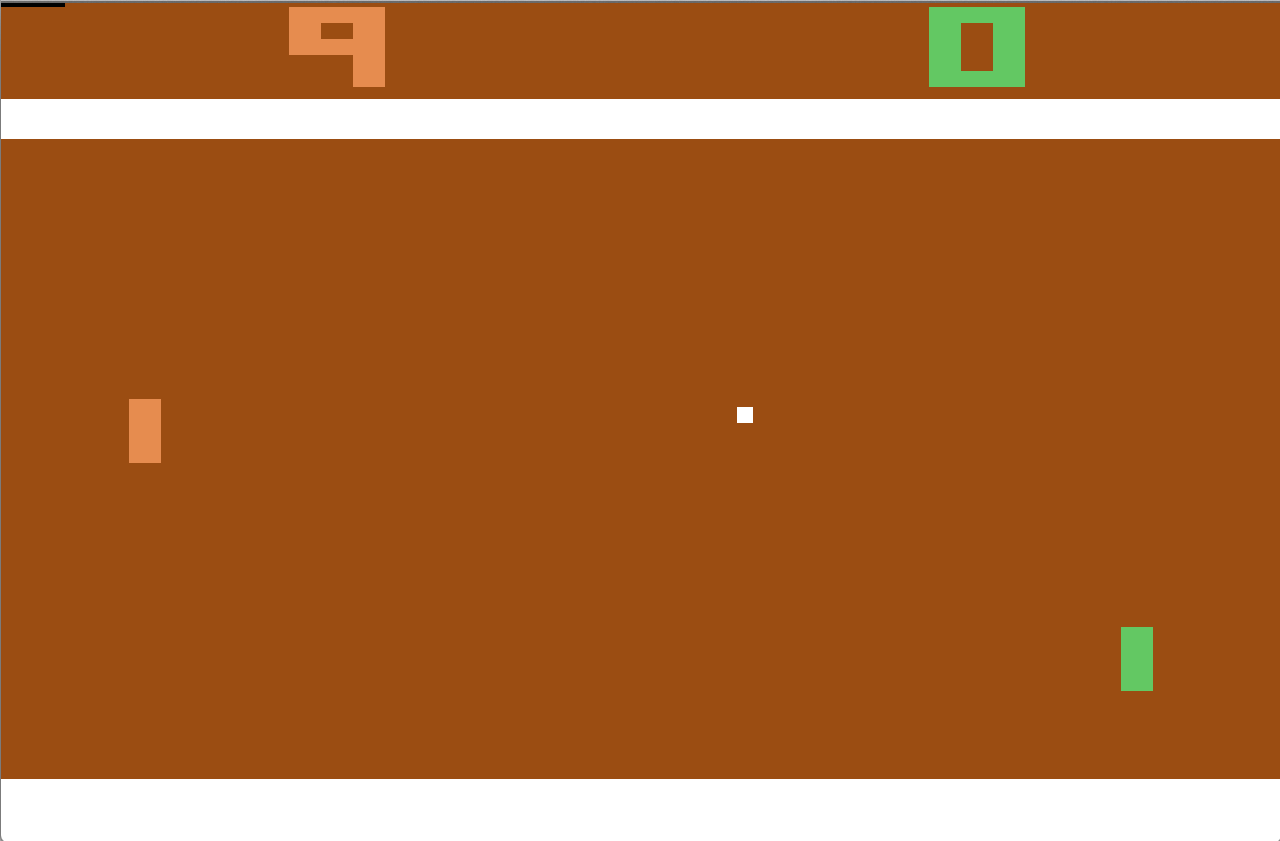
The 2013 Deep Q-Network (DQN) paper from DeepMind demonstrated that a single AI agent could learn to play a variety of Atari 2600 games directly from raw pixels. Before this, reinforcement learning often required manual feature engineering to represent the state of the environment. The researchers proposed a method that combined Q-learning with deep neural networks, allowing the agent to discover its own features. It was a proof of concept that high-dimensional sensory input could be mapped directly to successful actions.

Read Decoding
PPO: Policy Optimization (2017)
John Schulman, Filip Wolski, Prafulla Dhariwal, Alec Radford, Oleg Klimov

PPO: Policy Optimization (2017)

Reinforcement Learning (RL) has long been a powerful but temperamental tool in the AI arsenal, often characterized by extreme sensitivity to hyperparameters and the risk of catastrophic "policy collapse." Proximal Policy Optimization (PPO) introduced a breakthrough in stability by constraining how much a policy can change in a single update. By replacing complex second-order mathematical constraints with a simple "clipping" objective, PPO became the most widely used RL algorithm in the world, serving as the foundational engine for aligning Large Language Models through human feedback.

Read Decoding
RLHF: Helpful Assistant (2022)
Askell et al. (2022)

RLHF: Helpful Assistant (2022)

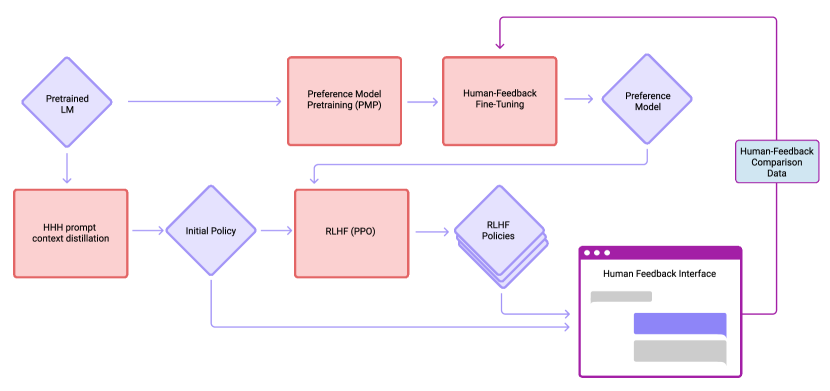
In 2022, the 'Helpful and Harmless' paper from Anthropic deepened the understanding of how Reinforcement Learning from Human Feedback (RLHF) can be used to align AI behavior. While previous work had focused on following simple instructions, this paper explored the inherent trade-offs between being useful to a user and avoiding harmful content. The researchers argued that alignment is not a single target, but a multi-dimensional space that requires careful data collection and model tuning. It was a push for safety as a core architectural requirement.

Read Decoding

Robotics & Embodied AI

3 PAPERS
Dexterous Manipulation (2018)
OpenAI et al. (2018)

Dexterous Manipulation (2018)

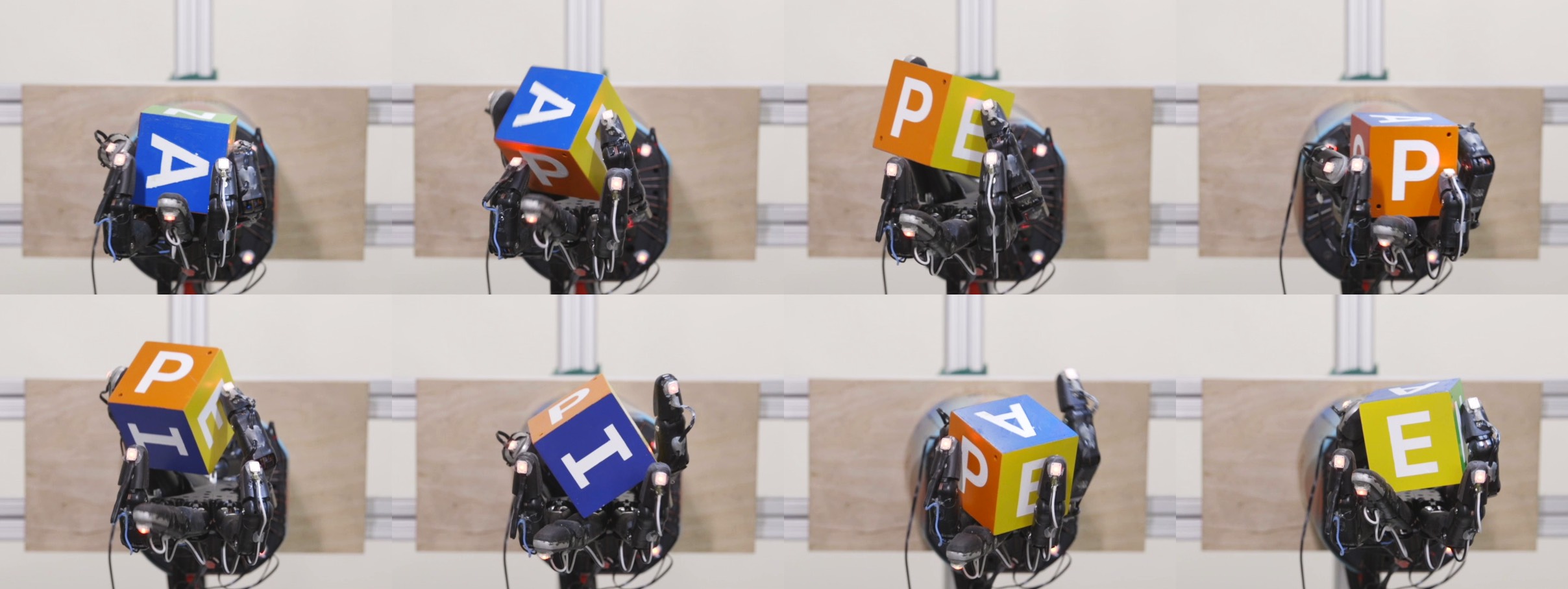
The 2018 paper on 'Learning Dexterous In-Hand Manipulation' demonstrated that a humanoid robot hand could learn to perform complex tasks, such as reorienting a block, using reinforcement learning in simulation. One of the greatest challenges in robotics is the 'reality gap' - the difference between the idealized physics of a simulator and the noisy, unpredictable nature of the real world. The researchers at OpenAI proposed that instead of trying to build a perfect simulator, they could train an agent on a massive variety of imperfect ones. It was a shift toward using diversity as a form of robustness.
Read Decoding
ACT: Action Chunking (2023)
Zhao et al. (2023)

ACT: Action Chunking (2023)

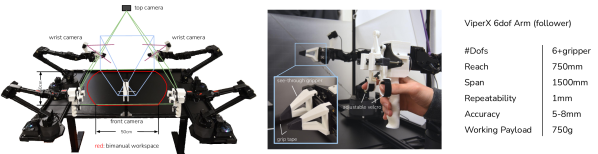
The 2023 'Action Chunking with Transformers' (ACT) paper addressed the difficulty of learning complex, fine-grained robotic tasks from a small number of human demonstrations. While traditional imitation learning often suffers from 'compounding errors' - where a small mistake in one step leads to total failure - researchers at Stanford and Meta proposed a method that predicts entire 'chunks' of future actions simultaneously. It was a shift from step-by-step prediction to sequence-level planning, allowing robots to perform delicate tasks like opening a marker or using a slotted spoon with high reliability.

Read Decoding
RT-2: VLA Models (2023)
Brohan et al. (2023)

RT-2: VLA Models (2023)

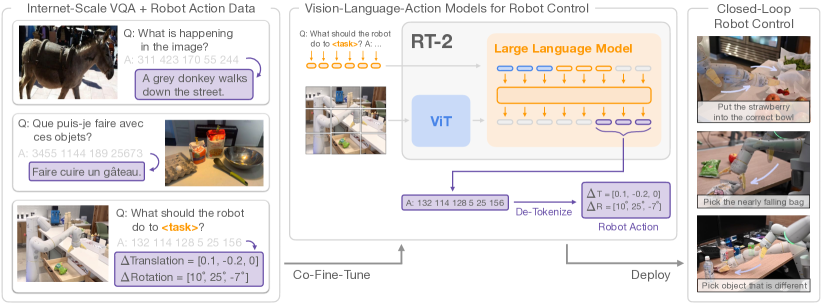
In 2023, Google DeepMind introduced 'RT-2,' a 'Vision-Language-Action' (VLA) model that directly translates visual observations and natural language instructions into robotic commands. While previous robots required separate modules for perception, reasoning, and control, RT-2 uses a single large model that has been pre-trained on billions of words and images from the internet. This allows the robot to inherit general-world knowledge - like knowing that a 'dinosaur' is a toy or that a 'healthy snack' is an apple - without ever being explicitly taught those concepts in a robotic context.

Read Decoding

AI Agents & Reasoning

8 PAPERS
ReAct: Reason + Act (2022)
Yao et al. (2022)

ReAct: Reason + Act (2022)

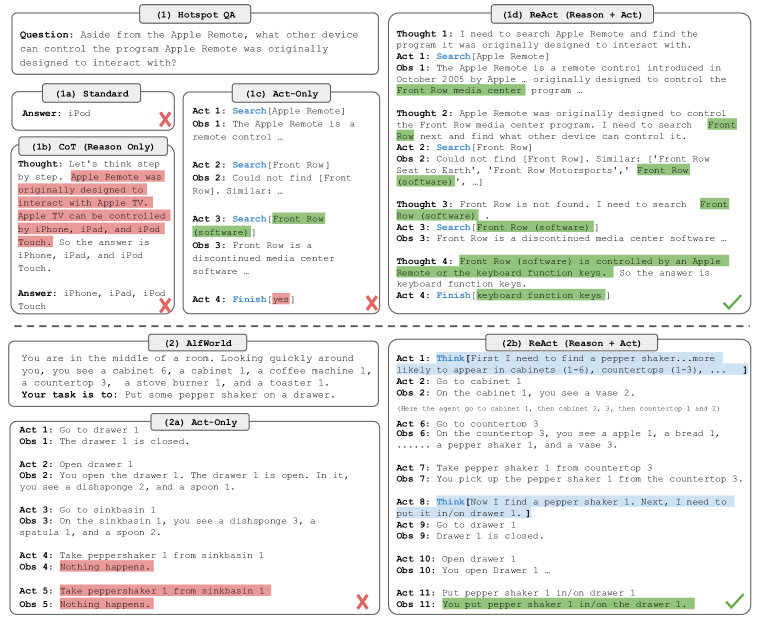
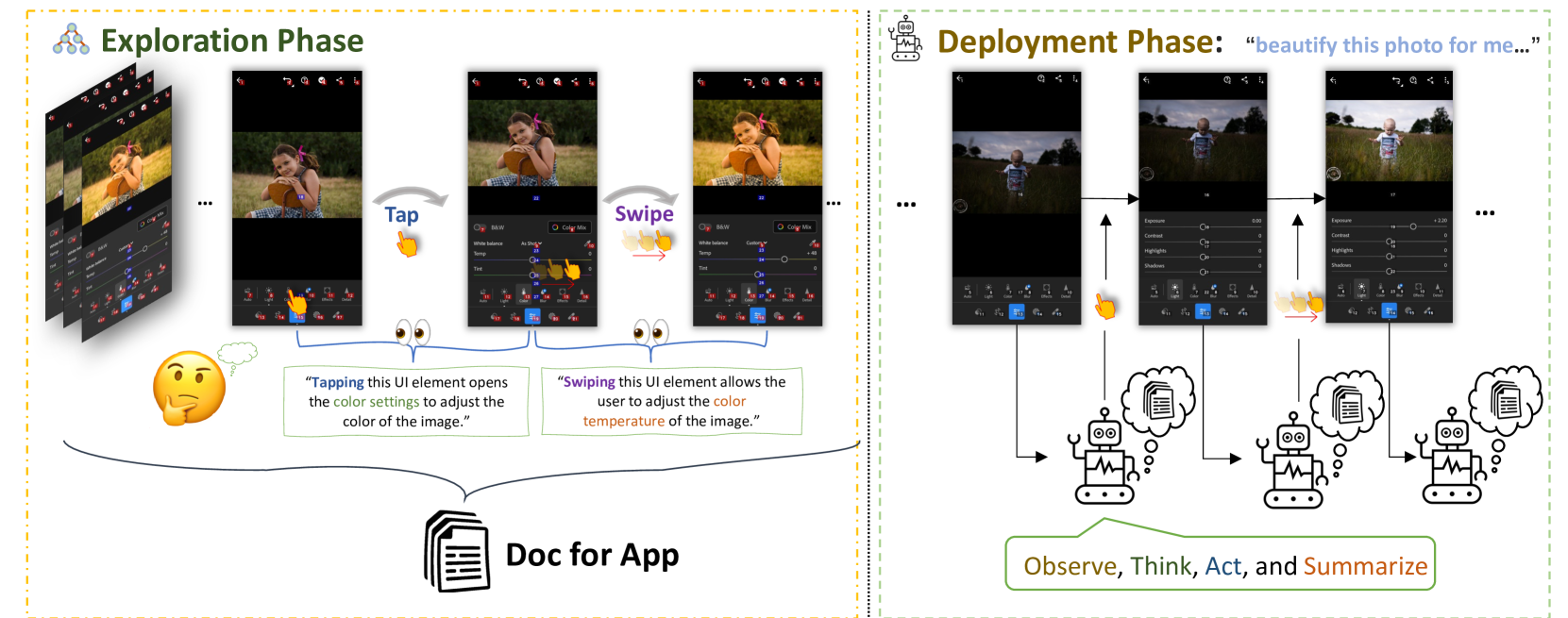
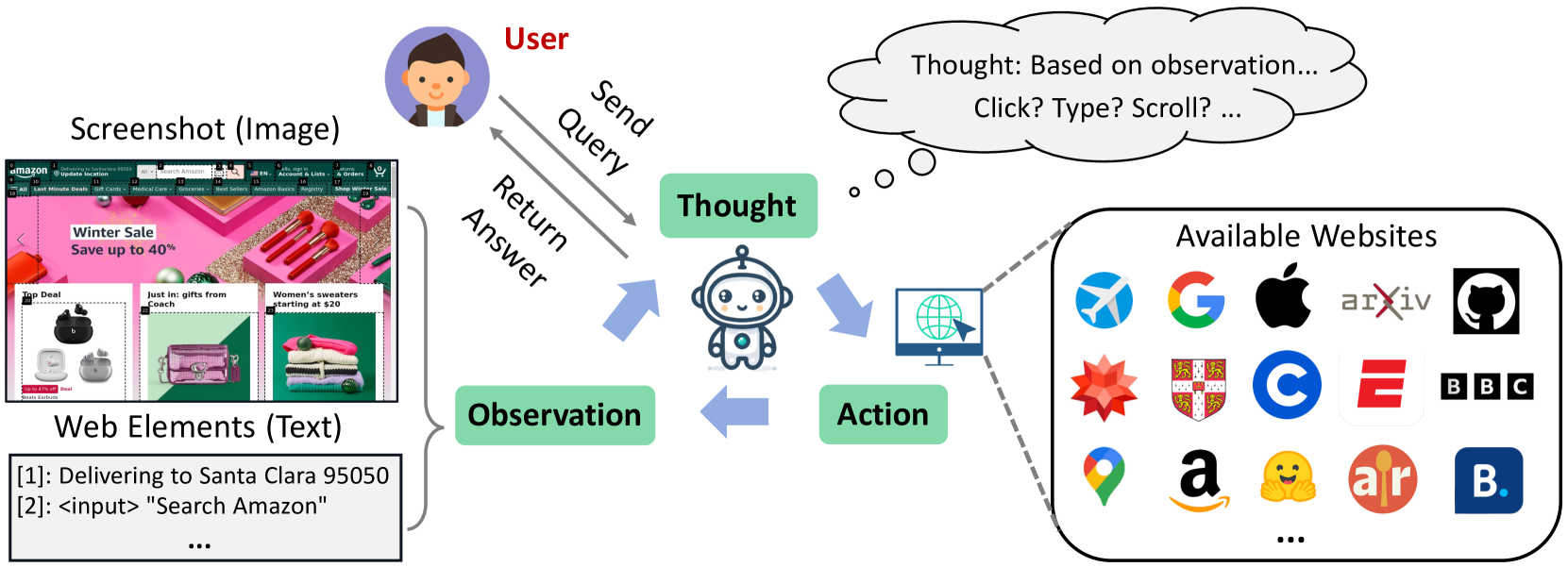
The 2022 'ReAct' paper introduced a prompting framework that allows Large Language Models to interleave reasoning traces with task-specific actions. While previous models either focused on internal reasoning (Chain-of-Thought) or external acting (Web-browsing), researchers at Princeton and Google DeepMind showed that combining the two leads to a synergistic effect where the model uses 'thoughts' to plan and 'actions' to ground its reasoning in reality. It was a shift from viewing a model as a static black box to viewing it as an agentic system capable of dynamic, multi-step interaction with its environment.

Read Decoding
Chain of Thought (2022)
Jason Wei, Xuezhi Wang, Dale Schuurmans, Maarten Bosma, Brian Ichter, Fei Xia, Ed Chi, Quoc Le, Denny Zhou

Chain of Thought (2022)

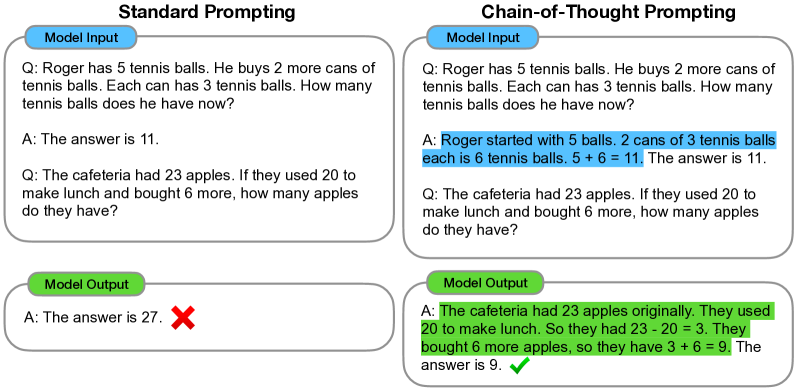
The 2022 "Chain of Thought" (CoT) paper introduced a fundamental structural shift in the way Large Language Models (LLMs) are used to solve complex problems. Before this work, standard few-shot prompting relied on direct input-output mapping, forcing the model to solve multi-step logic in a single computational leap. Researchers at Google demonstrated that by simply prompting the model to generate intermediate reasoning steps, they could unlock latent capabilities in arithmetic, symbolic logic, and commonsense reasoning. This discovery moved the field from viewing LLMs as associative memory engines to viewing them as sequential logical processors.

Read Decoding
Toolformer: Tool Use (2023)
Schick et al. (2023)

Toolformer: Tool Use (2023)

The 2023 'Toolformer' paper introduced a method for language models to autonomously learn how to use external tools through a self-supervised process. While previous approaches required large-scale human annotations or specialized architectural changes, researchers at Meta AI showed that a model can teach itself to use APIs - such as a calculator, a search engine, or a calendar - by simply identifying where a tool's result would make its next word easier to predict. It was a shift from viewing tools as external additions to viewing them as an integrated part of the model's fundamental predictive capability.

Read Decoding
Self-Refine: Iterative (2023)
Madaan et al. (2023)

Self-Refine: Iterative (2023)

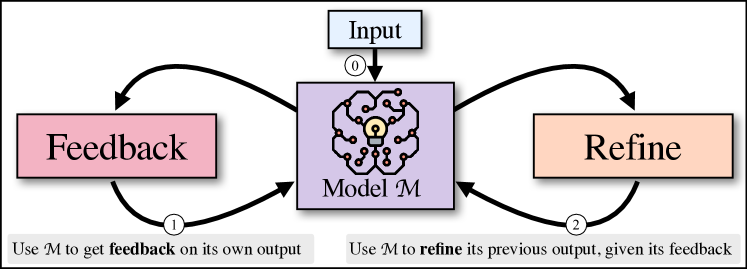
The 2023 'Self-Refine' paper introduced a method where a single large language model improves its own outputs through an iterative loop of feedback and correction. While traditional performance tuning requires external fine-tuning or human intervention, researchers at Carnegie Mellon and the Allen Institute showed that a model can leverage its own evaluative knowledge to critique and fix its own mistakes. It was a shift from viewing the model's first generation as a final product to viewing it as an initial draft in a recursive, self-correcting process.

Read Decoding
Generative Agents (2023)
Park et al. (2023)

Generative Agents (2023)

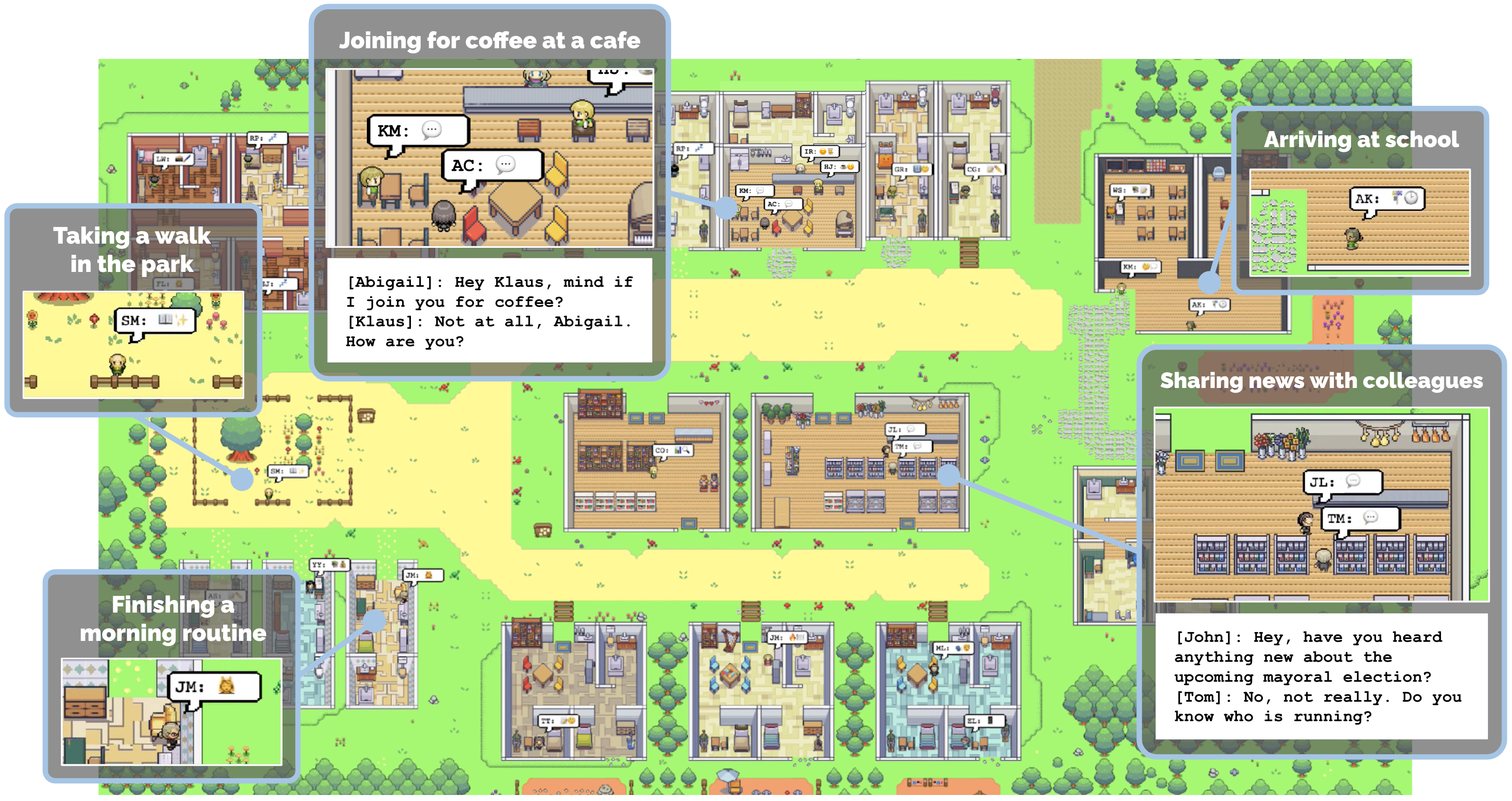
In 2023, the 'Generative Agents' paper from Stanford and Google introduced a way to create believable digital characters that can plan their days, form relationships, and coordinate activities autonomously. While previous non-player characters (NPCs) in games relied on rigid scripts or simple state machines, these agents used large language models to simulate the complexity of human life. The researchers populated a sandbox world with 25 agents and observed how individual actions coalesced into social dynamics. It was a shift from programming behaviors to architecting memories.

Read Decoding
Tree of Thoughts (2023)
Yao et al. (2023)

Tree of Thoughts (2023)

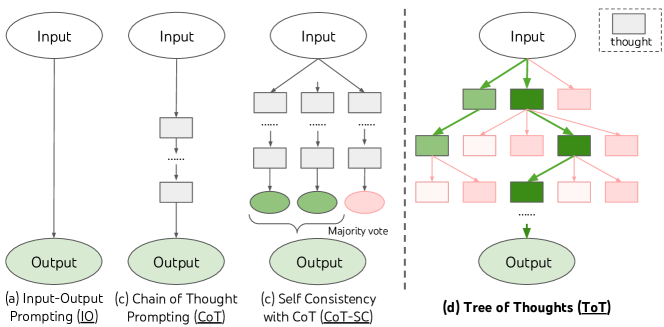
The 2023 'Tree of Thoughts' (ToT) paper addressed the struggle of large language models with tasks that require strategic look-ahead or global reasoning. While 'Chain of Thought' prompting allows models to solve problems step-by-step, it follows a single, linear path that cannot backtrack if it hits a dead end. Researchers at Princeton and Google DeepMind proposed a framework that allows models to explore multiple paths of reasoning simultaneously, evaluating the progress of each 'thought' as it goes. It was a shift from viewing generation as a stream of text to viewing it as a structured search through a space of ideas.
Read Decoding
s1: Simple Test-Time Scaling (2025)
Muennighoff, et al.

s1: Simple Test-Time Scaling (2025)

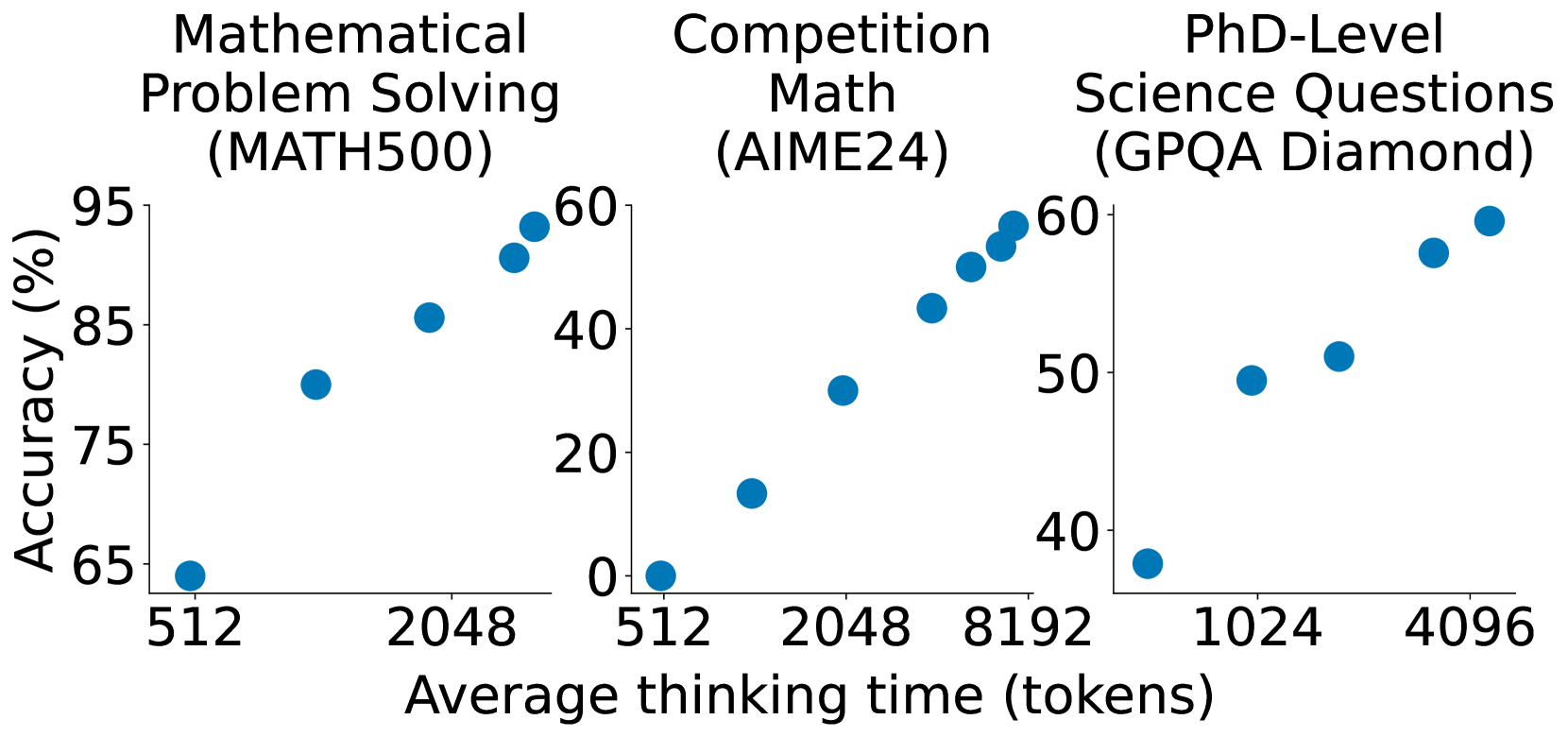
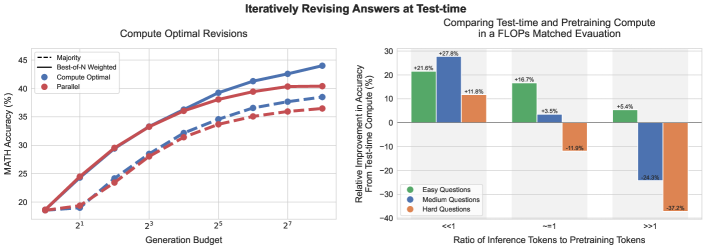
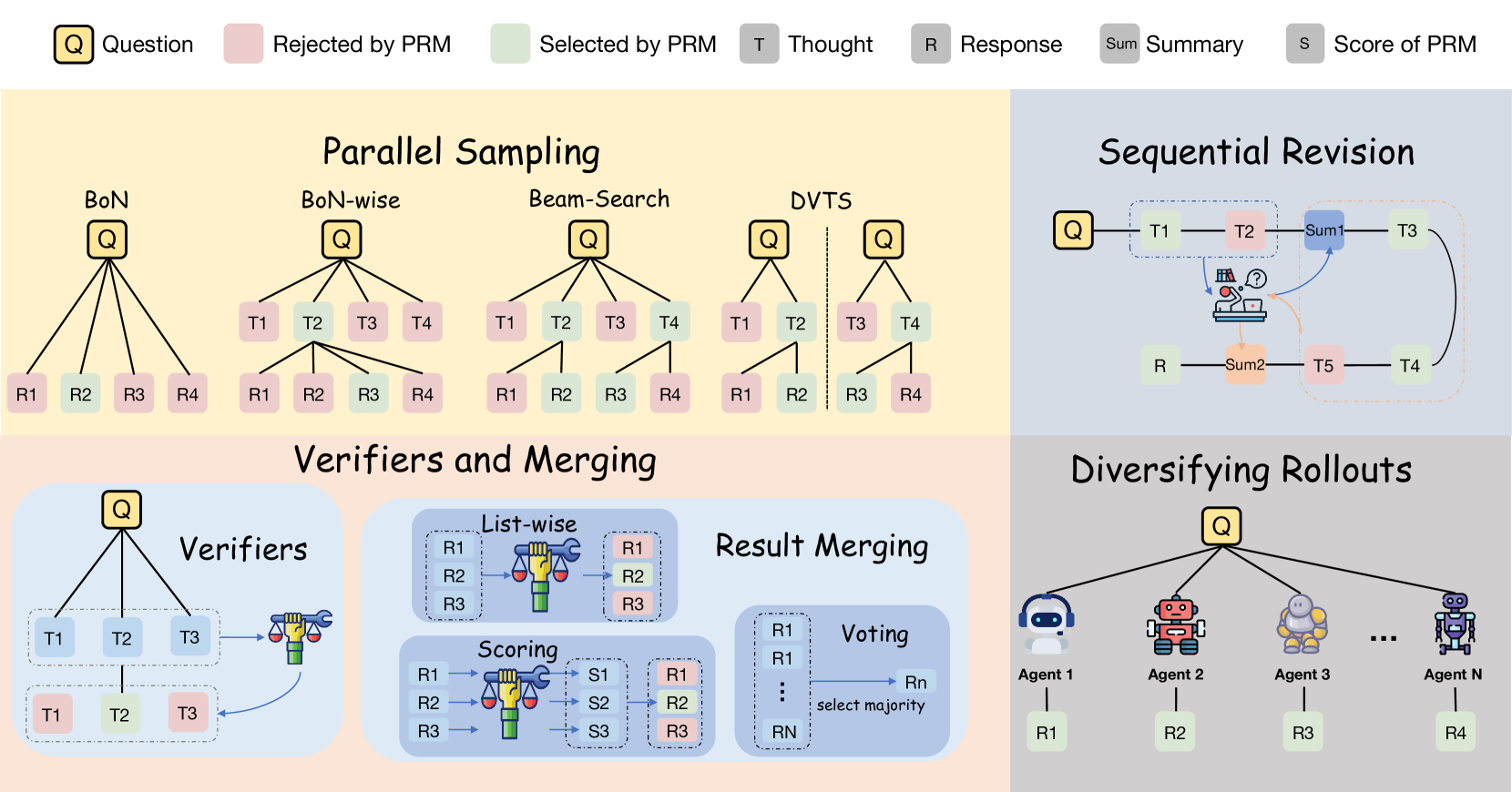
The paradigm of Large Language Model (LLM) scaling has historically focused on the "training-time" regime - increasing parameters and tokens to improve general capability. However, the emergence of reasoning models like OpenAI's o1 shifted the frontier toward "test-time" scaling, where models are given more compute at inference to "think" through complex problems. The s1 paper demonstrates that this capability does not require massive reinforcement learning or millions of samples. Instead, it can be achieved through a simple supervised fine-tuning (SFT) strategy on a tiny, curated dataset, coupled with a novel decoding intervention called Budget Forcing.

Read Decoding
DeepSeek R1: Reasoning (2025)
DeepSeek-AI (2025)

DeepSeek R1: Reasoning (2025)

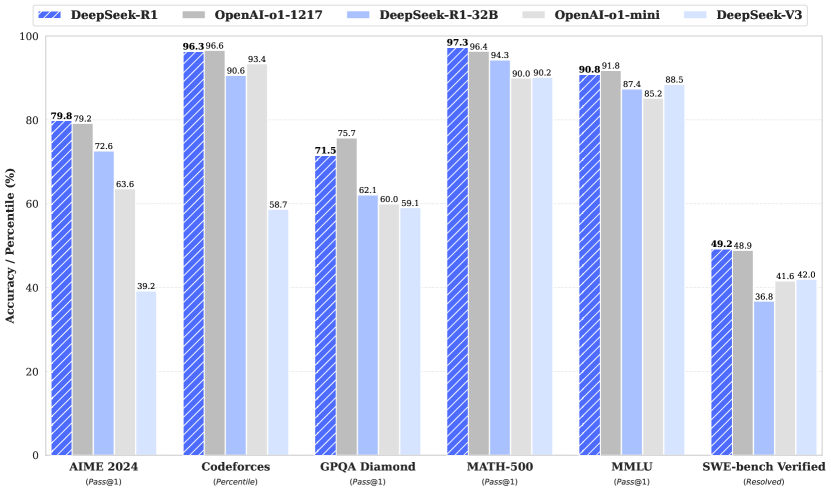
The 2025 paper 'DeepSeek-R1: Incentivizing Reasoning Capability in LLMs via Reinforcement Learning' represents a fundamental shift in the development of reasoning-oriented models. Before this breakthrough, high-level reasoning was largely viewed as a byproduct of massive Supervised Fine-Tuning (SFT), where models were explicitly taught 'Chain of Thought' patterns through vast sets of human-annotated examples. While inference-time scaling had demonstrated the power of extended computation, the industry remained tethered to the assumption that a model must first be shown how to reason before any reinforcement learning could effectively take place. This status quo relied on the quality and quantity of human demonstrations, creating a bottleneck that limited the model's ability to discover strategies beyond those provided in its training data.

Read Decoding

Multimodal

6 PAPERS
Flamingo (2022)
Alayrac et al. (2022)

Flamingo (2022)

The 2022 paper on Flamingo introduced a family of visual language models (VLMs) that could adapt to new tasks with only a few examples, similar to the capabilities of large language models like GPT-3. For years, vision-language systems required massive task-specific fine-tuning. Researchers at DeepMind proposed an architecture that bridges a powerful, frozen vision encoder with a large, frozen language model. It was a shift toward viewing multimodality as an interleaved sequence of visual and textual information.

Read Decoding
ImageBind (2023)
Girdhar et al. (2023)

ImageBind (2023)

The 2023 'ImageBind' paper from Meta AI proposed a method for aligning six different modalities - images, text, audio, depth, thermal, and IMU data - into a single, shared embedding space. Traditionally, multimodal models required pairs of data for every combination of modalities they wanted to connect. ImageBind challenged this by using images as a central 'binding' modality, showing that if you align everything to images, the other modalities will naturally align with each other. It was a shift from pairwise alignment to a holistic, hub-and-spoke architecture for sensory data.

Read Decoding
Gemini (2023)
Gemini Team, Google (2023)

Gemini (2023)

In late 2023, Google introduced 'Gemini,' a family of models designed from the ground up to be 'natively multimodal.' While previous 'multimodal' models often consisted of separate vision and language components that were bolted together after training, Gemini was trained simultaneously across text, images, audio, video, and code. This allowed the model to reason across different types of information with a fluidity that mimics human perception. It was a shift from modular multimodality to a single, integrated architecture that treats all data types as first-class citizens.

Read Decoding
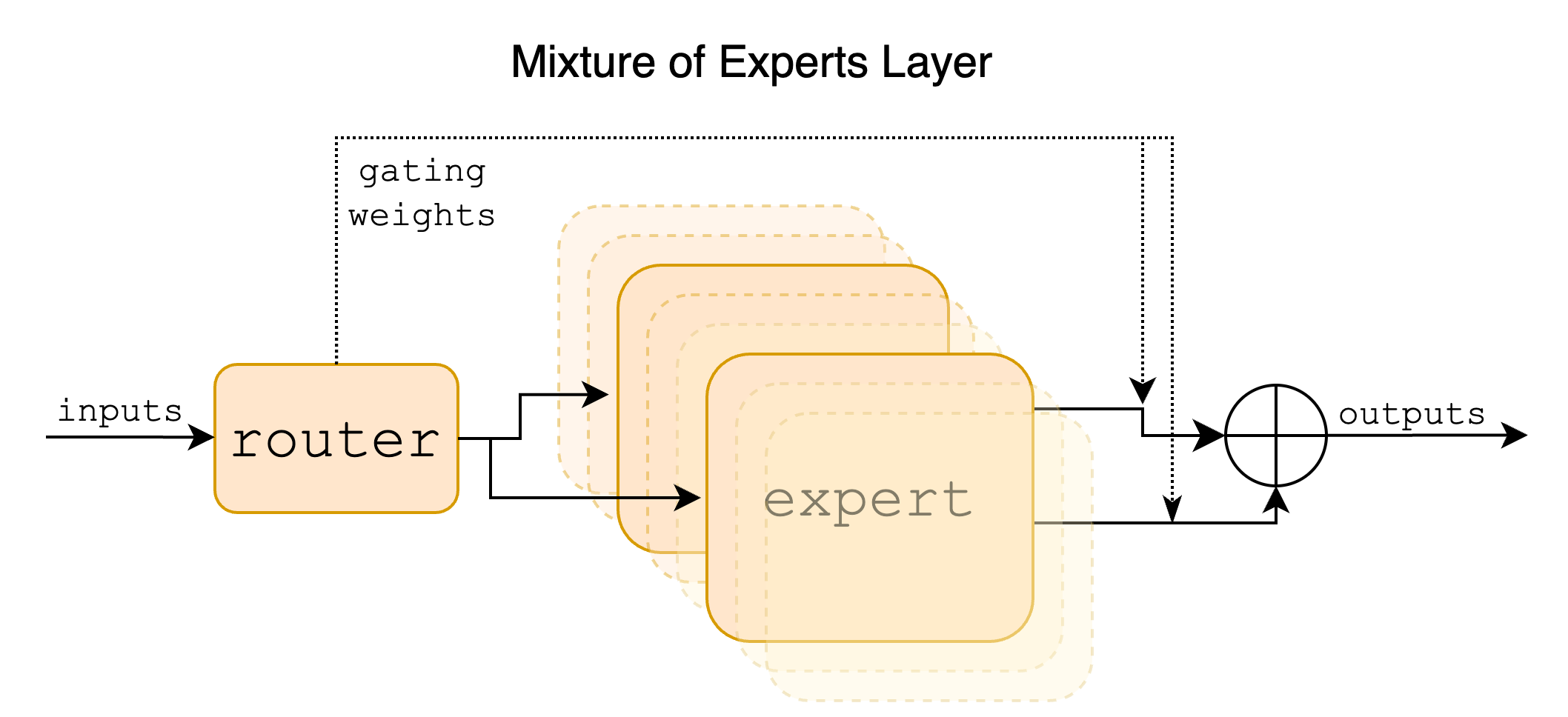
Gemini 1.5 Pro: Multimodal MoE (2024)
Google DeepMind (2024)

Gemini 1.5 Pro: Multimodal MoE (2024)

The evolution of sequence modeling has long been defined by a tension between the desire for global context and the quadratic memory costs of the attention mechanism. For years, the standard approach to processing long documents or complex codebases was to use retrieval-augmented generation (RAG), which breaks the data into isolated chunks and retrieves only the most relevant fragments. This fragmentation inherently sacrifices the model's ability to understand global dependencies or subtle relationships that span the entire sequence. The Gemini 1.5 Pro architecture addresses this limitation by moving toward a native long-context window of up to 10 million tokens, effectively transforming the model's internal state into a high-fidelity searchable database.

Read Decoding
GPT-4 (2023)
OpenAI (2023)

GPT-4 (2023)

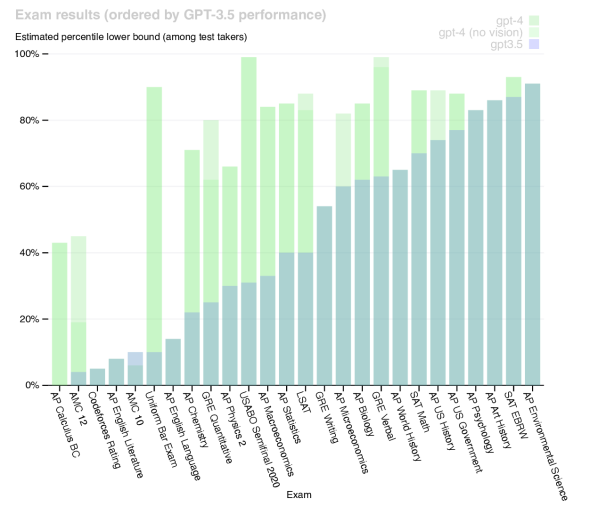
The release of the GPT-4 Technical Report in 2023 marked a transition from the era of experimental large language models to a period of predictable engineering. Before GPT-4, the development of massive neural networks was often characterized by uncertainty, where the final performance of a model was only known after millions of dollars in compute had already been spent. OpenAI's researchers demonstrated that this unpredictability is not an inherent property of AI. By training much smaller models - miniature versions of the final architecture - they found that the mathematical loss followed a clear, measurable curve. It was a shift that suggested intelligence is not a random byproduct of scale but a quantifiable trajectory that can be mapped before the first watt of power is used for the full-scale run.

Read Decoding
LLaVA (2023)
Liu et al. (2023)

LLaVA (2023)

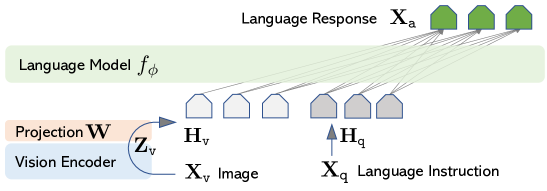
The emergence of LLaVA in 2023 demonstrated that the most effective way to teach a machine to see is not through more complex vision models, but through better language instruction. Before LLaVA, multimodal models were primarily trained for narrow tasks like captioning or classification, leaving them unable to engage in open-ended conversation. Researchers proposed a shift: using a large language model to generate synthetic visual instruction data. By flattening an image into a long string of 'visual words,' they showed that a simple linear bridge is sufficient to align vision and language. This revealed that reasoning is a general capability that can be extended across modalities through the right kind of data, suggesting that a model's 'intelligence' is more about how it is taught than how it is built.

Read Decoding

Diffusion & Generative

3 PAPERS
DDPM: Diffusion Models (2020)
Ho et al. (2020)

DDPM: Diffusion Models (2020)

Denoising Diffusion Probabilistic Models (DDPM), introduced by Ho et al. in 2020, marked a significant shift in generative modeling, moving away from the competitive dynamics of GANs toward a process of iterative refinement. The core idea is to transform a simple noise distribution into a complex data distribution by reversing a gradual degradation process. This approach treats generation as a sequence of small, manageable denoising steps, effectively breaking down a complex global mapping into a series of local, learnable transitions.

Read Decoding
Stable Diffusion (2021)
Rombach et al. (2021)

Stable Diffusion (2021)

In 2021, the release of Latent Diffusion Models, later known as Stable Diffusion, solved the problem of computational cost in generative AI. While earlier diffusion models worked directly on image pixels, they were incredibly slow and resource-heavy. Researchers at LMU Munich and Runway proposed that generation should instead happen in a 'latent space' - a compressed mathematical representation of an image. It was a push to make high-quality generation accessible on consumer hardware by separating the act of creation from the act of rendering.

Read Decoding
DALL-E 2: Hierarchical (2022)
Ramesh et al. (2022)

DALL-E 2: Hierarchical (2022)

In 2022, OpenAI’s 'DALL-E 2' (or 'unCLIP') introduced a two-stage approach to generating high-fidelity images from natural language descriptions. While previous models like the original DALL-E directly mapped text tokens to image pixels, researchers proposed a hierarchical system that first maps text to a CLIP image embedding and then decodes that embedding into a final image. It was a shift from viewing image generation as a single translation task to viewing it as a multi-step reconstruction of visual concepts.

Read Decoding

Large Language Models

14 PAPERS
BERT: Bidirectional Context (2018)
Jacob Devlin, Ming-Wei Chang, Kenton Lee, Kristina Toutanova

BERT: Bidirectional Context (2018)

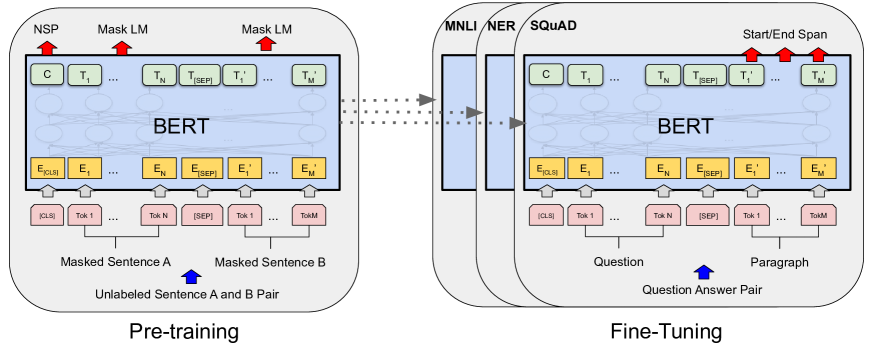
Language understanding is inherently contextual, yet early language models were fundamentally limited by their unidirectionality. Models like GPT-1 processed text from left to right, while ELMo concatenated independent left-to-right and right-to-left passes. BERT (Bidirectional Encoder Representations from Transformers) fundamentally shifted this landscape by introducing a training objective that allows the model to fuse context from both directions simultaneously across all layers. This "deep bidirectionality" transformed the Transformer encoder into a universal language processor, setting new standards for virtually every natural language understanding task.

Read Decoding
Transformer XL (2019)
Dai et al. (2019)

Transformer XL (2019)

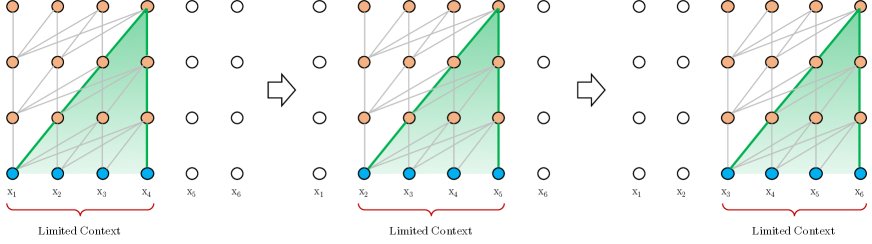
For a long time, the Transformer architecture operated within a self-imposed prison of fixed-length segments. While the attention mechanism was a leap over the vanishing gradients of RNNs, it remained tethered to a rigid window, forcing the model to process text in isolated chunks that ignored the semantic flow of what came before. This created a phenomenon known as context fragmentation, where the model, blind to the preceding segment, struggled to predict the first few tokens of a new block simply because it lacked the necessary history. It was a Newtonian approach to a quantum problem, treating language as a series of discrete events rather than a continuous stream of thought, effectively capping the model's 'intelligence' at the length of its training window.

Read Decoding
GPT-3: Few-Shot Learners (2020)
Tom B. Brown, et al. (OpenAI)

GPT-3: Few-Shot Learners (2020)

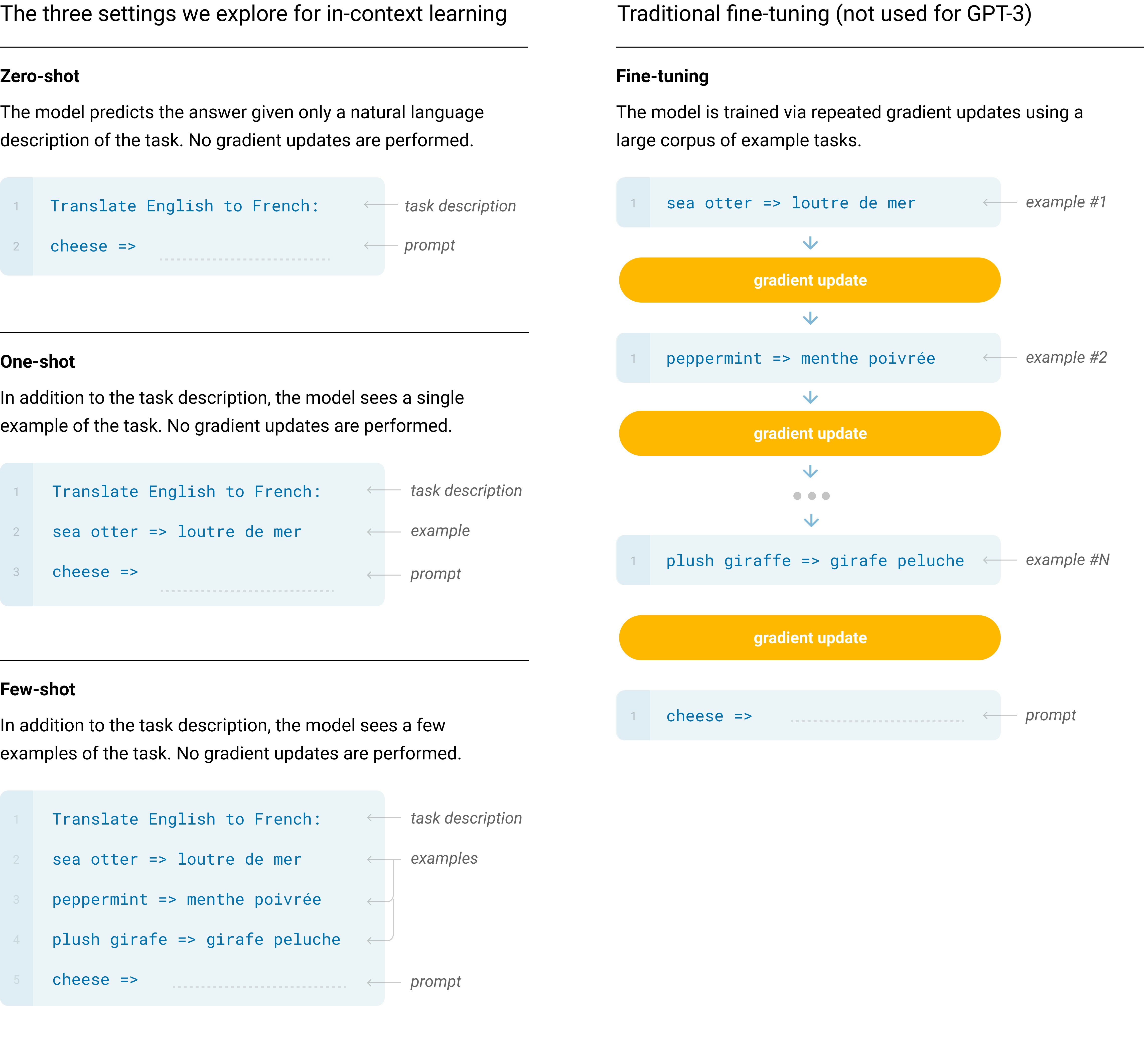
The 2020 release of GPT-3 marked a paradigm shift in artificial intelligence, moving the field away from the dominant "pre-train then fine-tune" workflow. As models grew in complexity, the requirement to gather thousands of labeled examples for every specific task - from translation to sentiment analysis - became an unsustainable bottleneck. OpenAI researchers proposed a radical alternative: a model so massive that it could perform tasks by simply observing a few examples in its input context. This "few-shot learning" capability suggested that intelligence is not just about learning a specific rule, but about the "meta-learning" ability to identify patterns and logic in real-time.

Read Decoding
LoRA: Low-Rank Adaptation (2021)
Hu et al. (2021)

LoRA: Low-Rank Adaptation (2021)

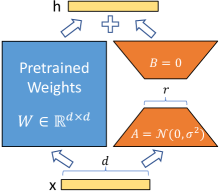
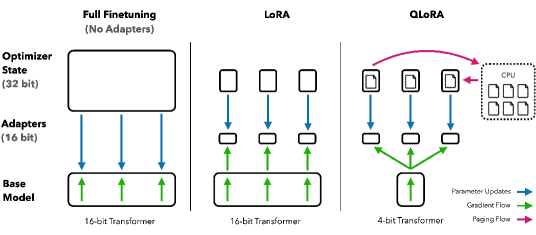
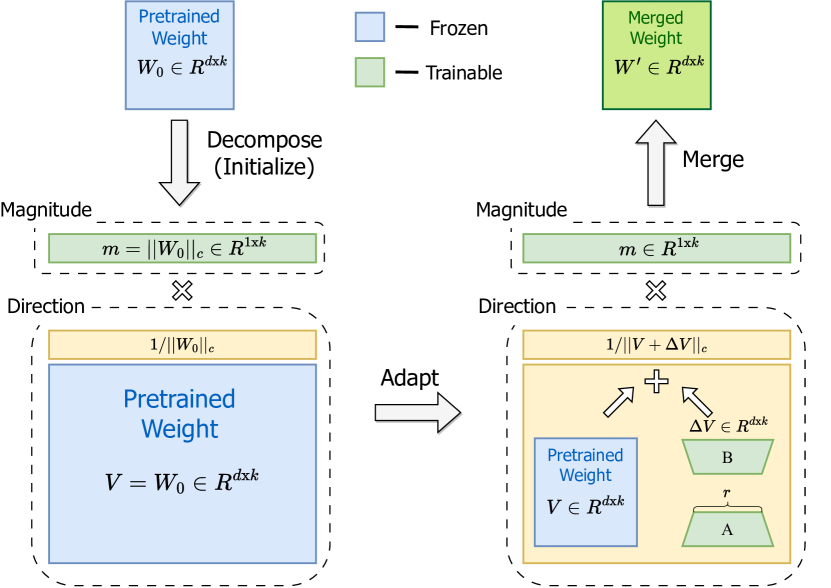
The 2021 paper 'LoRA: Low-Rank Adaptation of Large Language Models' by Hu et al. introduced a fundamental shift in how massive neural networks are adapted for specific tasks. Before this work, the status quo for fine-tuning large language models (LLMs) was defined by two equally problematic strategies: full fine-tuning, which required updating and storing hundreds of billions of parameters for every downstream application, and the use of 'adapter' layers, which inserted extra modules into the network's architecture. While full fine-tuning was computationally prohibitive and a storage nightmare for models like GPT-3, adapter layers introduced significant inference latency by increasing the depth of the model's sequential processing. This created a perceived bottleneck where researchers had to choose between the high fidelity of a fully updated model and the efficiency of a partially frozen one, often compromising on the speed and scalability of their production systems.

Read Decoding
InstructGPT: Model Alignment (2022)
Long Ouyang, et al. (OpenAI)

InstructGPT: Model Alignment (2022)

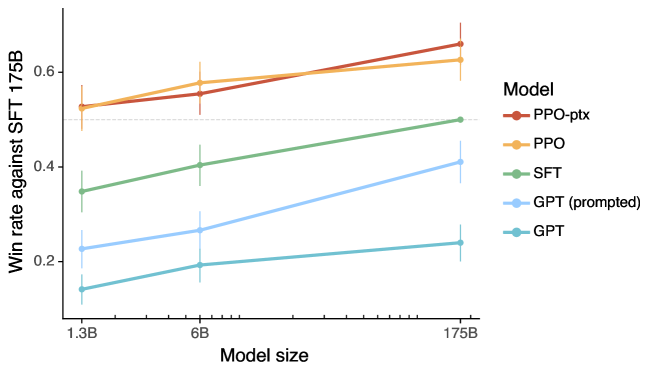
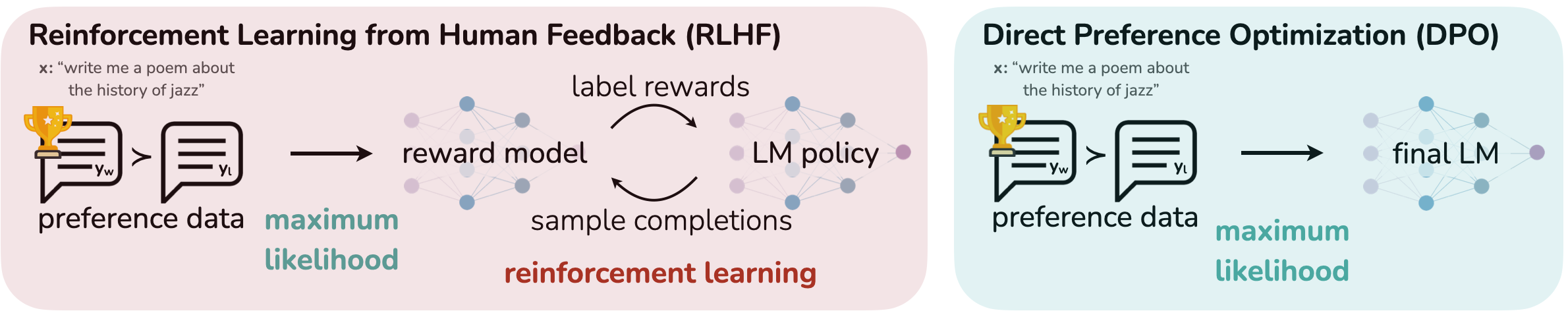
The release of GPT-3 proved that Large Language Models (LLMs) are formidable storehouses of human knowledge, yet it also revealed a fundamental misalignment. A model trained strictly on next-token prediction learns to imitate the internet, not to be a helpful assistant. It will complete a user's prompt by following its statistical distribution, which often leads to toxic, untruthful, or unhelpful outputs. InstructGPT resolved this through Reinforcement Learning from Human Feedback (RLHF), a multi-stage process that shifted the model's objective from imitation to alignment with human intent.

Read Decoding
FlashAttention: IO-Aware (2022)
Dao et al. (2022)

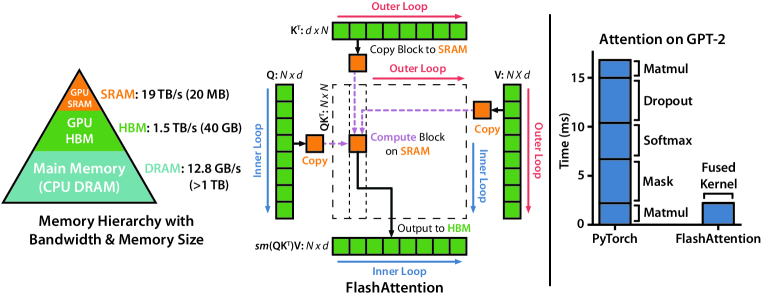
FlashAttention: IO-Aware (2022)

The 2022 paper on 'FlashAttention' introduced a fundamental optimization that allowed Transformers to break through the 'context wall' that had limited their memory for years. Before FlashAttention, the ability of a model to remember long sequences was constrained by a quadratic memory requirement - doubling the length of a conversation required four times the memory. Researchers at Stanford University proposed a shift: instead of trying to reduce the number of mathematical operations, they focused on the speed of data movement within the GPU. It was a transition from 'compute-bound' to 'memory-bound' thinking, proving that the bottleneck in modern AI is not how fast a chip can think, but how fast it can move its thoughts.

Read Decoding
LLaMA: Foundation Models (2023)
Touvron et al. (2023)

LLaMA: Foundation Models (2023)

The 2023 'LLaMA' (Large Language Model Meta AI) paper challenged the prevailing belief that bigger is always better in AI. While models like GPT-3 had grown to 175 billion parameters, researchers at Meta AI focused on training smaller, more efficient models (ranging from 7B to 65B parameters) on much larger datasets. They showed that a 13B parameter model could outperform the original GPT-3 on most benchmarks, provided it was trained long enough on high-quality data. It was a shift from a 'parameter-centric' view of AI to a 'data-centric' view, prioritizing efficiency and accessibility.

Read Decoding
Mistral 7B: Efficient (2023)
Jiang et al. (2023)

Mistral 7B: Efficient (2023)

The 2023 paper on 'Mistral 7B' challenged the prevailing 'scaling laws' that had dominated the artificial intelligence landscape for years. Before Mistral, the industry largely assumed that model capability was a direct function of parameter count - if you wanted more reasoning power, you simply built a larger model with a more massive dataset. Researchers at Mistral AI proposed a shift: instead of chasing scale, they focused on architectural efficiency. By using techniques like Sliding Window Attention and Grouped-Query Attention, they created a 7-billion parameter model that consistently outperformed models twice its size. It was a transition from 'brute-force' scaling to a more nuanced, 'inference-first' engineering approach, proving that how a model thinks is just as important as how much it knows.

Read Decoding
Phi-2: Textbook-Quality (2023)
Li et al. (2023)

Phi-2: Textbook-Quality (2023)

The 2023 paper on 'Phi-2' fundamentally challenged the 'Chinchilla scaling laws' that had become the industry standard for AI development. Before Phi, the prevailing wisdom was that a model's intelligence was a proportional result of its size and the sheer volume of its training data. Researchers at Microsoft Research proposed a shift: instead of training on trillions of noisy web-crawled tokens, they focused on 'textbook-quality' data. By curating a high-signal mixture of synthetic stories and filtered educational content, they created a 2.7-billion parameter model that could match or exceed the reasoning capabilities of models 25 times its size. It was a transition from 'data quantity' to 'data quality,' proving that intelligence is not just a function of scale but of the signal-to-noise ratio in the training process.

Read Decoding
QLoRA: Efficient (2023)
Dettmers et al. (2023)

QLoRA: Efficient (2023)

The 2023 paper on 'QLoRA' (Quantized Low-Rank Adaptation) fundamentally changed the economics of artificial intelligence by democratizing the ability to fine-tune massive language models. Before QLoRA, training a 65-billion parameter model like LLaMA required over 780 gigabytes of VRAM - a requirement that limited the field to massive, multi-GPU clusters owned by a few tech giants. Researchers at the University of Washington proposed a shift: instead of training on 16-bit weights, they developed a system to fine-tune 4-bit quantized models without any loss in performance. This transition allowed a 65B model to be fine-tuned on a single professional GPU, proving that the high precision of a model's 'memory' is not necessary for its 'learning,' much like a student can learn from a summary just as well as from a full textbook.

Read Decoding
Mixtral 8x7B: SMoE (2024)
Jiang et al. (2024)

Mixtral 8x7B: SMoE (2024)

The 2024 paper 'Mixtral of Experts' by the Mistral AI team introduced a significant pivot in the architecture of Large Language Models, moving away from the 'brute force' scaling of dense Transformers. Before this work, the industry standard for high-performance open models was defined by dense architectures like Llama 2 70B, where every single parameter is activated for every token processed. This created a linear 'compute tax,' where increasing a model's capacity directly increased the computational cost of inference, making 70B+ models prohibitively expensive for low-latency or high-throughput applications. This status quo assumed that intelligence was a monolithic signal that required the full weight of the network's parameters to be applied to every piece of information, regardless of its complexity or context.
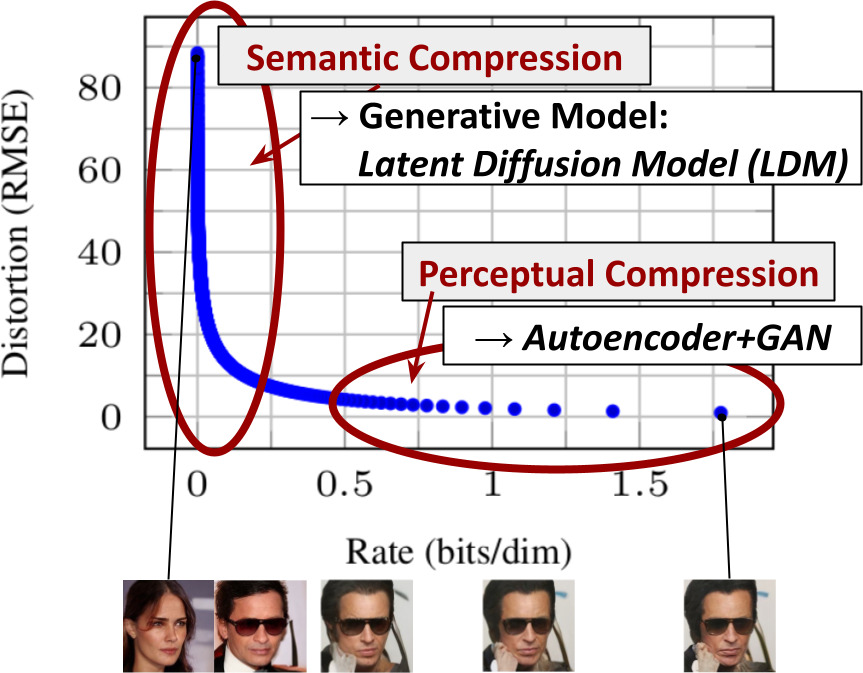
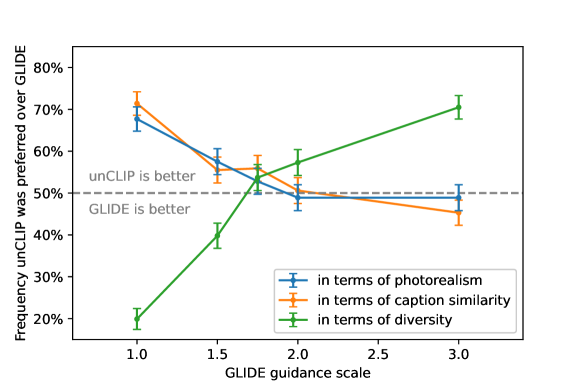
Read Decoding
Gemma 2: High-Signal Open Models (2024)
Gemma Team, Google (2024)

Gemma 2: High-Signal Open Models (2024)

The competition for dominance in the open-weight model ecosystem has historically been defined by brute scaling, with researchers attempting to match closed-source performance by simply increasing parameter counts and training tokens. However, the Gemma 2 project from Google DeepMind suggests that the intelligence of a model is not merely a result of its size, but a function of the signal density it encounters during training. By moving away from training on raw datasets toward a system of predictive distillation, Gemma 2 demonstrates that smaller models can achieve reasoning capabilities previously thought to be the exclusive domain of much larger architectures.

Read Decoding
Llama 3 405B: Dense Scaling (2024)
Dubey et al. (Meta, 2024)

Llama 3 405B: Dense Scaling (2024)

The development of state-of-the-art language models has recently seen a divergence between the pursuit of architectural novelty and the systematic refinement of existing frameworks. While several high-capacity models have transitioned to sparse Mixture-of-Experts (MoE) designs to manage inference costs, the Llama 3 project represents a deliberate doubling down on the standard dense Transformer architecture. The researchers at Meta AI argued that the inherent stability and predictability of a dense model - when paired with massive data and compute scaling - provides a more robust foundation for general reasoning than the more complex routing logic required by MoE. This choice reflects a transition from architectural experimentation to an exhaustive optimization of the Transformer's known limits.

Read Decoding
DeepSeek-V2: Latent Attention (2024)
DeepSeek-AI (2024)

DeepSeek-V2: Latent Attention (2024)

The primary constraint on the deployment of long-context large language models is the "KV cache bottleneck," where the memory required to store the Keys and Values for every token in a sequence grows linearly with context length. In standard architectures, this memory footprint can exceed the capacity of high-end GPUs, forcing a trade-off between the number of concurrent users and the length of the documents the model can process. DeepSeek-V2 addresses this engineering hurdle by moving away from standard Multi-head Attention toward a low-rank joint compression mechanism called Multi-head Latent Attention (MLA).

Read Decoding

Fine-tuning & Efficiency

4 PAPERS
DPO: Direct Preference Optimization (2023)
Rafael Rafailov, Archit Sharma, Eric Mitchell, Stefano Ermon, Christopher D. Manning, Chelsea Finn

DPO: Direct Preference Optimization (2023)

Reinforcement Learning from Human Feedback (RLHF) has been the cornerstone of large language model alignment, yet its implementation is notoriously fragile, requiring the careful balancing of multiple neural networks and the high-variance sampling of Reinforcement Learning (RL). Direct Preference Optimization (DPO) fundamentally disrupts this paradigm by proving that the optimal policy for human preferences can be derived in closed form, allowing models to be aligned using a simple classification objective without ever training an explicit reward model or employing RL.

Read Decoding
DoRA: Weight-Decomposed LoRA (2024)
Liu et al. (2024)

DoRA: Weight-Decomposed LoRA (2024)

The efficiency of fine-tuning large language models has long been governed by the trade-off between parameter count and expressive power. Standard Low-Rank Adaptation (LoRA) reduced the computational barrier by confining weight updates to a low-dimensional space, yet a performance gap persisted between these sparse updates and full parameter fine-tuning. Research into the behavioral patterns of these methods revealed that LoRA updates are limited by a rigid coupling between magnitude and direction. In LoRA, any significant change in the orientation of a weight vector is almost always accompanied by a proportional increase in its magnitude, a constraint that does not exist in full-parameter optimization. This lack of flexibility prevents the model from executing nuanced adjustments, such as precise directional shifts that require minimal changes in scale.

Read Decoding
BitNet b1.58: 1-Bit LLMs (2024)
Shuming Ma, Hongyu Wang, Lingxiao Ma, Lei Wang, Wenhui Wang, Shaohan Huang, Li Dong, Ruiping Wang, Jilly Huang, Furu Wei

BitNet b1.58: 1-Bit LLMs (2024)

The computational burden of Large Language Models (LLMs) has traditionally scaled with the precision of their weights, with the industry converging on 16-bit floating-point (FP16 or BF16) as the standard for maintaining performance. BitNet b1.58 shatters this convention by demonstrating that LLMs can achieve parity with full-precision models while utilizing only 1.58 bits per parameter. By restricting weights to a ternary set - $\{-1, 0, 1\}$ - the architecture fundamentally alters the nature of neural computation, replacing expensive floating-point multiplications with simple integer additions and subtractions.

Read Decoding
Scaling LLM Test-Time Compute (2024)
Snell et al. (DeepMind, 2024)

Scaling LLM Test-Time Compute (2024)

The traditional paradigm of scaling model intelligence has focused almost exclusively on the pre-training phase, treating performance as a static outcome of parameter count and training data volume. This pre-training centric view assumes that a model's reasoning capability is "frozen" at the point of deployment, requiring ever-larger models to solve increasingly complex problems. However, human cognition suggests a more dynamic approach, where the amount of effort expended is proportional to the difficulty of the task. The exploration of "test-time" or inference-time compute as a new scaling frontier suggests that the intelligence of a system can be expanded during the generation process itself, allowing a smaller model to overcome its inherent knowledge gaps through iterative search and refinement.

Read Decoding

Novel Architectures

2 PAPERS
Mamba: Selective State Spaces (2023)
Albert Gu, Tri Dao

Mamba: Selective State Spaces (2023)

The dominance of the Transformer architecture is predicated on the global receptive field of its attention mechanism, yet this same mechanism imposes a quadratic computational cost that fundamentally limits the processing of massive sequences. While previous attempts at sub-quadratic modeling - ranging from linear attention to gated convolutions - offered theoretical efficiency, they consistently failed to match the reasoning density of Transformers on discrete modalities like language. Mamba addresses this gap by introducing the Selective State Space Model (S6), a framework that restores content-based reasoning to the recurrence through input-dependent dynamics.

Read Decoding
KAN: Kolmogorov-Arnold Networks (2024)
Liu et al. (2024)

KAN: Kolmogorov-Arnold Networks (2024)

The structural foundation of deep learning has been dominated for decades by the Multi-Layer Perceptron (MLP), which interleaves linear weight matrices with fixed non-linear activation functions situated at the nodes. This design choice creates a fundamental limitation where the network's expressive power is tied to the width and depth of its static nodes, while the internal degrees of freedom of the activations themselves remain unused. Consequently, MLPs often require a massive expansion in parameter count to approximate complex functions, leading to the "curse of dimensionality" and a lack of transparency in the resulting high-dimensional representations. The proposal of Kolmogorov-Arnold Networks (KANs) challenges this status quo by fundamentally reorganizing the computational graph based on the **Kolmogorov-Arnold representation theorem**.

Read Decoding

Biology & Science AI

8 PAPERS
AlphaFold 2 (2021)
Jumper et al. (2021)

AlphaFold 2 (2021)

The 2021 'AlphaFold 2' paper from DeepMind resolved one of biology's most enduring challenges by treating the folding of a protein not as a physical simulation, but as a problem of geometric deep learning. For fifty years, predicting how a sequence of amino acids would collapse into a functional 3D shape - the 'protein folding problem' - was seen as a trade-off between the speed of statistical templates and the agonizingly slow precision of molecular dynamics. AlphaFold 2 introduced a shift toward an end-to-end differentiable system that directly refines 3D coordinates. It moved away from the proxy of distance distributions to a model that understands the physical constraints of a protein as a set of learnable geometric relationships.

Read Decoding
AlphaFold 3: Unified Biomolecular Prediction (2024)
Josh Abramson, Jonas Adler, Jack Dunger, Richard Evans, Tim Green, Alexander Pritzel, Olaf Ronneberger, Will Song, John Jumper, Demis Hassabis, et al.

AlphaFold 3: Unified Biomolecular Prediction (2024)

AlphaFold 2 revolutionized structural biology by solving the protein-folding problem, yet it remained largely specialized to the geometry of amino acid chains. AlphaFold 3 (AF3) represents a fundamental architectural expansion, moving beyond proteins to predict the interactions of almost all life's molecules - including DNA, RNA, ligands, and ions - within a single, unified framework. By replacing the specialized geometric priors of its predecessor with a generalized generative diffusion process, AlphaFold 3 treats the entirety of the molecular complex as a system of interacting atoms rather than a collection of rigid residues.

Read Decoding
Evo - DNA Language Model (2024)
Nguyen et al. (2024)

Evo - DNA Language Model (2024)

The 2024 'Evo' paper introduced a foundational shift in genomic research by treating the entire code of life as a continuous, generative language. Before Evo, genomic models were often specialized for narrow tasks - such as predicting gene expression or classifying mutations - and were limited by context windows that could only capture local fragments of a genome. This fragmentation prevented a holistic understanding of how distant genetic elements interact to define complex organismal traits. Evo utilized a hybrid architecture to bridge this gap, processing over 131,000 nucleotides in a single pass. It proved that the 'grammar' of DNA is not just a sequence of isolated instructions, but a global system of dependencies that can be modeled and even designed from scratch.

Read Decoding
GraphCast - Weather AI (2023)
Lam et al. (2023)

GraphCast - Weather AI (2023)

The 2023 'GraphCast' paper from Google DeepMind introduced a radical shift in meteorology by replacing the explicit physical equations of traditional weather models with a data-driven graph neural network. For decades, global weather forecasting relied on Numerical Weather Prediction (NWP), which uses massive supercomputers to solve fluid dynamics equations over a grid of billions of points. This process is computationally expensive and slow, often taking hours to produce a single 10-day forecast. GraphCast demonstrated that by treating the atmosphere as a global message-passing graph, a machine can learn to predict the future of the weather directly from historical data. It proved that the complexity of the Earth's climate can be captured more efficiently through learned representations than through manually defined physical formulas.

Read Decoding
CRISPR-GPT: AI-Assisted Genome Editing (2024)
Wang, Cong et al.

CRISPR-GPT: AI-Assisted Genome Editing (2024)

Exploring the foundational shifts that defined this breakthrough...

Read Decoding
Physics-Informed ML in Biomedical Engineering (2025)
Accepted in Annual Review of Biomedical Engineering, 2025

Physics-Informed ML in Biomedical Engineering (2025)

Exploring the foundational shifts that defined this breakthrough...

Read Decoding
Agentomics-ML: Autonomous ML for Genomics (2025)
2025 Preprint

Agentomics-ML: Autonomous ML for Genomics (2025)

Exploring the foundational shifts that defined this breakthrough...

Read Decoding
BIOVERSE: Multimodal Bio-Foundation Alignment (2025)
2025 Preprint

BIOVERSE: Multimodal Bio-Foundation Alignment (2025)

Exploring the foundational shifts that defined this breakthrough...

Read Decoding