
Gemma 2: High Performance in a Small Package
Gemma Team, Google (2024)
Gemma Team, Google. (2024). Gemma 2: Improving Open Models via Predictive Distillation. arXiv preprint arXiv:2408.00118.
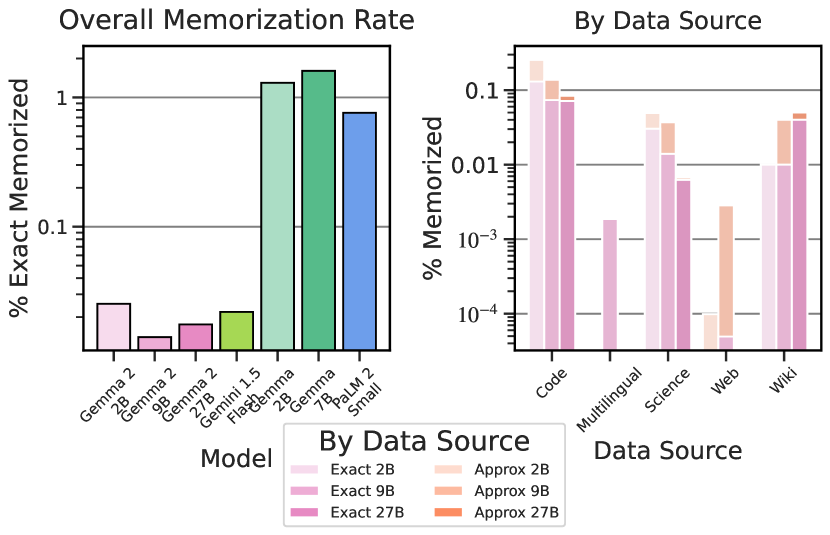
The 2024 Gemma 2 project from Google DeepMind suggests that the effectiveness of a model is determined by the density of the training signal rather than the sheer volume of parameters. While many open-weight models have attempted to match closed-source performance through brute scaling, Gemma 2 utilizes predictive distillation to achieve reasoning capabilities that exceed its size. This demonstrates that smaller architectures can match the logic of larger ones if they are trained on highly refined datasets rather than raw, noisy information.
The model's efficiency is supported by a hybrid attention architecture that alternates between global and sliding window attention. Sliding window attention limits the look-back distance for certain layers, reducing the computational cost which otherwise grows quadratically with sequence length. This allows the model to maintain a global view while allocating its internal attention budget more strategically. This approach proves that memory overhead during inference can be managed without sacrificing the ability to handle long-range dependencies in complex documents.
To ensure stable training on high-density datasets, researchers implemented logit soft-capping. This mechanism prevents the values in the model's final layers from becoming excessively large, which can lead to vanishing gradients or unstable optimization. By mathematically capping the dynamic range of the logits, the researchers achieved a more stable optimization landscape on a two-trillion token dataset. This finding indicates that maintaining the integrity of internal signals is a critical factor in the final reasoning performance of an efficient system.
A significant shift in this project was the use of knowledge distillation during pre-training. Instead of training solely on raw human data, smaller model variants were tasked with matching the probability distributions of a much larger teacher model. This allows the student model to learn logical patterns and uncertainty estimates from a more capable system, bypassing much of the noise found in raw datasets. Distillation is thus used as a fundamental method for increasing the per-parameter intelligence of a network.
The results showed that a 9-billion parameter model trained through distillation can outperform larger models trained from scratch. This suggests a hierarchical future for AI development where giant systems act as educators for smaller, specialized agents. Whether a student model can ever surpass the reasoning of its teacher through this process remains an open question in the field. The focus of engineering is shifting from simply increasing model capacity to refining the educational relationship between different systems in the model lifecycle.
Dive Deeper
Gemma 2 Technical Report (arXiv)
arXiv • article
Explore ResourceGemma 2 Blog Post (Google)
Google • article
Explore Resource
Discussion
0Join the discussion
Sign in to share your thoughts and technical insights.
Loading insights...
Recommended Readings
The author of this article utilized generative AI (Google Gemini 3.1 Pro) to assist in part of the drafting and editing process.