
Llama 3 and the Future of Dense Scaling
Dubey et al. (Meta, 2024)
Dubey, A., et al. (2024). The Llama 3 Herd of Models. arXiv preprint arXiv:2407.21783.
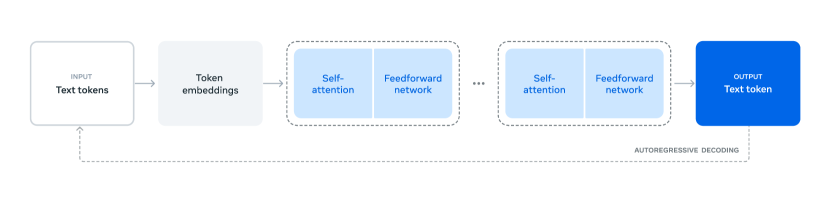
In 2024, Meta AI introduced the Llama 3 family of models, including a 405-billion parameter variant trained on a massive 15-trillion token dataset. This research demonstrated that the standard dense Transformer architecture can continue to yield significant performance gains as compute and data are scaled to the limits of current hardware clusters. By prioritizing data quality and training stability through a multi-stage curation pipeline, the project established a new benchmark for open-weights performance, rivaling the most capable proprietary systems across reasoning, coding, and multi-lingual benchmarks.
Massive Scaling and Data Curation Efficiency

The primary technical achievement of Llama 3 is the management of scale across 16,000 H100 GPUs. To maintain training stability, the researchers implemented a highly optimized training stack that combined model, data, and pipeline parallelism. A critical finding was that the utility of a model is as much a function of the signal-to-noise ratio in its training data as it is of its parameter count. To overcome the diminishing returns of raw web-crawled tokens, the team utilized previous versions of Llama to filter and categorize the incoming data stream, ensuring a high-density mixture of code, reasoning, and multi-lingual examples. This finding established that the most stable path to achieving frontier performance is through the relentless cleaning and balancing of the training corpus.
Grouped-Query Attention and Inference Optimization
To maintain efficient inference at the 400B+ parameter level, Llama 3 incorporates Grouped-Query Attention (GQA) across all its size variants. GQA reduces the memory footprint of the KV cache by allowing multiple query heads to share a single key and value head. This structural optimization is essential for processing long sequences in high-concurrency environments, as it prevents the memory bandwidth from becoming an insurmountable bottleneck. This methodological choice proved that the standard Transformer architecture can be scaled effectively if the underlying communication and memory bottlenecks are addressed through targeted refinement rather than total redesign.
Synthetic Data Generation and Recursive Improvement
A critical technical component of the project was the use of the 405B model as a primary engine for generating synthetic training data for the smaller 8B and 70B "herd" members. As the limit of high-quality human data is reached, the ability of a model to act as its own teacher becomes a necessity for further scaling. The 405B model was used to generate millions of high-quality reasoning traces and safety-aligned examples. This recursive loop - where the strongest model curates the data for the next generation - suggests that the bottleneck for future development will move from data collection to data synthesis and verification. By using the massive model to verify the correctness of its own synthetic reasoning, the researchers were able to create a feedback loop that improved performance without requiring a proportional increase in human oversight.
Impact on the Open AI Ecosystem
The success of Llama 3 demonstrated that frontier-level intelligence can be achieved within an open-weight framework, enabling a wave of downstream innovation. By providing models that are highly steerable and capable of complex multi-step reasoning, the research provided a robust foundation for the development of agentic systems and specialized domain models. This realization remains the central theme of current AI research, suggesting that the most valuable asset of a foundation model may not be its ability to answer user queries directly, but its role as a high-signal generator for training the next generation of efficient, autonomous agents.
Dive Deeper
Llama 3 Technical Report (Official arXiv)
arXiv • article
Explore ResourceMeta AI Llama 3 Blog
Meta AI • article
Explore ResourceLlama 3 Model Collection (Hugging Face)
Hugging Face • model
Explore Resource
Discussion
0Join the discussion
Sign in to share your thoughts and technical insights.
Loading insights...
Recommended Readings
The author of this article utilized generative AI (Google Gemini 3.1 Pro) to assist in part of the drafting and editing process.