
Where Quantum Power Ends and Reality Begins
Scott Aaronson (2009)
Aaronson, S. (2010). BQP and the Polynomial Hierarchy. In Proceedings of the forty-second ACM symposium on Theory of computing (pp. 141-150).
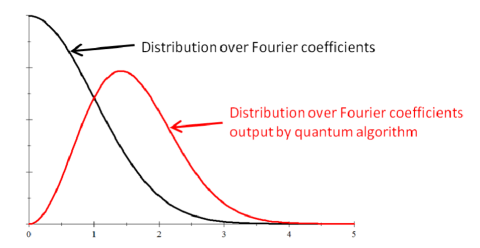
In 2009, Scott Aaronson established a complexity-theoretic separation between Bounded-error Quantum Polynomial time (BQP) and the Polynomial Hierarchy (PH) using an oracle-based model. This research addressed a fundamental question regarding the nature of quantum advantage: whether quantum computers are merely more efficient at classical non-deterministic tasks, or if they possess a distinct computational capacity that lies outside the entire hierarchy of P, NP, and coNP. The researcher demonstrated that there exist black-box problems, termed Fourier-checking, that can be resolved by a quantum machine in polynomial time but require exponential resources for any classical machine, regardless of the depth of existential and universal quantification permitted.
Oracle Separation and the Fourier-Checking Problem

The primary technical contribution of the paper is the definition and analysis of the Fourier-checking problem. In this setting, the machine is given access to two Boolean functions, and , and must determine if is approximately the discrete Fourier transform of . Aaronson proved that a quantum algorithm can resolve this task with a constant number of queries by preparing a uniform superposition, querying , applying a Hadamard transform, and querying . This methodological choice demonstrated that quantum mechanics allows for the detection of global correlations across an entire function space, a task that is fundamentally different from the local verification of witnesses that defines the Polynomial Hierarchy.
The Incompatibility of PH and Global Interference
A critical insight of the research is the structural incompatibility between the quantifier-based logic of the PH and the interference-based logic of BQP. The Polynomial Hierarchy is built upon the nesting of local logical checks - asking if there "exists" a witness or if "for all" witnesses a property holds. In contrast, quantum algorithms like Fourier-checking rely on the global constructive and destructive interference of probability amplitudes across all possible states. Aaronson proved that no amount of classical quantification can efficiently mimic this global sensing of parity and correlation. This finding established that quantum advantage is not merely a subset of non-determinism, but an orthogonal computational primitive rooted in the wave-like properties of matter.
Complexity-Theoretic Foundations and BQP containment
The paper provided a rigorous proof that there exists an oracle such that . This result was subsequently strengthened to a "relativized" separation, suggesting that in any environment where we only have black-box access to information, quantum computers are strictly more powerful than the Polynomial Hierarchy. This finding clarified the boundaries of BQP, showing that while it is contained within PSPACE (polynomial space), it likely spans across the layers of the PH in a way that classical non-determinism cannot. It revealed that the theoretical limits of quantum advantage are tied to the manipulation of complex-valued coefficients rather than the size of the search space.
Impact on Quantum Supremacy Benchmarks
The practical significance of Aaronson’s work is evidenced by its role in defining the benchmarks for quantum supremacy. By identifying problems that lie outside the PH, the research pointed toward sampling tasks - such as Boson sampling and random circuit sampling - as the most effective candidates for demonstrating a definitive gap between quantum and classical hardware. These tasks exploit the same "Fourier-like" global structures identified in the 2009 paper, providing a rigorous framework for proving that a physical machine has surpassed the limits of classical simulation. The work established the principle that the most robust way to prove quantum advantage is to identify tasks where the global topology of the state space is the primary computational bottleneck.
Interference as an Orthogonal Computational Class
The success of this research demonstrated that the complexity of computational systems is most accurately understood through the mathematical operations they can perform on information. The decision to model quantum computing as an operation on the coefficients of a state vector revealed that the primary constraint on classical intelligence was the reliance on local, symbolic logic. This principle remains the central theme in the search for new quantum algorithms that leverage global state correlation. It leaves open the question of whether there exist "natural" non-oracle problems in BQP that are not in PH, or if the separation will remain restricted to the domain of black-box complexity until the resolution of the P vs NP problem.
Dive Deeper
BQP and the Polynomial Hierarchy (Official DOI)
ACM • docs
Explore ResourceAaronson's Original Paper (arXiv)
arXiv • docs
Explore ResourceThe Complexity of Quantum States (arXiv Survey)
arXiv • article
Explore ResourceQuantum Complexity Theory (Wikipedia)
Wikipedia • article
Explore Resource
Discussion
0Join the discussion
Sign in to share your thoughts and technical insights.
Loading insights...
Recommended Readings
The author of this article utilized generative AI (Google Gemini 3.1 Pro) to assist in part of the drafting and editing process.