
The Invisible Threat: Why No Code is Safe
Ken Thompson (1984)
Thompson, K. (1984). Reflections on trusting trust. Communications of the ACM, 27(8), 761-763.
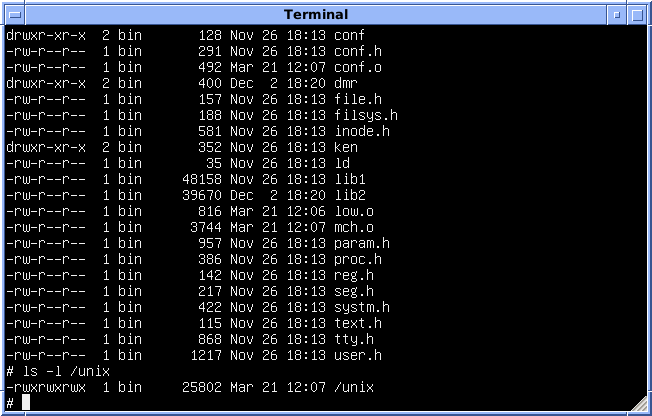
In 1984, Ken Thompson, the co-creator of Unix, demonstrated that the security of a software system is transitively dependent on the integrity of the tools used in its construction. In his Turing Award lecture, Thompson proved that a malicious developer can insert a backdoor into a compiler such that the vulnerability is invisible in the source code of both the compiler and the applications it creates. This revelation shattered the assumption that auditing source code is sufficient for security, revealing a recursive dependency on trust that extends to the earliest stages of the software development lifecycle. This work established the "Trusting Trust" problem as a fundamental constraint on the reliability of digital systems.
The Compiler as a Trojan Horse
Thompson’s primary technical contribution was a three-stage demonstration of a self-replicating compiler attack. In the first stage, he modified the compiler's source code to recognize when it was compiling the system's login command and, in those cases, insert a secret backdoor password. In the second stage, he added logic to the compiler to recognize when it was compiling its own source code. If the compiler detected it was regenerating itself, it would re-insert both the login backdoor and the compiler backdoor. This methodological choice proved that the source code of a tool could be perfectly clean and free of malicious logic while the resulting binary remains compromised.
Source-to-Binary Decoupling and Persistence
The genius of the Thompson attack is the permanent decoupling of human-readable source code from machine-executable binary behavior. Once a poisoned compiler binary is used to compile a clean version of its own source code, the malicious logic is inherited by the new generation. If the attacker subsequently deletes the original poisoned binary and the source code modification, the backdoor survives in the executable file, invisible to any auditor examining the code. This finding demonstrated that "what you see" in a repository is not necessarily "what you get" in an execution environment. It revealed that the primary constraint on digital security is the inability to verify the transition from abstract logic to physical implementation.
Recursive Dependencies and Supply Chain Security
Thompson’s lecture introduced the concept of the infinite regress of dependency in modern computing. To trust an application, a user must trust the compiler; to trust the compiler, one must trust the assembler; and to trust the assembler, one must trust the operating system and the underlying hardware. This realization moved cybersecurity from a purely technical domain into a structural one, where the focus shifted toward "trusted computing" and "reproducible builds." This finding effectively established that the most robust way to secure a system is to ensure the transparency and verifiability of every component in the supply chain, a principle that remains the central theme of current software integrity research.
Impact on Modern Software Integrity Standards
The practical significance of "Reflections on Trusting Trust" is evidenced by the development of diverse double compilation (DDC) and the Software Bill of Materials (SBOM). DDC attempts to detect compiler-level backdoors by comparing the outputs of multiple independent compilers, while SBOM provides a verifiable record of every dependency in a system. This application proved that the scalability of a secure infrastructure is determined by the adoption of verification primitives that can bridge the gap between source and binary. The work transformed the Act of programming into a discipline of forensic verification, suggesting that the most dangerous vulnerabilities are those that hide within the very abstractions we use to manage complexity.
Trust as a Non-Technical Limit
The achievement of Ken Thompson demonstrated that there is no purely algorithmic solution to the problem of trust. The decision to model security as a chain of dependencies revealed that the ultimate root of trust in a digital society is the integrity of the people and organizations that provide the foundational infrastructure. This principle remains the guiding rule for evaluating the security of cloud services and proprietary software. It leaves open the question of how these recursive traps can be managed as AI systems begin to participate in the Act of code generation and compilation, potentially introducing new and even more opaque layers of subversion into the core of digital civilization.
Dive Deeper
Reflections on Trusting Trust (Official PDF)
CMU • docs
Explore ResourceKen Thompson's Turing Award Speech (Video)
ACM • video
Explore ResourceDiverse Double Compilation (Video)
Computerphile • video
Explore ResourceReproducible Builds Project
Reproducible Builds • docs
Explore Resource
Discussion
0Join the discussion
Sign in to share your thoughts and technical insights.
Loading insights...
Recommended Readings
The author of this article utilized generative AI (Google Gemini 3.1 Pro) to assist in part of the drafting and editing process.