
The Morris Worm: An Early Case Study in Internet Security Vulnerabilities
Eugene H. Spafford (1988)
Spafford, E. H. (1988). The Morris Worm: An Analysis. Purdue University Technical Report.
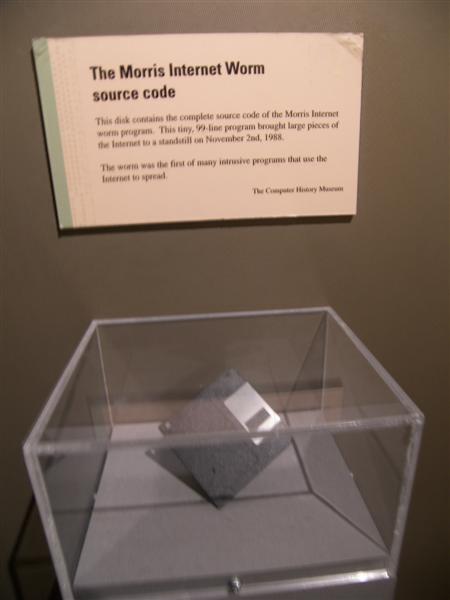
On November 2, 1988, the release of a self-replicating program by Robert Tappan Morris triggered the first major security crisis of the interconnected internet. While the program was intended to gauge the size of the network, a design flaw in its replication logic caused it to spread significantly faster than expected, crashing thousands of Unix systems within hours. The subsequent analysis by Eugene Spafford and other researchers provided the first comprehensive look at how a decentralized network of "trusted" machines could be subverted by an automated agent. this event established the end of the internet's "default trust" era and led to the creation of the first formal computer emergency response infrastructures.
Exploiting Trusted Unix Services and lateral Movement
The technical mechanism of the Morris Worm was characterized by its use of multiple infection vectors targeting standard Unix services. It exploited a buffer overflow in the fingerd service, a flaw in the sendmail debug mode, and utilized a dictionary attack to guess passwords on accounts with weak security. Additionally, it leveraged the rsh (remote shell) service, which permitted users on "trusted" machines to log in without a password. By combining these methods, the worm was able to move laterally through the network, proving that the security of a global system is limited by the weakest configuration of any individual node. This finding revealed that the "trusted host" model was structurally insufficient for a scalable digital infrastructure.
The Exponential Growth Flaw and System Exhaustion
The destructive impact of the worm was a direct consequence of a failure in its internal feedback loop. To prevent a single machine from being infected multiple times, the worm was designed to query a potential target for the presence of an existing copy. However, fearing that administrators might create "fake" copies to ward off the infection, Morris instructed the program to replicate anyway one out of every seven times. This "one-in-seven" rule led to an exponential increase in the number of processes on infected machines, eventually exhausting the system's memory and process table. This observation highlighted the inherent risk of autonomous code: even without malicious intent, a flaw in control logic can lead to catastrophic system failure.
The Birth of Global Incident Response and CERT
The reaction to the Morris Worm crisis transformed cybersecurity from an informal hobby into a professional discipline. Because there was no centralized mechanism for communicating security threats, administrators were forced to coordinate through phone calls and the very network that was under attack. This failure in coordination led to the creation of the Computer Emergency Response Team (CERT) at Carnegie Mellon University, established the first formal structure for sharing vulnerability information and coordinating global defenses. This move established the principle that a resilient network requires a coordinated "immune system" capable of responding to autonomous threats in real-time.
Legal Precedents and the Ethics of Research
The practical significance of the Morris Worm was evidenced by its role as the first major test of the 1986 Computer Fraud and Abuse Act (CFAA). Robert Morris became the first person to be convicted under the Act, initiating a national debate regarding the legal boundaries of "security research" and the responsibility of programmers for the unintended consequences of their code. While the creator argued the intent was benign, the legal system focused on the objective physical damage caused to the nation's infrastructure. This finding established the precedent for how cybercrime would be prosecuted for decades, defining the structural integrity of the network as a protected public interest.
The Legacy of Default Trust and Network Hygiene
The legacy of the Morris Worm is the permanent shift toward "zero-trust" architecture and improved network hygiene. It led to the deprecation of insecure services like rsh and the development of more robust coding practices to prevent the buffer overflows that were common in the late 1980s. However, the core vulnerability exploited by the worm - the human element of weak passwords and misconfigured services - remains the primary entry point for modern malware. It leaves open the question of whether our current, more complex networks are simply larger versions of the same fragile systems subverted in 1988, or if we have achieved a fundamental leap in structural resilience.
Dive Deeper
The Morris Worm: An Analysis (Official Technical Report)
Utah • docs
Explore ResourceThe First Internet Worm (Video)
Computerphile • video
Explore ResourceThe Morris Worm at 30 (FBI)
FBI • article
Explore ResourceCFAA Overview (Wikipedia)
Wikipedia • article
Explore Resource
Discussion
0Join the discussion
Sign in to share your thoughts and technical insights.
Loading insights...
Recommended Readings
The author of this article utilized generative AI (Google Gemini 3.1 Pro) to assist in part of the drafting and editing process.