
BLAST: The Engine of Comparative Genomics
Stephen F. Altschul, Warren Gish, Webb Miller, Eugene W. Myers, David J. Lipman (1990)
Altschul, S. F., Gish, W., Miller, W., Myers, E. W., & Lipman, D. J. (1990). Basic local alignment search tool. Journal of Molecular Biology, 215(3), 403-410.
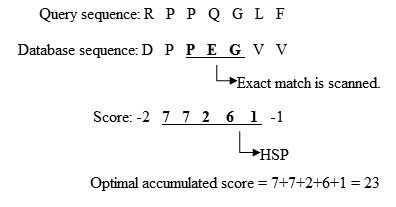
In 1990, researchers introduced BLAST (Basic Local Alignment Search Tool), an algorithm that turned biological sequence comparison into a fast, everyday computational routine. As genomic sequencing expanded, searching query sequences against large databases using exact dynamic programming algorithms like Smith-Waterman became too slow for common hardware. BLAST demonstrated that by replacing exhaustive search matrices with a heuristic based on neighborhood word seeds and statistical thresholds, researchers could scan whole biological databases in seconds while preserving the sensitivity needed to detect distant evolutionary relatives.
The Search Bottleneck and Maximal Segment Pairs
Exact local alignment tools evaluate all possible cell alignments across a quadratic grid, scaling with the product of the sequence lengths. BLAST sidesteps this quadratic burden by formalizing local similarity through Maximal Segment Pairs (MSPs). An MSP is defined as the top-scoring pair of identical-length segments chosen from two sequences whose alignment score cannot be improved by shortening or extending. Instead of attempting to construct full-length alignments with arbitrary insertions and deletions from the start, the algorithm concentrates purely on identifying these core, ungapped segments of conservation.
Neighborhood Word Indexing and Seeding
The primary innovation of BLAST lies in how it seeds comparisons. Rather than demanding exact character matches, BLAST breaks query sequences into small words of length ( for amino acids, for nucleotides). For every query word, it constructs a neighborhood list of all possible biological words that achieve a substitution score at or above a strict threshold using a scoring matrix such as PAM-120 or BLOSUM62. When the target database is scanned, any occurrence of a neighborhood word triggers an alignment seed. This design captures conservative amino acid substitutions at the earliest filtration step, avoiding wasteful processing of unpromising regions.
Ungapped Extension and Karlin-Altschul Statistics
Once a seed hit occurs, BLAST extends the alignment bidirectionally without gaps. The algorithm accumulates positive and negative substitution values until the running score drops by an amount below the maximum score achieved during the extension. To determine whether an aligned segment is biologically meaningful or a random artifact, the authors derived Karlin-Altschul extreme value statistics. They proved that local alignment scores follow a Gumbel distribution, enabling the calculation of the expect value (-value):
where and are search space dimensions, is the alignment score, and and are natural scale parameters derived from the scoring matrix and background amino acid frequencies. The -value provides researchers with a rigorous mathematical estimate of how many chance matches to expect at that score level.
Database-Scale Comparative Genomics
BLAST accelerated sequence database searches by roughly 50 to 100 times compared to exact Smith-Waterman implementations on identical hardware, while detecting distant evolutionary relationships missed by rigid k-mer matchers. By establishing an open standard for sequence alignment and significance calibration, it provided the computational infrastructure for the Human Genome Project and modern molecular biology. The conceptual framework introduced by BLAST proved that biological information retrieval does not require perfect global alignment; instead, rapid local heuristics coupled with rigorous statistical thresholds can reliably uncover evolutionary conservation.
Dive Deeper
BLAST: Basic Local Alignment Search Tool (Official Paper)
ScienceDirect • docs
Explore ResourceNCBI BLAST Server and Documentation
NCBI • docs
Explore ResourceNCBI C++ Toolkit Repository
GitHub • code
Explore Resource
Discussion
0Join the discussion
Sign in to share your thoughts and technical insights.
Loading insights...
Recommended Readings
The author of this article utilized generative AI (Google Gemini 3.1 Pro) to assist in part of the drafting and editing process.